
Written by Alexander Greco
With the Help of ChatGPT
Introduction
Algorithms are the hidden infrastructure of the modern world. From search engines and navigation systems to financial markets, medical diagnostics, and artificial intelligence, algorithms determine how information is processed, decisions are made, and outcomes are produced. Although often associated exclusively with computer programming, algorithms are a much older and broader concept—one rooted in mathematics, logic, and systematic reasoning.
At their most fundamental level, algorithms define how problems are solved, independent of the machines that execute them. They are the bridge between abstract reasoning and practical computation, allowing ideas to be transformed into repeatable, reliable processes. Understanding algorithms is therefore central not only to computer science, but to engineering, data science, economics, and increasingly, everyday digital literacy.
This article explores the foundations of algorithms: what they are, where they come from, how they are classified, how they are evaluated, and why they matter in both technical and social contexts.
1. What Is an Algorithm?
An algorithm is a finite, well-defined sequence of steps designed to solve a specific problem or perform a computation [1]. The defining characteristic of an algorithm is not the technology used to implement it, but the logical structure of the procedure itself.
To qualify as an algorithm, a procedure must satisfy several core properties:
- Finiteness – The algorithm must terminate after a finite number of steps [2].
- Definiteness – Each instruction must be precise and unambiguous.
- Input – The algorithm may accept zero or more inputs.
- Output – It must produce at least one output.
- Effectiveness – Every step must be basic enough to be carried out exactly as described.
These constraints distinguish algorithms from vague instructions or heuristic guidelines. For example, “cook until done” is not algorithmic, while “bake at 180°C for 40 minutes” is algorithmic because it is explicit and repeatable.
2. Algorithms Before Computers
Algorithms predate modern computers by thousands of years. Early civilizations developed systematic procedures for arithmetic, geometry, astronomy, and engineering long before electronic machines existed.
One of the most famous early examples is the Euclidean algorithm, attributed to Euclid, which computes the greatest common divisor of two integers [3]. Its enduring relevance highlights a key feature of good algorithms: once discovered, they can remain optimal across centuries of technological change.
Another major historical influence is Muhammad ibn Musa al-Khwarizmi, whose systematic methods for arithmetic and algebra shaped mathematical practice throughout the Islamic Golden Age and later Europe [4]. The term algorithm itself derives from the Latinized form of his name, Algoritmi, reflecting his influence on procedural calculation.
These early algorithms were executed by humans, not machines, but they already embodied modern principles: abstraction, generality, and formal reasoning.
3. Algorithms and the Birth of Computer Science
The emergence of programmable machines in the 20th century transformed algorithms from practical tools into objects of formal study. The question shifted from how to compute to what can be computed at all.
A foundational contribution came from Alan Turing, whose theoretical model—the Turing machine—defined the limits of algorithmic computation [5]. Turing’s work demonstrated that algorithms are independent of physical machines and instead belong to an abstract domain governed by logic and mathematics.
Later scholars such as Edsger Dijkstra emphasized correctness, clarity, and provable properties in algorithm design [6], while Donald Knuth systematized algorithm analysis and documentation, treating algorithms as mathematical artifacts worthy of rigorous study [7].
This intellectual framework established algorithms as the core subject of computer science, distinct from hardware engineering or software implementation.
4. Algorithmic Thinking
Algorithmic thinking is the practice of solving problems by expressing solutions as clear, ordered steps that can be executed reliably. It involves several cognitive skills:
- Decomposition – Breaking complex problems into simpler subproblems
- Pattern recognition – Identifying recurring structures
- Abstraction – Ignoring irrelevant details while focusing on essentials
- Logical sequencing – Ensuring steps follow consistently
These skills are not limited to programming. Decision-making processes in logistics, finance, medicine, and management often rely on algorithmic reasoning, even when not formalized as code [8].
As automation expands into more domains, algorithmic thinking is increasingly regarded as a fundamental literacy skill alongside reading and mathematics.
5. Types of Algorithms
Algorithms can be classified according to their structure, purpose, or domain of application.
5.1 Sorting Algorithms
Sorting algorithms arrange elements into a specific order, such as ascending or descending.
Common examples include:
- Bubble Sort
- Merge Sort
- Quick Sort
Although all achieve the same goal, they differ dramatically in efficiency and scalability, illustrating why algorithm choice matters [9].
5.2 Search Algorithms
Search algorithms locate specific elements within a dataset.
Examples include:
- Linear search
- Binary search
Binary search is significantly faster but requires sorted input, demonstrating how algorithm performance depends on assumptions and constraints [10].
5.3 Graph Algorithms
Graph algorithms operate on networks of nodes and edges, representing relationships such as roads, communication links, or social connections.
Applications include:
- Navigation and routing
- Network optimization
- Recommendation systems
5.4 Recursive Algorithms
Recursive algorithms solve problems by applying the same procedure to smaller instances of the original problem. While elegant and mathematically expressive, recursion must be carefully controlled to avoid infinite execution or excessive resource use [11].
6. Algorithm Efficiency and Complexity
Not all correct algorithms are equally useful. Efficiency determines whether a solution is practical at scale.
Algorithm analysis focuses on:
- Time complexity – How execution time grows with input size
- Space complexity – How memory usage grows with input size
Big-O notation provides a standardized way to describe these growth rates abstractly [12]. This allows developers and researchers to compare algorithms independent of hardware or implementation language.
7. Correctness, Reliability, and Robustness
Algorithm correctness requires that an algorithm produces the correct output for all valid inputs, including edge cases. Formal verification methods and proofs of correctness are especially important in safety-critical systems such as aviation, medical devices, and financial infrastructure [13].
A robust algorithm also handles unexpected or imperfect inputs gracefully, rather than failing catastrophically.
8. Algorithms vs Heuristics
Algorithms guarantee correctness under defined conditions, whereas heuristics trade certainty for speed or simplicity.
Many real-world problems—such as route optimization, scheduling, or pattern recognition—are computationally infeasible to solve optimally, leading systems to rely on heuristic or approximate algorithms [14]. Modern artificial intelligence often blends deterministic algorithms with probabilistic heuristics.
9. Algorithms in Everyday Life
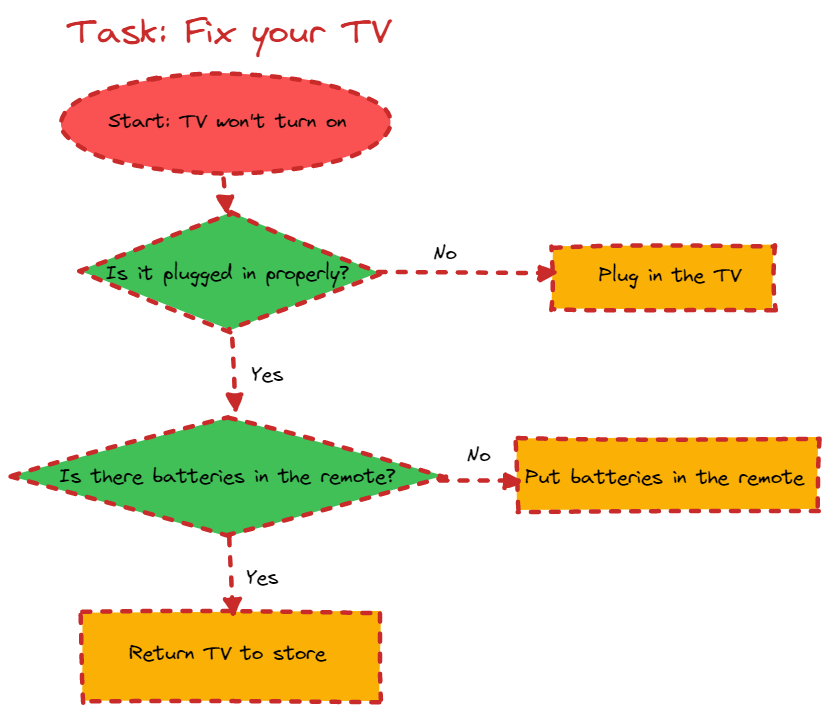
Algorithms shape daily experiences in subtle but profound ways:
- Search engines rank information
- Social media feeds prioritize content
- Streaming platforms generate recommendations
- Compression algorithms reduce storage and bandwidth needs

These systems influence attention, access to information, and even social behavior, raising important ethical and societal questions [15].
10. Why Algorithms Matter
Algorithms determine:
- Efficiency – How well resources are used
- Scalability – Whether systems function at global scale
- Fairness – How decisions are weighted and applied
- Transparency – Whether outcomes can be explained
As algorithmic systems increasingly mediate economic and social life, understanding their foundations is essential for responsible design and informed public discourse.
Conclusion
Algorithms are the logical backbone of computation. Rooted in ancient mathematics and refined through modern computer science, they provide the structured reasoning that enables complex systems to function reliably and at scale. Understanding algorithms equips individuals not only to build software, but to reason critically about the automated systems that increasingly shape modern society.
References
- Cormen, T. H., et al. Introduction to Algorithms. MIT Press.
- Sipser, M. Introduction to the Theory of Computation. Cengage.
- Euclid. Elements.
- Berggren, J. L. Episodes in the Mathematics of Medieval Islam.
- Turing, A. M. “On Computable Numbers.” Proceedings of the London Mathematical Society.
- Dijkstra, E. W. A Discipline of Programming.
- Knuth, D. E. The Art of Computer Programming.
- Wing, J. M. “Computational Thinking.” Communications of the ACM.
- Sedgewick, R., Wayne, K. Algorithms.
- Kleinberg, J., Tardos, É. Algorithm Design.
- Skiena, S. The Algorithm Design Manual.
- Aho, A., Hopcroft, J., Ullman, J. Data Structures and Algorithms.
- Hoare, C. A. R. “An Axiomatic Basis for Computer Programming.”
- Russell, S., Norvig, P. Artificial Intelligence: A Modern Approach.
- O’Neil, C. Weapons of Math Destruction.
Further Reading & Learning Resources
Books
- Knuth – The Art of Computer Programming
- Skiena – The Algorithm Design Manual
Online Courses
- MIT OpenCourseWare – Algorithms
- Coursera / Stanford Algorithms
Interactive Tools
- VisuAlgo
- Algorithm Visualizer
Academic Journals
- Communications of the ACM
- Journal of Algorithms
Leave a Reply