Category: Science & Technology

  • Fabbit Customs

    Fabbit Customs

    An Interview With Michael Faucher

    A Look at Starting a Business

    Written By: Alexander C Greco


    “I’d rather succeed in doing what we can than fail to do what we can’t.”

    Hazel from Watership Down, by Richard Adams


    Over the last few months, I’ve had the opportunity to meet and talk with Michael Faucher of Fabbit Customs. Michael Faucher is a retired USMC vet, with training in everything from automotives, automation, ordinance maintenance and industrial marketing and sales. While there’s a tremendous list of things we could’ve talked about with even further, with our limited time, we managed to have a great conversation, from which I was able to develop a lot of insight for additional writing, and hopefully develop the groundwork for further conversations in the future.


    Me [Greco]: Can you tell me about your business and how you guys got started? How long have you been working on cars, and what made you start your own company?

    Michael Faucher: This business was started by my father-in-law, Ben Corbett, in 1989, utilizing a small 30 x 40 shop behind his house. The original intent of the company was to help the surrounding rural community with general mechanical repairs and tires. At that time the name of the company was Corbett’s Auto Clinic. I came along in 1993 after a medical discharge from the Marine Corps. I helped shape the focus to repairs on computer-controlled cars, which were new on the scene and there were few shops troubleshooting the various new sensors on these cars. We also did collision repair and paint.

    Michael: By 1995, we had switched entirely to the restoration of classic cars and offered full turnkey jobs and the name changed to Corbett’s Auto Restoration. This continued slowly until the internet allowed us to create a website and we exploded overnight. This made us look for a larger space and in 2004(ish) we purchased a 30 x 60 shop in Cherryville, NC. Ben retired a few years later and we began to do business as Fabbit Customs.

    Michael: In 2016 we finally found the location of our dreams and moved into a 150 year old cotton mill on the river. The shop now occupies over 15,000 sqft of space and serves customers worldwide.

    Michael: The drive to start all of this stems back to building my first car, a 1967 VW Beetle, in the garage of our home while I was in high school. Everything about that build was terrible… But, doing something wrong, and knowing it, is the best learning tool I know.


    Starting a small business is tough. Michael had a strong support system, and was backed by a ton of previous knowledge and skill. This is still a tough endeavor though, even with a support system and his skill set.

    Starting a small business can cost anywhere from a few thousand dollars to hundreds of thousands of dollars as far as upfront costs, and ongoing overhead costs can range from 10% to 50% of total revenue a month. Depending on your small business type, parts, tools and additional investments for a small business can similarly range from a few thousand dollars to $10k-$100k+. The cost varies from company to company, and varies based on opportunities you may or may not be aware of, as well as having frugal strategies to achieve your goals.

    Some businesses can be run almost completely free. For example, digital marketing, network admin and online tutoring only require a laptop, software and peripheral computer hardware and any business fees. Most businesses require a lot of commitment, economically and with your time.

    So, here are a few examples of common startup costs for businesses:

    • Average rent for an average storefront (3500 sq ft) is about $6,700/month, $80,400/year
    • Digital businesses cost from a few hundred dollars to $10,000
    • Physical businesses can cost tens to hundreds of thousands of dollars
    • Equipment, insurance and inventory for a small business can cost $5,000-$25,000
    • The cost of specialized equipment can raise this cost to $50,000-$100,000+
    • Staff wages vary by industry and state, though many annual salaries for full time workers range from $35,000 to $80,000
    • Legal costs are generally around a few hundred dollars to $2k-$5k

    Common startup costs for specific businesses:

    • House Repair and Handyman Services
      • Equipment can cost several thousand dollars, unless you are using your own equipment
      • Insurance can cost from a few hundred dollars to a few thousand dollars
    • Retail and E-Commerce
      • Retail can cost from the $3,000-$10,000 for a business without a storefront, to tens of thousands of dollars, up to potentially hundreds of thousands, for physical storefronts
      • Retail costs include website, legal registration, licensing, and inventory, which can cost a couple thousand dollars, up to tens of thousand dollars, with most of that cost coming from inventory costs and marketing
    • Food
      • While running a food truck, delivery or cart can cost as low as a few thousand dollars to a few dozen thousand dollars, average startup costs for the food industry start at the $100,000 range, up to millions of dollars
    • Freelancing/Digital Media
      • Most freelancing costs start at $400-$2000 dollars for legal fees, website domain and equipment—typically just a laptop—while higher-end costs are around $10,000 to $60,000 dollars.
    • Small Scale Manufacturing
      • Equipment costs can vary, though can cost up to $100k-$500k+
      • Initial facility costs can reach $100k+
      • Inventory, legal costs and marketing can each cost up to $10k-$20k+
    • Specialized Contracting
      • While startup costs can be as low as $5,000, most startup contracting businesses cost anywhere from $10k-$100k+

    There are many ways a business can reduce these costs, though, in most cases, starting a business is a hefty commitment.

    Most large costs are from storefronts, equipment, inventory, overhead and employees.

    Here are a few ways to mitigate these costs:

    • Storefront:
      • Look for spaces outside prime retail, and locations that might not be listed
      • Look for storefronts through websites, online listings, and social media networks
      • Contact a local Commercial Real Estate Agent who would know more about the market, have networking advantages and more experience finding properties
    • Equipment
      • Buy used or refurbished, or lease, rent, and consolidate purchases from vendors
      • Minimize equipment, optimize usage, and handle repairs and training in-house
      • Become familiar with tax codes, deductions and optimizing deductions
    • Inventory
      • Maintain essential inventory for current demand
      • Forecast demand, and optimize stock levels through inventory analysis
      • Inventory and warehouse management software
    • Overhead
      • Optimize utilities and efficient behaviors (turning off unused equipment, water-efficient systems, going paperless)
      • Audit utilities, proper building code and management
      • Embrace remote work, hybrid spaces or shared workspaces where possible
      • Invest in energy efficient technology and automated tasks
    • Staff
      • Benchmark wages Bureau of Labor Statistics and tools like MIT Living Wage Calculator to match industry salaries and wages
      • Compensate through performance-based wages
      • Proper use of payroll technology—automating payroll, digital timekeeping, payroll management software
      • Ensure you’re optimizing roles and clearly defined labor and duties

    Me: What sort of fabrications and custom work do you guys do? Do you guys work with steel fabrications only? Do you guys make custom electrical components? Are you building or customizing cars from the ground up?

    Michael: We fabricate parts in an old-school hot-rodder mindset, out of necessity. The goal is to build a car to better suit the driver’s needs, which falls into two categories… so that it can be driven daily or used as a play toy. To do this requires installing modern parts, many never originally designed to be used on the car we are installing them on. This requires being creative with custom brackets or mounts.

    Michael: We work in all kinds of medium: steel, aluminum, plastic, fiberglass, carbon fiber, etc… the project, or customer, will dictate what is needed. Many of the designs start off in the computer as a 3D model. From there, it might get printed in 3D to check fit in the real world. And finally, it will go into production for the final part.

    Michael: Not all cars are a ground-up build, but yes, we do build from the ground up.

    Me: What are some important traits for people working on automotives? I know patience is one, patience, determination, being careful with all the details of what you guys do is another.

    Michael: One of the things that I think works well in this industry is a diverse background. Guys that have been in multiple industries have a much larger pool of experience, knowledge and skills from which to pull and this makes it easier to make the seemingly impossible possible. Personally, I have formal education in many areas: a degree in Autobody repair and painting, a degree in Electronic Engineering, Training in construction as well as explosives and demolition.”

    Michael: My work history includes things like Pizza Delivery (before GPS), 3 years in the USMC, Nationwide sales of industrial equipment, Reverse engineering and design of industrial machinery, designing complex automation systems with PLCs, touchscreens and industrial electrical panels, and finally 30+ years of building cars with wild concepts from customers.


    Across traditional companies and newer company-types, having a variety of skill sets is a must:

    • Software and Practical Computer Skills
    • Electrical, Digital and Technical Knowledge
    • Mechanical Know-How
    • Knowledge of Standard Work-Force Skills and Practical Experience

    In addition, we can find a variety of new technologies shaping a variety of industries:

    • 3-D and 4-D Printing
    • Digital Networks and Internet of Things
    • Advanced Data, Computing, Security and Crypto/Blockchain Systems
    • Robotics & Automation
    • Agentive and Generative AI
    • Advanced Manufacturing Systems

    Many of these technologies may seem a bit out of reach, though these are all readily attainable technologies. As far as developing these skill sets and knowledge base, there are a variety of approaches.

    In the future, I will publish articles on these topics even further, however, for right now, here is a basic run-down of achieving this sort of training, or equivalent, as well as costs, training time and everyday use of these technologies.

    • Training
      • Most training is either done through a company—through an employer or contracted training group working with or for hiring companies—or is done independently, contacting educators and training facilities on your own time.
      • Employers may pay for training fees, though many trade skills and trade school degrees or certificates will be out of pocket.
      • Certification: A few hundred to a few thousand dollars
      • Trade School: A few thousand dollars up to $20k-$25k+
      • Virtual Training can reduce trade school certs to a few hundred dollars
    • Education
      • Some companies have their own education programs, and offer either tuition assistance or tuition reimbursement: Walmart, Amazon, Starbucks and Boeing.
      • The traditional costs of an Associates Degree is $3k-$12k, with a Bachelors Degree costing $30k-$40k, though potentially up to $100k+.
    • Practical Experience

    The best form of practical experience is on-the-job training, though there are a variety of ways to achieve and develop practical knowledge

    • High School Trade Programs
      • Internships
      • Part-Time Jobs
      • Niche Clubs or Groups
      • Part Time Jobs
      • Volunteer and Community Service

    Another great avenue is military service, which provides access to training, work experience and education opportunities—often for free.

    Here are the primary uses for these technologies and average pricing:

    • 3-D Printing
      • Prototyping
      • Manufacturing alternatives
      • Production of medical, dental, consumer and construction components and goods
      • Cost: High-End and Industrial Printers range from $15k-$500k, with annual operational costs ranging from $2,500 to $10k-$15k.
      • Less expensive Professional-Grade Printers can cost around $5k-$50k
    • Advanced Computer Technology
      • Software, networking and computing systems for faster data processing and smart applications
      • Costs can vary with upfront server costs ranging from $5k to $250k
    • Automation
      • Can be applied to manufacturing, including welding, painting and assembling.
      • Used for quality control, logistics, supply change and process control—distribution, warehouse systems, refineries, oil and gas systems, material handling
      • Energy systems and management
      • $5k-$20k, up to $100k-$1M+ upfront costs, overhead of approx. $10k-$100k annually.
    • AI Technology
      • AI Technology, currently, can be applied to nearly any line of work, and can be applied to payroll, marketing, business and admin of any company
      • Costs: A few hundred dollars for basic uses, up to thousands of dollars to hundreds of thousands of dollars for major applications.
    • Advanced Manufacturing Systems
      • These systems include advanced software utilization, networking systems, and specialized manufacturing systems, and can be applied to nearly every company or sector with manufacturing capacities or needs.
      • Costs: Generally range from hundreds of thousands to $1M+ for small and medium companies.

    Me: What should people know about starting an automotive company?

    Michael: Don’t start any company unless it is your passion. Next, find a niche that isn’t filled and fill it. Finally, have fun… don’t focus on success, focus on enjoying your life. Success naturally follows joy.


    Starting a small business can be approached from a variety of vantage points. The key to being successful requires understanding your goals, understanding what is required to achieve these goals, having a strategy, and having a passion for what you do that will carry you through. Enjoying what you do will make obstacles easier to confront and the effort to successfully confront these goals much lighter—you will find what you need to be successful from the passion you have for achieving your goals.

    Starting a small business like Michael’s can require a lot of upfront cost and commitment. If you have access to your own tools and equipment already, the costs to start a business similar to Mr. Faucher’s can range anywhere from a few thousand to $10k-$30k+ for tools, licenses and permits, and either converting building space or developing new building space—though costs for similar businesses can cost upwards of $100k+. However, having a strong support system, being smart and frugal with your decisions, and having a passion for what you do that carries you through can be all it takes at the core of being successful.

    While there was much more to discuss with Michael Faucher, hopefully we can continue this conversation in the future, and hopefully our discussion offered valuable insight and inspiration for whatever your goals may be.


    Me: What are some things people might not know about starting or running this sort of business, and what are some things that people should know about this industry in general?


    Michael: Not sure there is a way to quantify or create a simple list of things people do not know about this industry. Most gain their knowledge from watching the shows on cable TV, which does a terrible job of describing a typical day. I guess the main thing they should know before diving in is that they love working on cars and find it hard to see themselves doing anything else. If they know this… they will find a way.

  • The Traits of Successful People: Lifelong Development, Evidence, and How to Build Them at Any Age

    The Traits of Successful People: Lifelong Development, Evidence, and How to Build Them at Any Age

    Written by Alexander Christian Greco

    With the Help of ChatGPT

    https://kajabi-storefronts-production.kajabi-cdn.com/kajabi-storefronts-production/themes/2150071826/settings_images/EIpsxw5WSpCin2peJVle_file.jpg

    The Traits of Successful People: Lifelong Development, Evidence, and How to Build Them at Any Age

    Success is often portrayed as a result of talent, intelligence, or fortunate circumstances. Decades of psychological, educational, and sociological research, however, suggest a more nuanced and hopeful reality: success emerges from developed traits that evolve over time and remain adaptable across the lifespan. These traits are shaped by early experiences, reinforced or weakened during adolescence, and refined through adulthood via deliberate practice, reflection, and environment design.

    This article recreates and expands the earlier discussion by integrating inline scholarly references, a formal reference list, and further reading, while preserving the original structure and ideas. Success is defined broadly to include personal effectiveness, resilience, fulfillment, competence, and sustained achievement—not merely wealth or status.


    1. A Growth-Oriented Mindset

    A growth-oriented mindset refers to the belief that abilities and intelligence can be developed through effort, learning, and persistence. Individuals with this mindset interpret challenges as opportunities and failure as information rather than proof of limitation.

    Research by Carol Dweck demonstrates that people who hold incremental beliefs about intelligence are more likely to embrace challenges and persist after setbacks (Dweck, 2006). Longitudinal studies show that mindset predicts academic achievement, career adaptability, and resilience over time.

    Development Across the Lifespan

    In early childhood, mindset is shaped by feedback. Praise focused on effort (“you worked hard”) rather than fixed traits (“you’re smart”) fosters resilience and curiosity (Haimovitz & Dweck, 2017). During adolescence—when social comparison intensifies—mindset can either crystallize into rigidity or expand through supportive mentorship and autonomy.

    In adulthood, a growth mindset supports reskilling, career transitions, and psychological flexibility in rapidly changing environments (Yeager et al., 2019).

    Cultivating It at Any Age

    • Reframe failure as diagnostic feedback rather than personal deficiency
    • Use process-oriented self-talk (“What strategy can I improve?”)
    • Track learning curves rather than outcomes alone
    • Engage in tasks slightly beyond current competence

    2. Self-Discipline and Consistency

    Self-discipline is the capacity to align behavior with long-term goals despite short-term discomfort. Consistency transforms discipline into results through compounding effects.

    Research on self-regulation and delayed gratification—most famously associated with Walter Mischel—demonstrates that early self-control predicts later academic, health, and social outcomes (Moffitt et al., 2011).

    Development Across the Lifespan

    Children learn discipline through structure and routines. Predictable environments and clear expectations build executive function. Adolescents, gaining autonomy, begin internalizing regulation through time management and goal-setting.

    In adulthood, discipline shifts from external enforcement to system design. Successful individuals rely less on willpower and more on habits, routines, and environmental cues (Clear, 2018).

    Cultivating It at Any Age

    • Start with small, repeatable habits
    • Tie habits to identity (“I am someone who practices daily”)
    • Reduce friction for positive behaviors
    • Measure streaks and consistency, not perfection

    3. Emotional Regulation and Self-Awareness

    Emotional regulation is the ability to monitor, evaluate, and modify emotional reactions. Self-awareness—the capacity to recognize internal states and patterns—supports regulation and decision-making.

    Studies in emotional intelligence by Daniel Goleman show strong links between emotional skills, leadership effectiveness, and interpersonal success (Goleman, 1995).

    Development Across the Lifespan

    Children learn emotional regulation through modeling and language. Caregivers who label emotions and demonstrate calm responses foster emotional literacy. Adolescence challenges regulation due to neurodevelopmental changes, but also offers rapid growth through social feedback.

    In adulthood, emotional regulation predicts stress tolerance, conflict resolution, and long-term mental health (Gross, 2015).

    Cultivating It at Any Age

    • Practice mindfulness or reflective journaling
    • Name emotions precisely rather than broadly
    • Insert a pause between emotion and action
    • Solicit feedback to uncover emotional blind spots

    4. Resilience and Adaptability

    Resilience refers to recovery from adversity, while adaptability reflects the ability to adjust strategies when conditions change. Together, they enable sustained progress over time.

    Research by Ann Masten frames resilience not as extraordinary toughness, but as “ordinary magic” arising from basic adaptive systems (Masten, 2014).

    Development Across the Lifespan

    Moderate, manageable stress in childhood—when paired with support—builds coping skills. Adolescents experience identity, academic, and social challenges that can either erode or strengthen resilience depending on context.

    Adults face structural changes such as career shifts, economic instability, and health challenges. Adaptability becomes critical in navigating uncertainty (Fletcher & Sarkar, 2013).

    Cultivating It at Any Age

    • Normalize setbacks as part of development
    • Focus on controllable variables during crises
    • Develop multiple competencies to reduce fragility
    • Establish recovery routines after stress

    5. Purpose and Long-Term Orientation

    Purpose provides coherence and motivation across time. Individuals with a sense of meaning demonstrate greater persistence, psychological health, and life satisfaction.

    Research in positive psychology by Viktor Frankl and later empirical work shows that meaning buffers stress and supports long-term goal pursuit (Alimujiang et al., 2019).

    Development Across the Lifespan

    Children initially borrow purpose from caregivers and social structures. Adolescents explore values and identities. In adulthood, purpose often consolidates through work, relationships, service, or creative pursuits.

    Purpose is not static; it evolves with life stages and circumstances.

    Cultivating It at Any Age

    • Reflect on moments of deep engagement
    • Identify values that guide decision-making
    • Set long-term goals aligned with those values
    • Revisit purpose periodically and revise as needed

    6. Learning Orientation and Skill Accumulation

    Successful people view learning as a lifelong process. They prioritize skills that compound—critical thinking, communication, adaptability, and technical literacy.

    Educational research emphasizes “learning how to learn” as a key predictor of long-term success (Bjork et al., 2013).

    Development Across the Lifespan

    Early exposure to exploratory learning fosters curiosity. Adolescence allows specialization and skill discovery. Adulthood demands strategic learning aligned with changing contexts.

    Cultivating It at Any Age

    • Schedule dedicated learning time
    • Focus on transferable skills
    • Apply knowledge immediately
    • Teach others to deepen understanding

    7. Social Intelligence and Relationship Building

    Social intelligence encompasses empathy, communication, cooperation, and conflict navigation. Success in nearly all domains depends on relational competence.

    Longitudinal research indicates that social skills predict career advancement and life satisfaction independent of IQ (Deming, 2017).

    Development Across the Lifespan

    Children develop social skills through play. Adolescents refine them through peer interaction. Adults rely on trust-based relationships in professional and personal contexts.

    Cultivating It at Any Age

    • Practice active listening
    • Seek understanding before persuasion
    • Communicate clearly and respectfully
    • Invest in long-term relationships

    8. Responsibility and Internal Locus of Control

    An internal locus of control reflects the belief that outcomes are influenced by one’s actions. This trait correlates strongly with motivation, resilience, and leadership.

    Foundational work by Julian Rotter demonstrates that individuals with internal control beliefs engage more proactively with challenges (Rotter, 1966).

    Development Across the Lifespan

    Children develop agency through responsibility. Adolescents learn accountability through consequences. Adults leverage internal control to adapt and self-correct.

    Cultivating It at Any Age

    • Ask “What can I influence here?”
    • Avoid excessive blame or victim narratives
    • Track cause-and-effect in personal actions
    • Take ownership of mistakes and corrections

    Integrating Traits Across Time

    These traits are interdependent. Growth mindset supports learning; discipline enables consistency; emotional regulation strengthens resilience; purpose guides effort. Importantly, none are age-limited. Adults can develop new traits just as children do—often more efficiently due to accumulated self-awareness.

    Success, therefore, is not a fixed identity but a trajectory shaped by repeated choices.


    Conclusion

    Successful people are not defined by innate talent or luck alone. They cultivate mindsets, habits, emotional skills, and values across time. These traits begin forming early but remain plastic throughout life. With intentional practice, structured environments, and reflective learning, anyone can strengthen these characteristics at any stage.

    Success is less about who you are today and more about the systems you build to become who you aim to be tomorrow.


    References

    Alimujiang, A., et al. (2019). Association between life purpose and mortality among US adults. JAMA Network Open, 2(5), e194270.
    Bjork, R. A., Dunlosky, J., & Kornell, N. (2013). Self-regulated learning. Annual Review of Psychology, 64, 417–444.
    Clear, J. (2018). Atomic Habits. Avery.
    Deming, D. J. (2017). The growing importance of social skills. Quarterly Journal of Economics, 132(4), 1593–1640.
    Dweck, C. S. (2006). Mindset: The New Psychology of Success. Random House.
    Fletcher, D., & Sarkar, M. (2013). Psychological resilience. European Psychologist, 18(1), 12–23.
    Goleman, D. (1995). Emotional Intelligence. Bantam Books.
    Gross, J. J. (2015). Emotion regulation. Annual Review of Psychology, 66, 17–39.
    Haimovitz, K., & Dweck, C. S. (2017). The origins of children’s growth mindsets. Psychological Science, 28(9), 1236–1245.
    Masten, A. S. (2014). Ordinary Magic: Resilience in Development. Guilford Press.
    Moffitt, T. E., et al. (2011). A gradient of childhood self-control. PNAS, 108(7), 2693–2698.
    Rotter, J. B. (1966). Generalized expectancies for internal versus external control. Psychological Monographs, 80(1).
    Yeager, D. S., et al. (2019). A national experiment reveals growth mindset improves achievement. Nature, 573, 364–369.


    Further Reading

    • Duckworth, A. (2016). Grit: The Power of Passion and Perseverance
    • Ericsson, K. A., & Pool, R. (2016). Peak
    • Peterson, C., & Seligman, M. (2004). Character Strengths and Virtues
    • Pink, D. H. (2009). Drive
    • Sapolsky, R. (2017). Behave
  • Fundamentals of Agricultural Science

    Fundamentals of Agricultural Science

    Written by Alexander Christian Greco

    With the Help of ChatGPT

    The Scientific Foundations of Food, Land, and Sustainable Human Systems

    https://offer.osu.edu/sites/offer/files/imce/Images/weed_measure_cropped.jpg


    Abstract

    Agricultural science is the interdisciplinary study of how humans cultivate plants, raise animals, manage land and water, and design food systems capable of sustaining societies across generations. Drawing from biology, chemistry, ecology, engineering, economics, and social sciences, agricultural science seeks to understand both the biological mechanisms and systemic consequences of food production. This article presents a comprehensive overview of the fundamental domains of agricultural science, including soil systems, plant and animal biology, water management, climate interactions, technology, sustainability, and human dimensions. Together, these foundations explain how agriculture functions as a complex socio-ecological system and why scientific understanding is essential for food security, environmental stewardship, and long-term resilience (Lal, 2020; Food and Agriculture Organization of the United Nations, 2023).


    1. What Is Agricultural Science?

    Agricultural science is the systematic study of managed biological systems designed to convert natural resources—sunlight, water, soil nutrients, and genetic diversity—into food, fiber, fuel, and ecosystem services. Unlike purely traditional or experiential farming knowledge, agricultural science relies on experimentation, measurement, modeling, and long-term observation to improve outcomes across diverse environments (NRC, 2010).

    At its core, agricultural science addresses four interrelated questions:

    1. How do plants and animals grow, reproduce, and function biologically?
    2. How do soil, water, climate, and ecosystems support or constrain production?
    3. How can agricultural systems be managed efficiently, ethically, and sustainably?
    4. How does agriculture interact with economies, societies, and environmental systems?

    Because agriculture directly links natural processes to human survival, agricultural science is inherently applied, systems-oriented, and interdisciplinary (Altieri, 2018).


    2. Soil Science: The Foundation of Agriculture

    https://passel2.unl.edu/image.php?display=ORIGINAL&extension=png&uuid=56301d02e403&v=1619102234

    Soil science underpins all terrestrial agriculture. Productive soils provide physical support for roots, regulate water movement, store and cycle nutrients, and host diverse microbial communities essential for plant health (Brady & Weil, 2017).

    2.1 Soil Composition and Structure

    Agricultural soils are composed of:

    • Mineral particles (sand, silt, clay)
    • Organic matter
    • Water
    • Air
    • Living organisms

    The relative proportions of sand, silt, and clay define soil texture, which strongly influences infiltration, drainage, nutrient retention, and root penetration (USDA Natural Resources Conservation Service, 2022). Soil structure—the arrangement of these particles into aggregates—further determines resistance to erosion and compaction.

    2.2 Soil Fertility and Nutrient Cycling

    Plants require macronutrients such as nitrogen (N), phosphorus (P), and potassium (K), along with micronutrients including iron, zinc, copper, and boron. Nutrient availability depends not only on total nutrient levels but also on soil pH, redox conditions, microbial activity, and chemical form (Havlin et al., 2014).

    Agricultural science examines nutrient cycles to balance productivity with environmental protection, minimizing losses through leaching, volatilization, and runoff.

    2.3 Soil Health and Conservation

    Modern agricultural science emphasizes soil health rather than short-term fertility alone. Healthy soils exhibit stable aggregation, high organic carbon, biological diversity, and resilience to disturbance (Lal, 2020). Conservation tillage, cover cropping, diversified rotations, and organic amendments are evidence-based strategies for sustaining long-term productivity.


    3. Plant Science and Crop Biology

    https://planetforward.org/wp-content/uploads/2023/11/astry-1.jpg

    Plant science investigates how crops convert light, water, and nutrients into biomass and yield under varying environmental conditions.

    3.1 Plant Physiology

    Photosynthesis, respiration, transpiration, and nutrient uptake govern plant growth and development. Environmental variables—temperature, light intensity, water availability, and nutrient supply—strongly influence these processes (Taiz et al., 2018).

    Understanding plant physiology allows for scientifically informed decisions regarding planting density, irrigation scheduling, fertilization, and harvest timing.

    3.2 Genetics and Crop Improvement

    Crop improvement relies on genetic diversity and selection to enhance yield, stress tolerance, disease resistance, and nutritional quality. Traditional breeding techniques are now complemented by molecular tools such as marker-assisted selection and genomic analysis (Acquaah, 2012).

    These approaches are essential for adapting crops to climate variability and emerging pests.

    3.3 Crop Protection and Integrated Pest Management

    Weeds, insects, and pathogens reduce global crop yields substantially. Integrated Pest Management (IPM) combines biological control, resistant varieties, cultural practices, and targeted chemical use to manage pests while minimizing ecological harm (United States Environmental Protection Agency, 2023).


    4. Animal Science and Livestock Systems

    https://www.bentoli.com/wp-content/uploads/2017/04/Livestock-Nutrition.jpg

    Animal science focuses on domesticated animals used for food, fiber, labor, and ecosystem management.

    4.1 Animal Nutrition and Physiology

    Livestock diets must balance energy, protein, vitamins, and minerals to support growth, reproduction, and health. Feed efficiency directly influences economic viability and environmental impact (NASEM, 2016).

    4.2 Genetics and Breeding

    Selective breeding improves traits such as growth rate, milk production, fertility, and disease resistance. Agricultural science also emphasizes preserving genetic diversity to enhance system resilience.

    4.3 Animal Welfare

    Animal welfare science integrates ethics, physiology, and behavior. Reduced stress, humane housing, and proactive health management improve both productivity and ethical outcomes (Fraser, 2008).


    5. Water Science and Irrigation Management

    https://watercalculator.org/wp-content/uploads/2017/04/iStock_000010933844_1950.jpg

    Water availability is often the primary limiting factor in agricultural production.

    5.1 Crop Water Requirements

    Water needs vary by species, growth stage, soil type, and climate. Agricultural science quantifies evapotranspiration to guide efficient irrigation scheduling (Allen et al., 1998).

    5.2 Irrigation Technologies

    Surface, sprinkler, and drip irrigation systems are evaluated for efficiency, energy use, and effects on soil salinity and structure.

    5.3 Water Quality and Conservation

    Nutrient runoff and sediment loss from agriculture can impair aquatic ecosystems and drinking water supplies. Best management practices reduce these impacts while maintaining productivity (FAO, 2023).


    6. Climate, Weather, and Agroecology

    https://eu-images.contentstack.com/v3/assets/bltdd43779342bd9107/blt6b5b1f2876a08f4e/6409095ce5335a38e1139427/0313W2-3443-1800x1012.jpg

    Agriculture is highly sensitive to climate variability and long-term climate change. Temperature, precipitation patterns, and extreme events affect crop suitability, pest pressures, and water availability (Intergovernmental Panel on Climate Change, 2022).

    Agroecology applies ecological principles—biodiversity, nutrient cycling, redundancy—to agricultural systems, increasing resilience and reducing reliance on external inputs (Altieri, 2018).


    7. Agricultural Engineering and Technology

    https://media.beehiiv.com/cdn-cgi/image/fit%3Dscale-down%2Cformat%3Dauto%2Conerror%3Dredirect%2Cquality%3D80/uploads/asset/file/8749b5d7-23c0-4416-965c-faaf4922f165/63d20418-0cc9-48d8-b5cf-95a40a8dd57f_1792x1024.jpg?t=1716722268

    Mechanization, automation, and digital technologies have transformed agriculture. Precision agriculture uses sensors, GPS, and data analytics to apply inputs only where needed, improving efficiency and reducing waste. Controlled-environment systems such as greenhouses and vertical farms allow year-round production with minimal land use (Kalantari et al., 2018).


    8. Sustainability and Environmental Stewardship

    Sustainability is a central objective of modern agricultural science. Research focuses on reducing greenhouse gas emissions, conserving biodiversity, improving nutrient efficiency, and restoring degraded landscapes (Tilman et al., 2011).

    Sustainable agriculture seeks not only to maintain yields but to preserve the ecological systems that support agriculture itself.


    9. Human, Economic, and Social Dimensions

    https://images.ctfassets.net/go54bjdzbrgi/c7KXOIgLocAmAQteqcM9J/a5a2088421e348b8a442af3561297e2a/Comparing-images-thermal_images_to_create_VRA_maps.jpg

    Agriculture operates within complex economic, cultural, and political systems. Agricultural science intersects with farm management, labor systems, food security, land tenure, and public policy (FAO, 2023). Scientific advances must align with social and economic realities to be effective.


    10. Why Agricultural Science Matters

    Agricultural science underpins food security, economic stability, environmental sustainability, and climate resilience. As global populations grow and environmental pressures intensify, scientifically informed agriculture becomes essential for human survival and planetary health.


    Conclusion

    Agricultural science reveals agriculture as a complex, adaptive system linking biology, environment, technology, and society. By integrating soil science, plant and animal biology, water management, climate science, engineering, and human systems, agricultural science provides the tools needed to design productive, resilient, and ethical food systems. Mastery of these fundamentals enables informed decisions that will shape the future of food, land use, and environmental stewardship.


    References

    Acquaah, G. (2012). Principles of plant genetics and breeding. Wiley.
    Allen, R. G., Pereira, L. S., Raes, D., & Smith, M. (1998). Crop evapotranspiration. FAO.
    Altieri, M. A. (2018). Agroecology: The science of sustainable agriculture. CRC Press.
    Brady, N. C., & Weil, R. R. (2017). The nature and properties of soils. Pearson.
    FAO. (2023). The state of food and agriculture. Food and Agriculture Organization of the United Nations.
    Fraser, D. (2008). Understanding animal welfare. Wiley-Blackwell.
    Havlin, J. L., et al. (2014). Soil fertility and fertilizers. Pearson.
    IPCC. (2022). Climate change 2022: Impacts, adaptation, and vulnerability.
    Kalantari, F., et al. (2018). Vertical farming: Concepts and challenges. Renewable and Sustainable Energy Reviews.
    Lal, R. (2020). Managing soils for food security and climate change. Soil & Tillage Research.
    NASEM. (2016). Nutrient requirements of beef cattle. National Academies Press.
    NRC. (2010). Toward sustainable agricultural systems. National Academies Press.
    Taiz, L., et al. (2018). Plant physiology and development. Sinauer.
    Tilman, D., et al. (2011). Global food demand and sustainable intensification. PNAS.
    USDA NRCS. (2022). Soil health technical resources.


    Further Reading

    • Gliessman, S. R. – Agroecology: Ecological Processes in Sustainable Agriculture
    • Montgomery, D. R. – Dirt: The Erosion of Civilizations
    • Foley, J. A. et al. – Solutions for a Cultivated Planet
    • Pretty, J. – Sustainable Intensification of Agriculture
    • FAO Knowledge Gateway on Sustainable Agriculture
  • Business-Related Technology in the Secondary Economic Industries

    Business-Related Technology in the Secondary Economic Industries

    Written by Alexander Christian Greco

    With the Help of ChatGPT

    Manufacturing, Construction, and Industrial Processing in the 21st Century

    https://iticollege.edu/wp-content/uploads/2023/07/Automation.jpg

    1. Introduction: Why Secondary Industries Matter

    Secondary economic industries are responsible for transforming raw materials into usable products, components, and infrastructure. This includes manufacturing, construction, industrial processing, and fabrication. These industries form the core value-adding layer of the economy, sitting between extraction and services [1].

    Historically, secondary industries were dominated by:

    • Manual labor
    • Linear assembly lines
    • Fragmented supply chains
    • Reactive maintenance models

    Today, advances in automation, data systems, materials science, and digital infrastructure have fundamentally changed how value is created in these sectors [2]. Secondary industries now operate as cyber-physical systems, where digital intelligence is embedded directly into physical production.


    2. Automation and Robotics in Manufacturing

    https://www.azorobotics.com/images/Article_Images/ImageForArticle_702_17215975053294536.jpg

    Industrial automation has been one of the most transformative forces in manufacturing over the past five decades. Modern factories deploy robots for tasks that require speed, precision, consistency, or hazardous exposure [3].

    Key Developments

    • Multi-axis robotic arms for welding, painting, and assembly
    • Vision-guided robots capable of adapting to variability
    • Collaborative robots (“cobots”) designed to operate safely near humans

    Business Impacts

    Automation increases:

    • Output consistency
    • Production scalability
    • Workplace safety
    • Long-term cost predictability

    Rather than eliminating human labor entirely, automation reshapes labor demand, shifting workers toward higher-skill roles in programming, maintenance, quality assurance, and systems oversight [4].


    3. Smart Factories and Industrial Data Systems

    https://www.qualitymag.com/ext/resources/Issues/2025/09-September/Features/QM0925-FEAT-Manage-IoT-p1FT-GettyImages-2217641657-JPH-downloaded.webp?t=1754562273

    Smart factories integrate sensors, connectivity, and analytics directly into production systems. This model—often associated with “Industry 4.0”—treats factories as continuously monitored, self-optimizing environments [5].

    Core Components

    • Sensors measuring vibration, temperature, pressure, and load
    • Real-time dashboards for operations and management
    • Predictive maintenance algorithms
    • Machine-to-machine communication

    Strategic Value

    Unplanned downtime is among the largest hidden costs in manufacturing. Data-driven monitoring reduces downtime, extends equipment lifespan, and enables proactive decision-making [6].


    4. Advanced Manufacturing Techniques

    https://cdn.thefabricator.com/a/what-metal-additive-manufacturing-means-for-the-metal-fabricator-1543260445.JPG

    Advanced manufacturing refers to production methods that combine precision hardware, software control, and flexible design.

    https://www.goodwin.edu/enews/wp-content/uploads/2024/07/homa-appliances-_XDK4naBbgw-unsplash-scaled.jpg

    Additive Manufacturing

    3D printing enables:

    • Rapid prototyping
    • Small-batch and customized production
    • Complex internal geometries
    • On-demand spare parts fabrication [7]

    Hybrid Systems

    https://xometry.pro/wp-content/uploads/2023/12/A-3D-printing-machine-printing-a-complex-part.jpeg

    Many facilities now combine:

    • CNC machining
    • Laser and waterjet cutting
    • Additive-subtractive hybrid machines

    These approaches shorten product development cycles and reduce material waste, giving firms a competitive advantage in fast-moving markets [8].


    5. Construction Technology and the Digital Jobsite

    https://www.therealtytoday.com/media/django-summernote/2024-05-03/66f21a2a-d3d5-4de7-b3eb-1f54f9094a99.jpg

    Construction has historically lagged behind manufacturing in productivity growth. Recent technological adoption is closing this gap [9].

    Core Technologies

    • Digital building models used across the project lifecycle
    • Drones for surveying and inspection
    • Site-level sensors for safety and logistics
    • Cloud-based collaboration tools

    Business Outcomes

    Digitized construction reduces:

    • Cost overruns
    • Rework
    • Schedule delays
    • Safety incidents

    Projects increasingly operate as data-coordinated systems, rather than isolated trades working sequentially [10].


    6. Modular, Prefabricated, and Off-Site Construction

    https://www.pbctoday.co.uk/news/wp-content/uploads/2023/08/Volumetric-Building-Companies-3626.jpg

    Modular construction applies manufacturing principles to building creation. Components are fabricated in controlled environments and assembled on-site [11].

    Advantages

    • Faster project timelines
    • Consistent quality control
    • Reduced labor variability
    • Lower environmental impact

    This approach is expanding rapidly in housing, healthcare facilities, data centers, and infrastructure development [12].


    7. Materials Science and Industrial Innovation

    https://wordpress.textileworld.com/wp-content/uploads/2017/03/CompositesA.jpg

    Technological progress in secondary industries is driven as much by materials innovation as by machinery [13].

    https://www.viatechnik.com/wp-content/uploads/2023/07/Lightweight-Construction-Materials-The-Uses-and-Challenges-_1.jpg

    Examples

    • Lightweight composites for transportation and construction
    • High-strength alloys requiring less raw material
    • Recyclable and circular-economy materials
    • Smart materials that respond to environmental changes

    Materials innovation improves durability, energy efficiency, and lifecycle performance across products and infrastructure [14].

    https://images.adsttc.com/media/images/63f4/5b83/2b86/6c01/7024/fd82/newsletter/what-does-it-cost-to-recycling-building-materials_1.jpg?1676958597=

    8. Energy Efficiency and Sustainability Technologies

    https://facilitiesmanagementadvisor.com/app/uploads/sites/8/2022/03/shutterstock_605472758.jpg

    Energy costs represent a major operational expense for secondary industries. Technology now enables precise monitoring and optimization of energy use [15].

    Key Systems

    • Energy-management software
    • Electrified industrial processes
    • Waste-heat recovery systems
    • On-site renewable integration
    https://images.ctfassets.net/v7wr16nrr0mz/7gQQniBFO9qgCSstNZnNrx/eec3b3cf3aa5cf9590005ec4bd8b44c2/green-building-technology-understanding-1920x1080.jpg?f=center&fit=fill&fm=webp&h=1080&w=1920

    Sustainability increasingly aligns with cost reduction and risk management, rather than being solely a regulatory requirement [16].


    9. Supply Chain Integration and Digital Manufacturing Networks

    https://www.viastore.com/systems/sites/systems/files/styles/2_1_lg/public/2020-05/2020-manufacturing-industry-milkrun-for-production-supply-assembly-line-viastore-knorr-bremse.jpg?h=a000ff99&itok=75Y45UsF

    Secondary industries are now embedded within digitally synchronized global supply chains.

    Capabilities

    • Real-time inventory visibility
    • Automated procurement
    • Integrated logistics planning
    • Production linked directly to demand forecasts

    This integration increases resilience and reduces vulnerability to disruptions [17].

    https://www.viennaadvantage.com/blog/wp-content/uploads/Finance-Management-ERP-Dashboards-VIENNA-Advantage.jpg

    10. Workforce Transformation in Secondary Industries

    Technological adoption reshapes labor demand rather than eliminating it outright.

    High-Demand Skills

    • Automation and controls
    • Robotics maintenance
    • Data interpretation
    • Digital construction management

    Workers increasingly occupy hybrid roles, combining mechanical understanding with digital fluency [18].


    11. Business Strategy Implications

    Technology adoption in secondary industries enables:

    • Capital efficiency
    • Faster innovation cycles
    • Localized production
    • Reduced operational risk

    Firms that fail to modernize face competitive disadvantages tied to rigidity, cost inflation, and supply-chain fragility [19].


    12. The Next Decade of Secondary Industry Technology

    Looking ahead, major trends include:

    • Semi-autonomous and autonomous production systems
    • AI-driven design and production planning
    • Construction shifting toward industrialized models
    • Deeper integration between sustainability and profitability

    Secondary industries are transitioning from mechanical production systems into intelligent, adaptive ecosystems [20].


    References

    1. Smith, A. (1776). The Wealth of Nations.
    2. OECD. (2023). Industrial Transformation and Digitalization.
    3. International Federation of Robotics. (2024). World Robotics Report.
    4. Autor, D. (2015). Why Are There Still So Many Jobs? Journal of Economic Perspectives.
    5. Kagermann, H. et al. (2013). Industry 4.0.
    6. McKinsey Global Institute. (2022). The Value of Predictive Maintenance.
    7. Gibson, I., Rosen, D., & Stucker, B. (2021). Additive Manufacturing Technologies.
    8. MIT Manufacturing Initiative. (2020). Advanced Production Systems.
    9. McKinsey. (2017). Reinventing Construction.
    10. World Economic Forum. (2022). Shaping the Future of Construction.
    11. Kieran, S., & Timberlake, J. (2018). Refabricating Architecture.
    12. Dodge Data & Analytics. (2023). Modular Construction Outlook.
    13. Ashby, M. (2017). Materials Selection in Mechanical Design.
    14. Ellen MacArthur Foundation. (2021). Circular Economy in Industry.
    15. International Energy Agency. (2023). Industry Energy Efficiency.
    16. Porter, M. & Kramer, M. (2011). Creating Shared Value.
    17. Harvard Business Review. (2021). The New Supply Chain.
    18. World Economic Forum. (2023). Future of Jobs Report.
    19. Boston Consulting Group. (2022). Competing in the Age of Industry 4.0.
    20. National Academies of Sciences. (2020). Smart Manufacturing Systems.

    Further Reading & Learning Pathways

    • Industry 4.0 and Smart Manufacturing (WEF, OECD)
    • Construction Digitalization and BIM Standards
    • Advanced Materials and Circular Manufacturing
    • Industrial Energy Systems and Electrification
    • Workforce Reskilling for Industrial Automation
  • The Fundamentals of Game Theory

    The Fundamentals of Game Theory

    Written by Alexander Christian Greco

    With the Help of ChatGPT

    The Fundamentals of Game Theory

    A Structured, Referenced Introduction to Strategic Interaction

    Abstract

    Game theory is a formal framework for analyzing strategic interaction—situations in which the outcome for each participant depends not only on their own decisions but also on the decisions of others. Developed initially within mathematics and economics, game theory now underpins critical work in political science, biology, computer science, cybersecurity, artificial intelligence, and behavioral sciences. This article presents a comprehensive introduction to the fundamentals of game theory, including its core concepts, formal structures, major classes of games, equilibrium notions, and real-world applications. Inline references, a formal reference list, and curated further reading are included to support academic use and continued study.


    1. Introduction: What Is Game Theory?

    Game theory studies strategic interdependence—decision-making environments where outcomes depend on the combined actions of multiple agents rather than on isolated choices (Osborne & Rubinstein, 1994). These agents, called players, may be individuals, firms, governments, algorithms, or biological organisms.

    In contrast to everyday usage, a game in game theory is any structured interaction defined by:

    • Players
    • Strategies
    • Payoffs
    • Information rules

    Classic examples include market competition, voting systems, military deterrence, bargaining, and resource allocation (Gibbons, 1992).

    https://www.researchgate.net/publication/220272822/figure/fig1/AS%3A642483742593024%401530191469646/Payoff-matrix-for-the-Prisoners-Dilemma-game.png

    The formal origins of game theory are attributed to John von Neumann, whose work with economist Oskar Morgenstern established the mathematical foundations of strategic analysis in Theory of Games and Economic Behavior (von Neumann & Morgenstern, 1944).


    2. Why Game Theory Matters

    Game theory matters because most meaningful decisions occur in interactive environments. Prices, wages, treaties, social norms, and algorithmic systems are shaped by strategic anticipation—actors choosing while accounting for others’ incentives and likely responses (Myerson, 1991).

    Applications include:

    • Firms setting prices under competition (Bertrand and Cournot models)
    • Nations deciding whether to cooperate or defect in international agreements
    • Online platforms designing auctions and recommendation systems
    • AI agents competing or coordinating in shared environments
    • Organisms evolving behavioral strategies under selection pressure

    Game theory offers a rigorous way to understand why systems stabilize where they do—and when instability or inefficiency emerges.


    3. Core Components of a Game

    3.1 Players

    Players are decision-makers. Traditional models assume rationality, meaning players select actions that maximize their expected utility given beliefs about others’ behavior (Mas-Colell et al., 1995). Later models relax this assumption through bounded rationality and behavioral approaches.

    3.2 Strategies

    A strategy is a complete contingent plan—specifying what a player will do in every possible situation within the game (Fudenberg & Tirole, 1991).

    Strategies may be:

    • Pure (deterministic actions)
    • Mixed (probability distributions over actions)

    3.3 Payoffs

    Payoffs quantify preferences over outcomes. They may represent money, utility, survival probability, prestige, or system performance. Importantly, game theory models ordinal or cardinal preferences, not moral worth.

    3.4 Information

    Information structures determine what players know and when they know it. These include:

    • Knowledge of others’ actions
    • Knowledge of payoff functions
    • Knowledge of types or characteristics

    Information asymmetry is central to many real-world strategic problems (Akerlof, 1970).


    4. Major Classes of Games

    4.1 Simultaneous vs. Sequential Games

    • Simultaneous games: players act without observing others’ choices (e.g., price setting).
    • Sequential games: players move in sequence, observing earlier actions (e.g., bargaining).

    Sequential games require concepts like subgame perfection to rule out non-credible threats (Selten, 1965).

    4.2 Cooperative vs. Non-Cooperative Games

    • Non-cooperative game theory studies individual decision-making without enforceable agreements.
    • Cooperative game theory studies coalition formation and payoff allocation (Shapley value, core).

    Most foundational results focus on non-cooperative games.

    4.3 Zero-Sum vs. Non-Zero-Sum Games

    • Zero-sum games: total payoffs are constant (one player’s gain is another’s loss).
    • Non-zero-sum games: mutual gains or losses are possible.

    Many social dilemmas arise in non-zero-sum settings.

    4.4 Complete vs. Incomplete Information

    • Complete information: all players know the game structure.
    • Incomplete information: some aspects are unknown, requiring belief-based reasoning (Harsanyi, 1967).

    5. Game Representations

    5.1 Normal (Strategic) Form

    Normal form represents games as payoff matrices, listing strategies and outcomes. This format is common for simultaneous games and introductory analysis.

    5.2 Extensive Form

    Extensive form uses decision trees to model timing, information sets, and sequential rationality. It is essential for analyzing commitment, signaling, and dynamic strategies.


    https://saylordotorg.github.io/text_introduction-to-economic-analysis/section_17/8c015a1d9042645b104806d273662597.jpg

    6. The Prisoner’s Dilemma

    The Prisoner’s Dilemma is the most famous game in game theory because it reveals how rational individual behavior can produce collectively inferior outcomes (Axelrod, 1984).

    Each player chooses between cooperate and defect. Defection strictly dominates cooperation, yet mutual cooperation would yield higher total welfare. This tension explains phenomena such as:

    • Arms races
    • Environmental degradation
    • Overexploitation of shared resources

    The dilemma highlights the limits of one-shot rationality.


    7. Nash Equilibrium

    7.1 Definition

    A Nash equilibrium is a strategy profile where no player can improve their payoff by unilaterally deviating, given the strategies of others (Nash, 1950).

    7.2 Significance

    Nash equilibrium generalizes equilibrium concepts across almost all non-cooperative games and provides a stability criterion for strategic systems.

    7.3 Critiques

    • Equilibria may be inefficient
    • Multiple equilibria can exist
    • Some equilibria rely on implausible beliefs

    Despite these issues, Nash equilibrium remains foundational.


    8. Mixed Strategies and Randomization

    When pure-strategy equilibria do not exist, players may randomize. Mixed strategy equilibria are common in competitive contexts such as security, sports, and market entry games (Osborne, 2004).

    Randomization prevents predictability and exploitation.


    9. Dominant Strategies and Iterative Elimination

    A dominant strategy yields higher payoffs regardless of others’ actions. When dominant strategies exist, equilibrium analysis is straightforward.

    Game theorists often apply iterated elimination of dominated strategies, removing inferior actions step by step to simplify strategic reasoning.


    10. Repeated Games and the Emergence of Cooperation

    When games repeat over time, players can condition current behavior on past actions. This enables:

    • Reputation effects
    • Credible punishment
    • Long-run cooperation

    Strategies like Tit-for-Tat demonstrate how cooperation can emerge even among self-interested agents (Axelrod, 1984).

    Repeated games explain the evolution of norms, trust, and institutions.


    11. Incomplete Information and Bayesian Games

    In many environments, players lack full knowledge of others’ preferences or constraints. Bayesian games model this uncertainty using types and beliefs (Harsanyi, 1967).

    A Bayesian Nash equilibrium accounts for optimal behavior given probabilistic beliefs and private information.

    Applications include:

    • Auctions
    • Insurance markets
    • Contract theory

    12. Signaling and Screening

    • Signaling occurs when informed players send costly signals to convey information (Spence, 1973).
    • Screening occurs when uninformed players design mechanisms to induce self-revelation.

    These concepts are central to labor economics, finance, and online marketplaces.


    13. Mechanism Design

    Mechanism design reverses the traditional question: instead of predicting outcomes from rules, it asks how to design rules that lead to desired outcomes despite strategic behavior (Myerson, 1991).

    Examples include:

    • Auction formats
    • Voting systems
    • Matching algorithms

    It is foundational to modern market design and platform economics.


    14. Evolutionary Game Theory

    Evolutionary game theory replaces rational choice with population dynamics (Maynard Smith, 1982). Strategies that perform better reproduce or spread more widely.

    Key concepts include:

    • Evolutionarily Stable Strategies (ESS)
    • Replicator dynamics
    • Frequency-dependent selection

    This framework connects game theory with biology, sociology, and cultural evolution.


    15. Game Theory in Computer Science and AI

    Game theory underlies:

    • Algorithmic mechanism design
    • Multi-agent systems
    • Adversarial learning
    • Network security
    • Distributed resource allocation

    As autonomous systems increasingly interact strategically, game-theoretic reasoning is becoming central to AI safety and alignment research.


    16. Strengths and Limitations

    Strengths

    • Formal precision
    • Broad applicability
    • Clear incentive analysis

    Limitations

    • Strong rationality assumptions
    • Sensitivity to payoff specification
    • Computational complexity in large systems

    Behavioral and experimental game theory address many of these limitations.


    17. Conclusion

    Game theory provides a powerful, unified framework for understanding strategic behavior across economics, politics, biology, and technology. By formalizing incentives and expectations, it explains both cooperation and conflict—and why rational agents sometimes fail to achieve collectively optimal outcomes.

    As societies, markets, and intelligent systems grow more interconnected, the insights of game theory will remain essential for understanding and designing strategic environments.


    References

    Akerlof, G. A. (1970). The market for “lemons”: Quality uncertainty and the market mechanism. Quarterly Journal of Economics, 84(3), 488–500.

    Axelrod, R. (1984). The Evolution of Cooperation. Basic Books.

    Fudenberg, D., & Tirole, J. (1991). Game Theory. MIT Press.

    Gibbons, R. (1992). A Primer in Game Theory. Harvester Wheatsheaf.

    Harsanyi, J. C. (1967). Games with incomplete information played by Bayesian players. Management Science, 14(3), 159–182.

    Mas-Colell, A., Whinston, M. D., & Green, J. R. (1995). Microeconomic Theory. Oxford University Press.

    Maynard Smith, J. (1982). Evolution and the Theory of Games. Cambridge University Press.

    Myerson, R. B. (1991). Game Theory: Analysis of Conflict. Harvard University Press.

    Nash, J. F. (1950). Equilibrium points in n-person games. Proceedings of the National Academy of Sciences, 36(1), 48–49.

    Osborne, M. J. (2004). An Introduction to Game Theory. Oxford University Press.

    Osborne, M. J., & Rubinstein, A. (1994). A Course in Game Theory. MIT Press.

    von Neumann, J., & Morgenstern, O. (1944). Theory of Games and Economic Behavior. Princeton University Press.


    Further Reading & Learning Pathways

    Introductory

    • Dixit, A., & Skeath, S. – Games of Strategy
    • Stanford Encyclopedia of Philosophy – Game Theory entries

    Intermediate

    • Camerer, C. – Behavioral Game Theory
    • Jackson, M. – Social and Economic Networks

    Advanced

    • Algorithmic Game Theory (Nisan et al.)
    • Mechanism Design and Market Design literature
    • Multi-agent reinforcement learning research
  • New Technologies Reshaping the Distribution Industry

    New Technologies Reshaping the Distribution Industry

    Written by Alexander Christian Greco

    With Help from ChatGPT

    Warehousing, Wholesale, and Logistics

    https://interlakemecalux.cdnwm.com/blog/img/fully-automated-warehouse.1.4.jpg

    Abstract

    https://howtorobot.com/sites/default/files/2021-10/warehouse-robots.jpg

    The distribution industry—encompassing wholesale distribution, warehousing, and logistics—has entered a structural transformation driven by digitalization, automation, and artificial intelligence. Distribution centers are no longer static storage facilities; they are dynamic cyber-physical systems that sense conditions, make decisions, and execute actions in near real time. Advances in warehouse automation, robotics, computer vision, Internet of Things (IoT) sensors, digital twins, and AI-driven decision intelligence are redefining how goods flow from producers to customers. This article examines the most important new technologies specific to the distribution industry, explains how they fit together as a modern operational stack, and explores how these technologies improve accuracy, speed, resilience, and cost efficiency across physical supply chains.


    Disclosure

    https://www.lightguidesys.com/wp-content/uploads/2024/06/smart-warehouse-technology.png

    This article was drafted with the assistance of ChatGPT (OpenAI) as a writing and organization tool. The content is provided for educational and informational purposes and should be evaluated against real-world operational, safety, regulatory, and vendor-specific requirements before implementation.


    Table of Contents

    1. What “Distribution” Means in a Technology Context
    2. The Modern Distribution Technology Stack
    3. Warehouse Automation 2.0: AMRs, AS/RS, and Goods-to-Person
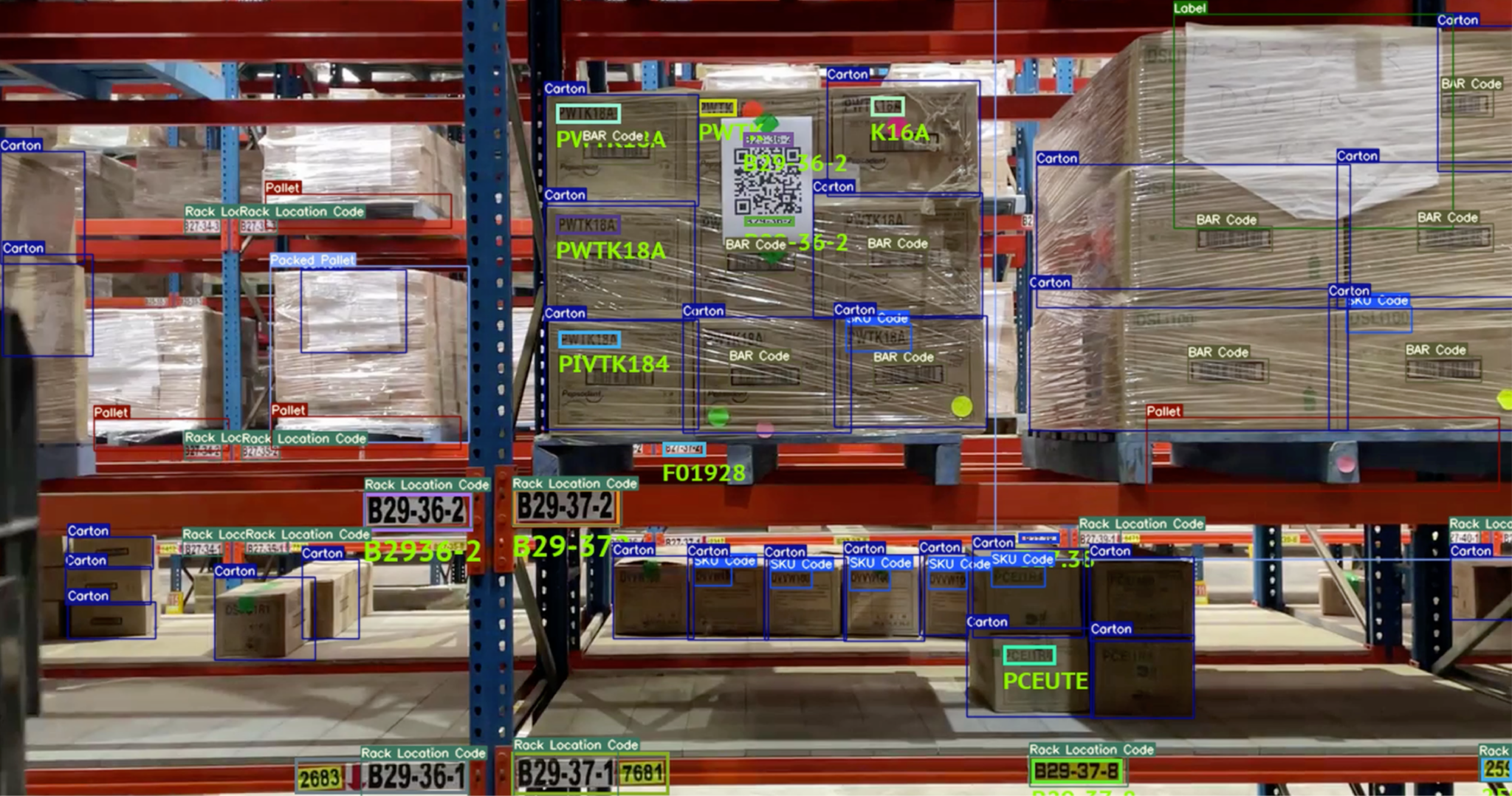
    4. Computer Vision and AI at the Dock Door
    5. RFID, IoT, and Real-Time Location Systems
    6. Digital Twins for Distribution Center Design and Control
    7. Agentic AI and Decision Intelligence in Distribution
    8. Supply Chain Visibility Standards and Event-Based Data
    9. Transportation Technologies and Last-Mile Integration
    10. Cybersecurity and Operational Resilience
    11. Implementation Strategy: Sequencing, Metrics, and Risks
    12. Conclusion
    13. Further Reading
    14. References

    1. What “Distribution” Means in a Technology Context

    Distribution sits between manufacturing and consumption, acting as the physical execution layer of commerce. While manufacturers focus on production efficiency and retailers focus on demand capture, distributors must manage:

    • High-volume physical handling of goods
    • Time-sensitive fulfillment commitments
    • Inventory accuracy across constantly moving assets

    Historically, distribution relied on manual labor, forklifts, paper pick lists, and batch-updated inventory systems. Even early Warehouse Management Systems (WMS) were primarily record-keeping tools rather than real-time control systems. Today, distribution technology is shifting toward continuous sensing, decision-making, and execution, enabled by real-time data streams and automation [1].

    The result is a fundamental redefinition of the distribution center: from a warehouse that stores goods to a system that orchestrates flow.


    2. The Modern Distribution Technology Stack

    Modern distribution operations are built as layered systems rather than isolated tools. These layers increasingly interoperate through APIs, event streams, and shared data models [2].

    Core layers include:

    According to DHL, this convergence of digital intelligence and physical logistics represents a long-term structural trend rather than a short-term efficiency play [3].


    3. Warehouse Automation 2.0: AMRs, AS/RS, and Goods-to-Person

    1. Systems of Record – ERP, WMS, TMS, OMS
    2. Execution & Orchestration – Warehouse Execution Systems (WES), Labor Management Systems (LMS), Yard Management Systems (YMS)
    3. Automation & Robotics – AS/RS, AMRs, AGVs, conveyors, sortation, robotic picking
    4. Sensing & Data Capture – barcode scanners, RFID, cameras, dimensioners, IoT sensors
    5. Intelligence Layer – forecasting, optimization, computer vision, AI decision engines
    6. Interoperability & Standards – EPCIS, APIs, modernized EDI

    Autonomous Mobile Robots (AMRs)

    AMRs represent a major shift from traditional fixed automation. Unlike conveyor-heavy systems, AMRs navigate dynamically and can be added or removed as demand changes. Their primary value is not speed alone, but reduced walking, labor flexibility, and scalability [4].

    Automated Storage and Retrieval Systems (AS/RS)

    Modern AS/RS solutions—such as shuttle systems and cube-based storage—enable goods-to-person workflows that dramatically reduce pick travel time while increasing accuracy. Integration with WES software allows automated systems and human labor to work from the same execution plan.

    Advanced Robotics and Emerging Systems

    Robotic depalletizing, induction, and piece picking are transitioning from experimental pilots to production deployments, especially in high-volume distribution environments. Large operators, including those reported on by the Financial Times, have expanded robotics programs to address labor shortages and throughput volatility [5].


    4. Computer Vision and AI at the Dock Door

    Computer vision addresses one of distribution’s oldest problems: the mismatch between digital records and physical reality.

    Common use cases include:

    • Automated verification of inbound shipments
    • Damage detection during receiving and sortation
    • Dimensioning and cubing for accurate billing
    • Safety monitoring and incident prevention

    By processing images at the edge, modern vision systems provide near-instant feedback without requiring full cloud connectivity [6].

    https://www.dematic.com/content/dam/dematic/images/insights/case-studies/Recieving-1-Werner.jpg

    5. RFID, IoT, and Real-Time Location Systems

    RFID and IoT technologies enable frictionless visibility across the distribution lifecycle.

    https://blogs.nvidia.com/wp-content/uploads/2023/03/KoiTrack-Real-time-Inventory-Visibility.png
    • RFID reduces scan labor and improves cycle count accuracy
    • IoT sensors monitor environmental conditions such as temperature and shock
    • RTLS tracks pallets, equipment, and high-value assets in real time

    Together, these technologies enable event-based inventory visibility, a prerequisite for advanced analytics and AI-driven optimization [7].


    6. Digital Twins for Distribution Center Design and Control

    A digital twin is a continuously updated virtual representation of a physical distribution environment. According to DHL, digital twins allow organizations to simulate operations, predict bottlenecks, and test changes before deploying them physically [8].

    Applications include:

    • Facility layout and automation design
    • Throughput and congestion analysis
    • Peak planning and stress testing
    • Real-time operational monitoring

    7. Agentic AI and Decision Intelligence in Distribution

    AI in distribution is evolving beyond forecasting toward decision intelligence—systems that recommend or initiate actions in real time.

    Gartner identifies agentic AI as a key supply-chain trend, describing systems that continuously sense conditions, evaluate options, and coordinate execution across people and machines [9].

    Examples include:

    • Dynamic slotting and replenishment
    • Automated exception handling
    • Labor and robot workload balancing
    • Inventory prioritization during shortages

    The defining shift is that AI is embedded directly into operational systems rather than operating as a separate analytics function.


    8. Supply Chain Visibility Standards and Event-Based Data

    Distribution networks span multiple organizations, making shared visibility difficult. GS1’s EPCIS standard provides a common event-based language for answering:

    • What happened?
    • Where did it happen?
    • When did it happen?
    • Why did it happen?

    According to GS1, EPCIS enables interoperable, real-time traceability across supply-chain partners [10].


    9. Transportation Technologies and Last-Mile Integration

    Distribution technology increasingly extends beyond the warehouse.

    Key advancements include:

    • AI-driven route optimization
    • Telematics for fleet health and ETA accuracy
    • Electrification and energy-aware routing

    These tools directly impact service reliability, cost-to-serve, and sustainability reporting [11].


    10. Cybersecurity and Operational Resilience

    As distribution becomes cyber-physical, cybersecurity risks increase. Attack surfaces now include robots, IoT sensors, handheld devices, and vendor remote access.

    Resilient distribution systems are designed for graceful degradation—maintaining reduced operations even when digital systems fail [12].


    11. Implementation Strategy: Sequencing, Metrics, and Risks

    Recommended Technology Sequence

    1. Data hygiene and inventory accuracy
    2. Event-based visibility
    3. Execution orchestration (WES/LMS)
    4. Targeted automation
    5. Digital twins and AI optimization
    6. Partner interoperability

    Key Metrics

    • Order cycle time
    • Pick accuracy and travel distance
    • Inventory record accuracy
    • Cost per order
    • Dock-to-stock time

    Common Pitfalls

    • Automating unstable processes
    • Underestimating change management
    • Vendor lock-in through proprietary data models

    12. Conclusion

    New technologies in distribution are not isolated tools—they form a coordinated shift toward event-driven, intelligent execution. Organizations that succeed will focus on data quality, orchestration, and scalability rather than chasing individual automation trends. Distribution’s future belongs to systems that can continuously sense reality, decide intelligently, and act efficiently across complex physical networks.


    13. Further Reading

    Reports & Industry Research

    • DHLLogistics Trend Radar
    • Gartner – Supply Chain Technology Trends
    • McKinsey & Company – Warehouse Automation Insights

    Standards & Technical Resources

    • GS1 – EPCIS and CBV Standards

    Journalism & Case Studies

    • Financial Times – Robotics and logistics reporting

    14. References (APA Style)

    1. Chopra, S., & Meindl, P. (2022). Supply chain management: Strategy, planning, and operation. Pearson.
    2. Christopher, M. (2016). Logistics & supply chain management. Pearson.
    3. DHL. (2024). Logistics Trend Radar 7.0.
    4. McKinsey & Company. (2023). Getting warehouse automation right.
    5. Financial Times. (2025). Robotics expansion in warehouse operations.
    6. Zhang, Z., et al. (2021). Computer vision applications in logistics. IEEE Access.
    7. Karkkainen, M. (2003). Increasing efficiency in supply chains using RFID. International Journal of Retail & Distribution Management.
    8. DHL. (2023). Digital twins in logistics.
    9. Gartner. (2025). Top supply chain technology trends.
    10. GS1. (2024). EPCIS and Core Business Vocabulary.
    11. OECD. (2022). Digital transformation of transport and logistics.
    12. NIST. (2023). Cybersecurity framework for critical infrastructure.
  • The Fundamentals of Algorithms: What Algorithms Are and Why They Matter

    The Fundamentals of Algorithms: What Algorithms Are and Why They Matter

    Written by Alexander Greco

    With the Help of ChatGPT

    Introduction

    Algorithms are the hidden infrastructure of the modern world. From search engines and navigation systems to financial markets, medical diagnostics, and artificial intelligence, algorithms determine how information is processed, decisions are made, and outcomes are produced. Although often associated exclusively with computer programming, algorithms are a much older and broader concept—one rooted in mathematics, logic, and systematic reasoning.

    At their most fundamental level, algorithms define how problems are solved, independent of the machines that execute them. They are the bridge between abstract reasoning and practical computation, allowing ideas to be transformed into repeatable, reliable processes. Understanding algorithms is therefore central not only to computer science, but to engineering, data science, economics, and increasingly, everyday digital literacy.

    This article explores the foundations of algorithms: what they are, where they come from, how they are classified, how they are evaluated, and why they matter in both technical and social contexts.


    1. What Is an Algorithm?

    An algorithm is a finite, well-defined sequence of steps designed to solve a specific problem or perform a computation [1]. The defining characteristic of an algorithm is not the technology used to implement it, but the logical structure of the procedure itself.

    To qualify as an algorithm, a procedure must satisfy several core properties:

    1. Finiteness – The algorithm must terminate after a finite number of steps [2].
    2. Definiteness – Each instruction must be precise and unambiguous.
    3. Input – The algorithm may accept zero or more inputs.
    4. Output – It must produce at least one output.
    5. Effectiveness – Every step must be basic enough to be carried out exactly as described.

    These constraints distinguish algorithms from vague instructions or heuristic guidelines. For example, “cook until done” is not algorithmic, while “bake at 180°C for 40 minutes” is algorithmic because it is explicit and repeatable.


    2. Algorithms Before Computers

    Algorithms predate modern computers by thousands of years. Early civilizations developed systematic procedures for arithmetic, geometry, astronomy, and engineering long before electronic machines existed.

    One of the most famous early examples is the Euclidean algorithm, attributed to Euclid, which computes the greatest common divisor of two integers [3]. Its enduring relevance highlights a key feature of good algorithms: once discovered, they can remain optimal across centuries of technological change.

    Another major historical influence is Muhammad ibn Musa al-Khwarizmi, whose systematic methods for arithmetic and algebra shaped mathematical practice throughout the Islamic Golden Age and later Europe [4]. The term algorithm itself derives from the Latinized form of his name, Algoritmi, reflecting his influence on procedural calculation.

    These early algorithms were executed by humans, not machines, but they already embodied modern principles: abstraction, generality, and formal reasoning.


    3. Algorithms and the Birth of Computer Science

    The emergence of programmable machines in the 20th century transformed algorithms from practical tools into objects of formal study. The question shifted from how to compute to what can be computed at all.

    A foundational contribution came from Alan Turing, whose theoretical model—the Turing machine—defined the limits of algorithmic computation [5]. Turing’s work demonstrated that algorithms are independent of physical machines and instead belong to an abstract domain governed by logic and mathematics.

    Later scholars such as Edsger Dijkstra emphasized correctness, clarity, and provable properties in algorithm design [6], while Donald Knuth systematized algorithm analysis and documentation, treating algorithms as mathematical artifacts worthy of rigorous study [7].

    This intellectual framework established algorithms as the core subject of computer science, distinct from hardware engineering or software implementation.


    4. Algorithmic Thinking

    Algorithmic thinking is the practice of solving problems by expressing solutions as clear, ordered steps that can be executed reliably. It involves several cognitive skills:

    • Decomposition – Breaking complex problems into simpler subproblems
    • Pattern recognition – Identifying recurring structures
    • Abstraction – Ignoring irrelevant details while focusing on essentials
    • Logical sequencing – Ensuring steps follow consistently

    These skills are not limited to programming. Decision-making processes in logistics, finance, medicine, and management often rely on algorithmic reasoning, even when not formalized as code [8].

    As automation expands into more domains, algorithmic thinking is increasingly regarded as a fundamental literacy skill alongside reading and mathematics.


    5. Types of Algorithms

    Algorithms can be classified according to their structure, purpose, or domain of application.

    5.1 Sorting Algorithms

    Sorting algorithms arrange elements into a specific order, such as ascending or descending.

    Common examples include:

    • Bubble Sort
    • Merge Sort
    • Quick Sort

    Although all achieve the same goal, they differ dramatically in efficiency and scalability, illustrating why algorithm choice matters [9].


    5.2 Search Algorithms

    Search algorithms locate specific elements within a dataset.

    Examples include:

    • Linear search
    • Binary search

    Binary search is significantly faster but requires sorted input, demonstrating how algorithm performance depends on assumptions and constraints [10].


    5.3 Graph Algorithms

    Graph algorithms operate on networks of nodes and edges, representing relationships such as roads, communication links, or social connections.

    Applications include:

    • Navigation and routing
    • Network optimization
    • Recommendation systems

    5.4 Recursive Algorithms

    Recursive algorithms solve problems by applying the same procedure to smaller instances of the original problem. While elegant and mathematically expressive, recursion must be carefully controlled to avoid infinite execution or excessive resource use [11].


    6. Algorithm Efficiency and Complexity

    Not all correct algorithms are equally useful. Efficiency determines whether a solution is practical at scale.

    Algorithm analysis focuses on:

    • Time complexity – How execution time grows with input size
    • Space complexity – How memory usage grows with input size

    Big-O notation provides a standardized way to describe these growth rates abstractly [12]. This allows developers and researchers to compare algorithms independent of hardware or implementation language.


    7. Correctness, Reliability, and Robustness

    Algorithm correctness requires that an algorithm produces the correct output for all valid inputs, including edge cases. Formal verification methods and proofs of correctness are especially important in safety-critical systems such as aviation, medical devices, and financial infrastructure [13].

    A robust algorithm also handles unexpected or imperfect inputs gracefully, rather than failing catastrophically.


    8. Algorithms vs Heuristics

    Algorithms guarantee correctness under defined conditions, whereas heuristics trade certainty for speed or simplicity.

    Many real-world problems—such as route optimization, scheduling, or pattern recognition—are computationally infeasible to solve optimally, leading systems to rely on heuristic or approximate algorithms [14]. Modern artificial intelligence often blends deterministic algorithms with probabilistic heuristics.


    9. Algorithms in Everyday Life

    https://storage.googleapis.com/algodailyrandomassets/curriculum/algorithm_tutorial/realworldexample2.png

    Algorithms shape daily experiences in subtle but profound ways:

    • Search engines rank information
    • Social media feeds prioritize content
    • Streaming platforms generate recommendations
    • Compression algorithms reduce storage and bandwidth needs
    https://www.researchgate.net/publication/220827211/figure/fig2/AS%3A394007092973580%401470950019808/Structure-of-a-recommender-system.png

    These systems influence attention, access to information, and even social behavior, raising important ethical and societal questions [15].


    10. Why Algorithms Matter

    Algorithms determine:

    • Efficiency – How well resources are used
    • Scalability – Whether systems function at global scale
    • Fairness – How decisions are weighted and applied
    • Transparency – Whether outcomes can be explained

    As algorithmic systems increasingly mediate economic and social life, understanding their foundations is essential for responsible design and informed public discourse.


    Conclusion

    Algorithms are the logical backbone of computation. Rooted in ancient mathematics and refined through modern computer science, they provide the structured reasoning that enables complex systems to function reliably and at scale. Understanding algorithms equips individuals not only to build software, but to reason critically about the automated systems that increasingly shape modern society.


    References

    1. Cormen, T. H., et al. Introduction to Algorithms. MIT Press.
    2. Sipser, M. Introduction to the Theory of Computation. Cengage.
    3. Euclid. Elements.
    4. Berggren, J. L. Episodes in the Mathematics of Medieval Islam.
    5. Turing, A. M. “On Computable Numbers.” Proceedings of the London Mathematical Society.
    6. Dijkstra, E. W. A Discipline of Programming.
    7. Knuth, D. E. The Art of Computer Programming.
    8. Wing, J. M. “Computational Thinking.” Communications of the ACM.
    9. Sedgewick, R., Wayne, K. Algorithms.
    10. Kleinberg, J., Tardos, É. Algorithm Design.
    11. Skiena, S. The Algorithm Design Manual.
    12. Aho, A., Hopcroft, J., Ullman, J. Data Structures and Algorithms.
    13. Hoare, C. A. R. “An Axiomatic Basis for Computer Programming.”
    14. Russell, S., Norvig, P. Artificial Intelligence: A Modern Approach.
    15. O’Neil, C. Weapons of Math Destruction.

    Further Reading & Learning Resources

    Books

    • Knuth – The Art of Computer Programming
    • Skiena – The Algorithm Design Manual

    Online Courses

    • MIT OpenCourseWare – Algorithms
    • Coursera / Stanford Algorithms

    Interactive Tools

    • VisuAlgo
    • Algorithm Visualizer

    Academic Journals

    • Communications of the ACM
    • Journal of Algorithms
  • The Basics of Interactive Content Creation

    The Basics of Interactive Content Creation

    Written by Alexander Christian Greco

    With the Help of ChatGPT

    A foundational guide to participatory media, tools, design principles, and pathways for creators


    Abstract

    Interactive content creation represents a fundamental shift in how information, stories, and experiences are designed and consumed in the digital age. Unlike static or linear media, interactive content invites audiences to actively participate—through choice, manipulation, exploration, and feedback—transforming users from passive observers into engaged contributors. This article provides a foundational overview of interactive content creation, covering its conceptual origins, core formats, design principles, technical underpinnings, tools, industry applications, required skills, and common challenges. The goal is to establish a clear baseline understanding for beginners while situating interactive content within broader trends in media, education, business, and digital culture.


    Disclosure

    This article was generated with the assistance of AI (ChatGPT) as a drafting and structuring tool and subsequently curated for educational and informational purposes. Readers are encouraged to verify sources independently and explore the referenced materials for deeper study.


    1. Introduction: What Is Interactive Content?

    Interactive content refers to media experiences that require active participation from the audience, rather than passive consumption. Unlike traditional formats—such as static articles, linear videos, or broadcast media—interactive content responds dynamically to user input, adapts to decisions, and often produces different outcomes based on engagement patterns [1].

    At its core, interactive content transforms the audience from viewer to participant. This shift reflects broader changes in digital culture, including the rise of participatory media, human–computer interaction research, and user-centered design methodologies [2]. Modern audiences increasingly expect to click, choose, explore, customize, and co-create rather than simply watch or read.

    Interactive content now appears across education, marketing, entertainment, journalism, gaming, training, healthcare, and digital art. Examples include quizzes, simulations, interactive videos, decision-based narratives, virtual tours, games, live polls, data visualizations, and immersive virtual or augmented reality experiences [3].

    Understanding the basics of interactive content creation is less about mastering a single tool and more about learning how systems respond to people—how design, logic, technology, and psychology intersect to create meaningful engagement.


    2. Why Interactive Content Matters

    https://www.i3-technologies.com/media/yqqkblqy/21090301rep0017-1.jpg

    2.1 Engagement and Retention

    Decades of educational and cognitive research suggest that people retain more information when they actively engage with material, rather than passively consuming it [4]. Interactive content leverages this principle by requiring users to make decisions, test ideas, and respond to feedback.

    Clicking, choosing, experimenting, and receiving immediate responses strengthens memory encoding and conceptual understanding. As a result, interactive formats are widely used in digital learning platforms, corporate training environments, and instructional simulations.

    2.2 Agency and Personalization

    Interactive content provides users with agency, defined as the perception that one’s actions meaningfully influence outcomes [5]. Even simple forms of choice—such as selecting a narrative path or adjusting parameters in a model—can significantly increase emotional investment and motivation.

    Personalization, often driven by user inputs or behavioral data, further enhances engagement by tailoring experiences to individual needs, preferences, or skill levels [6].

    2.3 Feedback Loops

    Unlike static media, interactive systems are built around feedback loops, where user actions generate responses that inform subsequent decisions. Feedback may be visual, auditory, textual, or systemic and is central to learning, gaming, and skill acquisition [7].

    2.4 Data and Adaptation

    From a creator or organizational perspective, interactive content generates behavioral data, offering insight into how users navigate information, where they struggle, and what captures attention. These insights enable iterative improvement and adaptive system design [8].


    3. Core Types of Interactive Content

    Interactive content encompasses a broad spectrum of formats, each suited to different goals and audiences.

    3.1 Interactive Text and Articles

    These include:

    • Click-to-reveal explanations
    • Branching narratives and hypertext fiction
    • Embedded decision points or reflective prompts

    Interactive text formats are common in education, digital journalism, and narrative experimentation, where reader choice influences structure or emphasis [9].

    3.2 Quizzes, Polls, and Assessments

    Widely used in marketing, education, and social media, quizzes and polls:

    • Encourage rapid engagement
    • Provide immediate feedback
    • Enable segmentation or personalization

    Their accessibility and low technical barrier make them ideal entry points for new creators [10].

    3.3 Interactive Video

    Interactive video allows viewers to:

    • Choose story branches
    • Click on embedded elements
    • Control pacing or perspective

    This format merges cinematic storytelling with decision-based logic, often used in entertainment, advertising, and training [11].

    3.4 Simulations and Models

    Simulations enable users to manipulate variables and observe outcomes, supporting systems thinking and experiential learning. Common applications include scientific modeling, economic forecasting, medical training, and environmental education [12].

    3.5 Games and Gamified Experiences

    Games represent one of the most sophisticated forms of interactive content, integrating:

    • Rules and mechanics
    • Goals and challenges
    • Feedback and progression systems

    Gamification applies these elements to non-game contexts such as education, productivity, and marketing [13].

    3.6 Immersive Experiences (VR/AR)

    Virtual and augmented reality introduce spatial interaction, where users move, look, and act within digital environments. These experiences are especially powerful for training, empathy-building, and immersive storytelling [14].


    4. Foundational Principles of Interactive Design

    https://www.fico.com/fico-xpress-optimization/docs/dms2018-01/insight_web/GUID-805AE6E8-667B-445A-B967-F92B6585676D-low.png

    4.1 Clear Interaction Rules

    Users must quickly understand:

    • What actions are possible
    • How to perform them
    • What outcomes to expect

    Ambiguity in interaction design reduces trust and engagement [15].

    4.2 Feedback and Responsiveness

    Every action should produce a perceptible response, reinforcing the sense of cause and effect. Effective feedback sustains immersion and guides learning [16].

    4.3 Progressive Complexity

    Successful interactive experiences introduce complexity gradually, aligning with cognitive load theory and scaffolding approaches in education [17].

    4.4 Meaningful Choice

    Choices should influence outcomes in visible or consequential ways. Superficial or inconsequential decisions weaken perceived agency [18].

    4.5 Accessibility and Inclusion

    Inclusive interactive design considers:

    • Assistive technologies
    • Input alternatives
    • Visual and cognitive accessibility

    Accessible design improves usability for all users, not only those with disabilities [19].


    5. The Technical Foundations (High-Level Overview)

    https://www.scnsoft.com/blog-pictures/ui-ux/interactive-design.png

    5.1 Logic and State

    Interactive systems rely on conditional logic and state management:

    • Variables store user choices
    • States represent progression
    • Rules determine outcomes

    These concepts underpin both simple web interactions and complex simulations [20].

    5.2 Front-End Interaction

    On the web, interaction is commonly implemented through:

    • HTML (structure)
    • CSS (presentation and transitions)
    • JavaScript (logic and behavior)

    Together, these technologies define how users interact with digital content [21].

    https://northamptonopenmedia.org/wp-content/uploads/2017/03/Xenko_Editor.jpg

    5.3 Engines and Platforms

    More complex interactive systems often use engines such as Unity or Unreal Engine, which abstract low-level technical details and support rapid development of interactive environments [22].

    5.4 Data and Persistence

    Many interactive experiences store progress, preferences, or analytics using local storage, databases, or cloud services, enabling continuity and personalization [23].


    6. Tools Commonly Used in Interactive Content Creation

    https://images.ctfassets.net/lzny33ho1g45/7LKlffAtwg6fffVyIw58pa/43f072b08dd40152693dab7caf6846ee/image3.png

    Tools vary widely, but generally fall into:

    • No-code/low-code platforms
    • Web frameworks
    • Game engines
    • Prototyping and UX design tools

    Tool selection depends on goals, scale, and technical expertise [24].


    7. Interactive Content Across Industries

    https://dashthis.com/media/4150/data-visualization-dashboard.png

    Interactive content is now embedded across sectors:

    • Education: adaptive learning and simulations
    • Marketing: personalized campaigns and engagement tools
    • Journalism: interactive data storytelling
    • Entertainment: games and immersive narratives

    Its versatility makes it a foundational digital skill [25].


    8. Skills Needed to Get Started

    https://figures.semanticscholar.org/8dcfa7a52be773dca0861fd0733cf1b3882d90d7/4-Figure1-1.png

    Key skills include:

    • Design thinking
    • Logical reasoning
    • Storytelling
    • Technical literacy
    • Testing and iteration

    Interactive content creation is inherently interdisciplinary and collaborative [26].


    9. Common Challenges and Pitfalls

    Common issues include:

    • Over-complexity
    • Unclear goals
    • Weak feedback
    • Technical overreach

    Successful projects emphasize simplicity, testing, and iteration [27].


    10. Getting Started: A Practical Path Forward

    https://assets.visme.co/templates/blockinfographics/fullsize/i_Interactive-Small-Business-Project-Timeline_full.jpg

    4

    A recommended beginner pathway:

    1. Start small
    2. Focus on one interaction
    3. Prototype early
    4. Test with users
    5. Iterate continuously

    Conclusion

    Interactive content creation represents a shift from linear communication to dialogue-driven, system-based experiences. As digital environments become more participatory, understanding interactivity is increasingly essential for creators across disciplines. Mastering the basics opens doors to education, design, storytelling, technology, and future-facing creative industries.


    References

    1. Manovich, L. (2001). The Language of New Media. MIT Press.
    2. Norman, D. (2013). The Design of Everyday Things. Basic Books.
    3. Murray, J. (1997). Hamlet on the Holodeck. MIT Press.
    4. Bransford, J. et al. (2000). How People Learn. National Academies Press.
    5. Bandura, A. (1982). Self-efficacy mechanism in human agency. American Psychologist.
    6. Shneiderman, B. (2022). Human-Centered AI. Oxford University Press.
    7. Gee, J. P. (2003). What Video Games Have to Teach Us About Learning. Palgrave.
    8. Nielsen, J. (1993). Usability Engineering. Morgan Kaufmann.
    9. Landow, G. (2006). Hypertext 3.0. Johns Hopkins University Press.
    10. Kahoot! Research Library.
    11. Netflix Interactive Media Studies.
    12. Sterman, J. (2000). Business Dynamics. McGraw-Hill.
    13. Deterding, S. et al. (2011). Gamification research.
    14. Slater, M. (2018). Immersion and presence in VR.
    15. ISO 9241 Human–Computer Interaction Standards.
    16. Skinner, B. F. (1958). Teaching machines.
    17. Sweller, J. (1988). Cognitive load theory.
    18. Ryan, R. & Deci, E. (2000). Intrinsic motivation.
    19. W3C Web Content Accessibility Guidelines (WCAG).
    20. Russell, S. & Norvig, P. (2021). Artificial Intelligence.
    21. Mozilla Developer Network (MDN).
    22. Unity & Unreal official documentation.
    23. O’Reilly Web Architecture Guides.
    24. IDEO Design Thinking Toolkit.
    25. OECD Digital Education Reports.
    26. Salen, K. & Zimmerman, E. (2004). Rules of Play.
    27. Krug, S. (2014). Don’t Make Me Think.

    Further Reading & Exploration

    Books

    • The Art of Game Design – Jesse Schell
    • Interactive Storytelling – Chris Crawford

    Online Resources

    • Mozilla MDN Web Docs
    • Unity Learn
    • Unreal Online Learning

    Journals & Media

    • Journal of Interactive Media in Education
    • GDC (Game Developers Conference) talks
    • UX Collective (Medium)
  • Gardening Skills Fundamentals

    Gardening Skills Fundamentals

    Written by Alexander Christian Greco

    With the Help of ChatGPT

    How to Start Gardening and Small-Scale Farming: Planting, Growing, and Harvesting

    https://www.marthastewart.com/thmb/kueHecJM0UT-5Z-vwF7ErbtxSac%3D/1500x0/filters%3Ano_upscale%28%29%3Amax_bytes%28150000%29%3Astrip_icc%28%29/ms-vegetable-garden-ideas-9d529572761740f1b8b0234ac9bc2207.jpg

    Introduction

    Gardening represents one of humanity’s oldest and most enduring relationships with the natural world. Long before industrial agriculture, food production depended on small-scale cultivation, seasonal knowledge, and intimate familiarity with soil and climate. Today, gardening remains both a practical skill and an educational gateway into broader agricultural systems, sustainability, and ecological literacy.

    https://joegardener.com/wp-content/uploads/2018/03/Featured-Image.jpg

    For beginners, gardening can appear deceptively simple—plant seeds, water them, and wait. In practice, successful gardening depends on understanding biological cycles, soil systems, plant needs, and environmental variables (Hartmann et al., 2018). Small-scale gardening and farming emphasize knowledge density rather than land area, making skill development far more important than physical scale (FAO, 2022).

    This article develops the foundational gardening skills required to begin gardening or small-scale farming. It focuses on the three central phases of plant production—planting, growing, and harvesting—beginning with a high-level systems overview and progressing toward practical, small-scale applications.

    https://kellogggarden.com/wp-content/uploads/2020/03/Community-Vegetable-Garden.jpg

    Part I: The Gardening Lifecycle – A Systems Overview

    https://media.geeksforgeeks.org/wp-content/uploads/20240328111848/Diagram-of-Seed-Germination.png

    All gardening systems, regardless of scale or technology, follow a predictable biological lifecycle. Understanding this lifecycle allows gardeners to anticipate needs, prevent problems, and optimize yield rather than reacting to issues after they occur (Raven, Evert, & Eichhorn, 2013).

    The Five Core Phases

    1. Preparation – soil conditioning, planning, and plant selection
    2. Planting – introducing seeds or transplants into the soil
    3. Growth and Maintenance – supporting vegetative and reproductive development
    4. Harvesting – removing crops at optimal maturity
    5. Soil Recovery – restoring fertility and structure for future cycles

    Small-scale gardening allows individuals to observe these phases directly and repeatedly, accelerating learning compared to industrial-scale systems where processes are abstracted and mechanized (Pretty, 2018).


    Part II: Core Gardening Skills — The Foundations

    https://cdn.shopify.com/s/files/1/2954/2248/files/Interpreting-Your-Results_1200x.png?v=1758286320

    Soil: The Primary Medium of Life

    Soil is a living ecosystem, not an inert substrate. Productive soil contains mineral particles, organic matter, water, air, and diverse microbial communities that regulate nutrient availability and root health (Brady & Weil, 2017).

    Common Soil Types

    • Sandy soils drain quickly but lose nutrients rapidly
    • Clay soils retain nutrients but restrict drainage and root growth
    • Loamy soils balance drainage, fertility, and structure

    Most small-scale gardeners improve existing soil rather than replacing it entirely, using compost, mulching, and reduced tillage to build fertility over time (Montgomery, 2017).

    Composting as a Soil Skill

    Composting recycles organic waste into biologically active fertilizer. Backyard compost systems convert kitchen scraps, leaves, and plant residues into humus, improving soil structure and nutrient cycling (EPA, 2023).

    Benefits include:

    • Increased water retention
    • Improved microbial diversity
    • Reduced reliance on synthetic fertilizers

    Sunlight and Microclimates

    Photosynthesis drives all plant growth. Most vegetables require 6–8 hours of direct sunlight daily, though leafy greens tolerate partial shade (Brickell et al., 2016).

    Small-scale gardeners benefit from identifying microclimates—areas where walls, slopes, or trees alter temperature, wind, or sunlight exposure—allowing better crop placement.

    Water Management Principles

    Water stress is a leading cause of poor yields. Effective watering emphasizes:

    • Deep, infrequent watering to promote root depth
    • Early-day watering to reduce fungal disease
    • Adjustments based on soil type and weather

    Understanding soil moisture is more important than rigid schedules (Horticultural Society, 2020).


    Part III: Planting Skills — Translating Plans into Growth

    https://www.thespruce.com/thmb/R54l2XLs0d5xagi3WP_mYNMgwK4%3D/4500x0/filters%3Ano_upscale%28%29%3Amax_bytes%28150000%29%3Astrip_icc%28%29/how-to-direct-sow-garden-seeds-2539874-hero-32074607f4f94af9a5260980f98280c6.jpg

    Crop Selection for Beginners

    Successful early gardens prioritize crops that are:

    • Fast-growing (radishes, lettuce)
    • Hardy (beans, peas, potatoes)
    • High-yield relative to space (zucchini, tomatoes)
    https://cdn.shopify.com/s/files/1/0089/1562/files/SeedsNow_Organic_Gardening_Ebook-2_775998fc-c5b3-4cd1-804c-36388dabbe1c.jpg?v=1549589691

    Local climate suitability matters more than novelty or popularity (FAO, 2022).

    Seeds vs. Transplants

    Seeds offer affordability and genetic diversity but require patience and proper conditions.
    Transplants reduce early-stage risk and shorten time to harvest but increase cost.

    Many small-scale gardeners use a hybrid approach to balance reliability and learning.

    Planting Depth and Spacing

    Incorrect spacing is a frequent beginner error. Overcrowding increases disease pressure and reduces yields by forcing plants to compete for light, water, and nutrients (Hartmann et al., 2018).

    General guidelines:

    • Plant seeds 2–3× their size in depth
    • Follow spacing recommendations for mature plant size
    https://www.botanicalinterests.com/community/blog/wp-content/uploads/2025/03/A-shot-of-a-person-inspecting-nursery-pots.jpg

    Seasonal Timing

    Understanding frost dates and temperature thresholds is essential. Crops fall broadly into:

    • Cool-season crops (spinach, peas, brassicas)
    • Warm-season crops (tomatoes, peppers, squash)

    Planting too early or too late can severely limit success.


    Part IV: Growing Skills — Maintaining Healthy Systems

    https://cdn.shopify.com/s/files/1/0603/4892/4151/files/2012-07-07-Life-Sty-Tuscaloosa_016-Edit-1.jpg

    Plant Nutrition Fundamentals

    Plants require macronutrients—nitrogen, phosphorus, potassium—and micronutrients in smaller quantities. Small-scale gardeners often meet these needs through:

    • Compost
    • Manure
    • Organic fertilizers
    • Crop rotation

    Excess fertilization can damage soil biology and plant health, making restraint a key skill (Brady & Weil, 2017).

    Pest and Disease Management

    Gardens are ecosystems, not sterile environments. Pest presence does not automatically require intervention. Effective strategies include:

    • Routine inspection
    • Encouraging beneficial insects
    • Crop diversity
    • Physical barriers
    https://cdn.shopify.com/s/files/1/0603/4892/4151/files/tomato-diagram-2_crop_web.jpg

    Early detection prevents escalation and reduces chemical dependency (Pretty, 2018).

    Pruning and Structural Support

    Certain crops benefit from training and pruning:

    • Tomatoes require staking or caging
    • Vines benefit from trellising
    • Removing diseased foliage improves airflow

    These techniques improve yield quality and reduce disease pressure.


    Part V: Harvesting Skills — Timing and Technique

    https://www.botanicalinterests.com/community/blog/wp-content/uploads/2024/08/tomatoes-late-season-harvesting-and-storage-techniques.jpg

    Recognizing Harvest Readiness

    Harvest timing affects flavor, nutrition, and productivity. Indicators vary by crop:

    • Leafy greens are harvested young
    • Fruits should reach full color and firmness
    • Roots are harvested based on size

    Regular harvesting often stimulates continued production.

    Harvesting Methods

    Use clean tools and gentle handling. Improper harvesting can damage plants and reduce future yields, particularly in cut-and-come-again crops like lettuce and herbs.

    Post-Harvest Handling

    Even small-scale gardeners benefit from basic post-harvest practices:

    • Washing produce correctly
    • Cooling or refrigerating when appropriate
    • Preserving excess through freezing or drying

    These practices extend food usability and reduce waste.


    Part VI: Small-Scale Gardening and Farming Considerations

    https://lowimpactorg.onyx-sites.io/wp-content/uploads/urban4.jpg

    Space Optimization

    Small-scale systems emphasize efficiency:

    • Raised beds improve soil control
    • Vertical gardening maximizes area
    • Containers enable urban participation

    Intensive planning compensates for limited land availability.

    https://lovelygreens.com/wp-content/uploads/2018/10/design-garden-layout.jpg

    Essential Tools

    Basic tools are sufficient:

    • Hand trowel
    • Pruners
    • Hoe
    • Watering system

    Skill and observation outweigh equipment quality at this scale.

    Learning Through Observation

    Small-scale gardeners gain a unique advantage: daily interaction with plants. Observing changes in leaf color, growth rate, and soil moisture develops intuition that formal instruction alone cannot provide (Montgomery, 2017).


    Conclusion

    Gardening is not a shortcut to food production—it is a learned skill grounded in biology, ecology, and seasonal awareness. Small-scale gardening rewards patience, observation, and incremental improvement. By mastering soil health, planting fundamentals, growth maintenance, and harvesting techniques, beginners build a resilient foundation that can expand into homesteading, market gardening, or lifelong self-sufficiency.

    Gardening ultimately teaches systems thinking: how inputs, timing, and environment interact. These lessons extend well beyond the garden, reinforcing sustainability, responsibility, and long-term planning.


    References

    Brady, N. C., & Weil, R. R. (2017). The nature and properties of soils (15th ed.). Pearson.

    Brickell, C., et al. (2016). RHS A–Z encyclopedia of garden plants. Dorling Kindersley.

    EPA. (2023). Composting at home. United States Environmental Protection Agency.

    FAO. (2022). Small-scale agriculture and food security. Food and Agriculture Organization of the United Nations.

    Hartmann, H. T., Kester, D. E., Davies, F. T., & Geneve, R. L. (2018). Plant propagation: Principles and practices. Pearson.

    Montgomery, D. R. (2017). Growing a revolution: Bringing our soil back to life. W. W. Norton & Company.

    Pretty, J. (2018). Sustainable intensification of agriculture. Routledge.

    Raven, P. H., Evert, R. F., & Eichhorn, S. E. (2013). Biology of plants (8th ed.). W.H. Freeman.


    Further Reading

    • Royal Horticultural Society – Beginner Gardening Guides
    • FAO Home Gardening Manuals
    • USDA Cooperative Extension Gardening Resources
    • The Vegetable Gardener’s Bible by Edward C. Smith
    • Gaia’s Garden by Toby Hemenway
  • Contemporary Technology Utilised for Small Businesses Across the Four Economic Sectors

    Contemporary Technology Utilised for Small Businesses Across the Four Economic Sectors

    Written by Alexander Christian Greco

    With the Help of ChatGPT

    Abstract

    Contemporary technology is fundamentally reshaping how small businesses operate across every sector of the economy. Unlike previous technological revolutions that disproportionately benefited large enterprises, today’s tools—cloud software, mobile platforms, embedded artificial intelligence (AI), low-cost sensors, and digital payment systems—are increasingly designed with small business constraints in mind. This article examines how modern technology is being applied by small businesses across the four-sector economic model: Primary (raw material extraction), Secondary (manufacturing and construction), Tertiary (services), and Quaternary (knowledge and information). By grounding the discussion in real operational use cases, this article demonstrates how technology is shifting small businesses from reactive, labor-intensive models toward data-informed, scalable, and resilient operations.


    Disclosure

    This article was drafted with the assistance of an AI language model (ChatGPT). It is intended for educational and informational purposes only. Readers should verify regulatory, financial, technical, and legal considerations with qualified professionals before implementing any technologies discussed.


    Table of Contents

    1. Introduction: What Contemporary Small-Business Technology Means Today
    2. Cross-Sector Technological Shifts Affecting All Small Businesses
    3. Primary Sector: Agriculture, Mining, and Fishing
    4. Secondary Sector: Manufacturing and Construction
    5. Tertiary Sector: Retail, Healthcare, Hospitality, Finance, and Transportation
    6. Quaternary Sector: Knowledge, IT, Education, and R&D
    7. Strategic Technology Adoption for Small Business Owners
    8. Risks, Constraints, and Governance Considerations
    9. Conclusion: The Small-Business Technological Advantage
    10. Further Reading
    11. References

    1. Introduction: What Contemporary Small-Business Technology Means Today

    In the mid-20th century, advanced business technology was largely inaccessible to small firms due to capital costs, infrastructure requirements, and specialist labor needs. In contrast, contemporary technology is defined by low upfront cost, subscription pricing, modular design, and cloud delivery, allowing even micro-businesses to deploy tools once reserved for enterprises.

    Today’s small-business technology ecosystem is characterized by four core attributes:

    1. Cloud-first software (Software-as-a-Service) that eliminates on-premise infrastructure [1].
    2. Mobile-centric workflows, enabling real-time operations in the field rather than behind a desk [2].
    3. Embedded artificial intelligence, increasingly integrated into accounting, marketing, CRM, and analytics platforms [1][3].
    4. Physical-to-digital data capture, including sensors, scanners, GPS, cameras, and Internet-of-Things (IoT) devices [4].

    The result is a fundamental shift: small business owners are no longer forced to choose between affordability and capability. Instead, they are tasked with choosing which capabilities matter most to their specific bottlenecks.


    2. Cross-Sector Technological Shifts Affecting All Small Businesses

    2.1 AI as an Embedded Operational Assistant

    Rather than existing as standalone tools, AI systems are now embedded into everyday business software—drafting emails, categorizing transactions, generating marketing content, summarizing meetings, and identifying trends in operational data [1][3]. For small businesses, this translates into time compression, allowing owners to reclaim hours previously lost to administrative overhead.

    Importantly, AI adoption in small businesses is primarily augmentative, not autonomous. Most firms deploy AI in a “human-in-the-loop” configuration, where outputs are reviewed before execution [5].

    2.2 Cybersecurity as a Baseline Cost

    As small businesses digitize operations, their attack surface expands. Reports from the World Economic Forum and Google Cloud consistently show that small organizations face disproportionate cyber risk due to limited security staffing and training [6][7]. Consequently, cybersecurity is no longer optional or “insurance-like”; it is an operational prerequisite.

    2.3 Convergence of Payments, Commerce, and Operations

    Modern point-of-sale systems increasingly function as business operating systems, integrating payments, inventory, customer management, analytics, and online commerce [8][9]. This convergence reduces tool fragmentation and simplifies management for small teams.


    3. Primary Sector: Agriculture, Mining, and Fishing

    https://media.licdn.com/dms/image/v2/D5612AQG6Rb_DhL5cAg/article-cover_image-shrink_600_2000/article-cover_image-shrink_600_2000/0/1708009028937?e=2147483647&t=B-QJ2KEmKH-2khU0hSP2D-eRNrkj5FtMrQLmc0-EkHM&v=beta

    3.1 Agriculture: Precision Tools for Small Farms

    Precision agriculture—once the domain of industrial farms—is increasingly accessible to small operators due to declining sensor costs and cloud analytics [10]. Tools such as soil moisture sensors, GPS guidance systems, and drone imaging allow farmers to apply inputs (water, fertilizer, labor) with far greater accuracy [11].

    Government and academic reviews show that precision agriculture can improve yield consistency while reducing environmental impact, particularly when applied incrementally rather than as a full-system overhaul [12].

    3.2 Mining and Resource Extraction

    Small mining contractors and exploration firms increasingly rely on fleet telematics, digital safety compliance platforms, and mobile inspection tools. These technologies enhance regulatory compliance, reduce downtime, and improve worker safety without requiring large IT departments [13].

    3.3 Fishing and Aquaculture

    Digital catch reporting, temperature monitoring, and traceability systems enable small fishing businesses to meet regulatory requirements while differentiating products through verified quality and provenance [14]. Additionally, direct-to-consumer e-commerce platforms allow fishers to stabilize income and reduce dependence on intermediaries.


    4. Secondary Sector: Manufacturing and Construction

    https://www.insight.com/content/insight-web/en_US/content-and-resources/2023/the-factory-floor-goes-digital/jcr%3Acontent/root/responsivegrid_919781243/column_layout_458368/-column-1/insight_image_1799013934.img.jpg/1700593244463.jpg

    4.1 Small-Scale Manufacturing

    Small manufacturers increasingly adopt lightweight, modular ERP-like systems—combining inventory management, purchasing, scheduling, and quality tracking without enterprise complexity [15]. Tablets, barcode scanners, and cloud dashboards provide real-time visibility into shop-floor operations.

    AI applications in this sector are typically focused on documentation, cost estimation, and process analysis rather than autonomous control [3][5].

    https://insideunmannedsystems.com/wp-content/uploads/2021/08/3-_Drone_Mapping_-_Windover_Construction_at_FMUV_Project.jpg

    4.2 Construction and the Rise of Digital Jobsites

    Construction technology adoption has accelerated due to rising material costs, labor shortages, and litigation risk. Tools such as reality capture, digital daily logs, and cloud-based scheduling systems reduce miscommunication and provide legally defensible documentation [16][17].

    Vendors like Matterport and DroneDeploy highlight how visual documentation improves coordination even for small contractors [16][17].


    5. Tertiary Sector: Service Industries

    https://cdn.prod.website-files.com/5ebc26ff448e162310d26a65/667e41321a5f44a25b94101a_Retail%20PoS%20features.jpeg

    5.1 Retail

    Retail technology centers on integrated POS systems offered by platforms such as Shopify and Square, which unify payments, inventory, loyalty programs, and online storefronts [8][9].

    5.2 Healthcare

    Small practices adopt EHR systems with online scheduling, automated reminders, telehealth, and AI-assisted documentation. These tools improve patient experience while reducing administrative load, provided compliance safeguards are maintained [18].

    https://telehealthuc.com/wp-content/uploads/2021/02/benicia-clinic-front.jpg

    5.3 Hospitality and Food Service

    Restaurants and hospitality businesses rely on reservation systems, online ordering, kitchen display systems, and labor scheduling software to protect thin margins and manage volatile demand [19].

    5.4 Transportation and Logistics

    Routing software, GPS tracking, proof-of-delivery tools, and automated invoicing allow small fleets to provide enterprise-level visibility and reliability [20].


    6. Quaternary Sector: Knowledge, IT, Education, and R&D

    https://bairesdev.mo.cloudinary.net/blog/2021/07/software-developing-team.jpg?tx=w_1920%2Cq_auto

    Knowledge-based small businesses benefit disproportionately from cloud collaboration and AI assistance. Tools for documentation, version control, meeting summarization, and low-code automation enable small teams to achieve outsized productivity [1][3].

    Educational entrepreneurs increasingly operate micro-institutions using learning management systems, video platforms, CRM tools, and AI-assisted curriculum development [21].


    7. Strategic Technology Adoption for Small Business Owners

    Effective adoption follows a consistent pattern:

    1. Identify the primary operational bottleneck
    2. Select a core system of record
    3. Ensure integration capability
    4. Pilot before scaling
    5. Measure return in time saved, errors reduced, or revenue gained

    Incremental adoption consistently outperforms large, disruptive implementations for small firms [22].


    8. Risks, Constraints, and Governance

    Key risks include cybersecurity exposure, vendor lock-in, and ungoverned AI usage. Reports from the World Economic Forum emphasize the importance of baseline security practices for small enterprises [6].

    AI governance should prioritize transparency, reviewability, and data boundaries rather than full automation [5].


    9. Conclusion

    Contemporary technology is not merely supporting small businesses—it is redefining what small businesses can be. Across all four economic sectors, the combination of cloud software, mobile access, embedded AI, and physical-world data capture allows small firms to operate with unprecedented efficiency and resilience. The competitive advantage lies not in adopting more technology, but in adopting appropriate, well-governed technology aligned to real operational needs.


    Further Reading

    • McKinsey & Company – Technology Trends Outlook
    • World Economic Forum – Global Cybersecurity Outlook
    • U.S. Government Accountability Office – Precision agriculture assessments
    • Shopify – Small retail technology guides
    • DroneDeploy – Construction reality capture explainers

    References (APA)

    1. McKinsey & Company. (2025). Technology trends outlook 2025.
    2. Deloitte. (2025). Tech trends 2026.
    3. World Economic Forum. (2025). Global AI governance outlook.
    4. Mansoor, S., et al. (2025). IoT integration in precision agriculture. Frontiers in Plant Science.
    5. OECD. (2024). AI risk management frameworks.
    6. World Economic Forum. (2025). Global cybersecurity outlook.
    7. Google Cloud Security. (2025). M-Trends report.
    8. Shopify. (2025). POS systems for small business.
    9. Square. (2025). Retail POS buyer’s guide.
    10. U.S. Government Accountability Office. (2024). Precision agriculture: Benefits and challenges.
    11. Getahun, S., et al. (2024). Precision agriculture review. Agricultural Systems.
    12. FAO. (2024). Digital agriculture and sustainability.
    13. International Council on Mining & Metals. (2024). Digital safety systems.
    14. NOAA. (2024). Electronic catch reporting systems.
    15. Gartner. (2025). SME manufacturing systems.
    16. Matterport. (2025). Reality capture in construction.
    17. DroneDeploy. (2025). Construction progress documentation.
    18. HealthIT.gov. (2024). Small practice EHR adoption.
    19. National Restaurant Association. (2024). Restaurant technology trends.
    20. American Transportation Research Institute. (2024). Fleet technology adoption.
    21. EDUCAUSE. (2025). Digital tools for small education providers.
    22. Harvard Business Review. (2024). Technology adoption in SMEs.