Category: Science & Technology

  • Space Article II: The Current State of Space Travel and Modern Developments

    Space Article II: The Current State of Space Travel and Modern Developments


    Written by Alexander Christian Greco

    With Help of ChatGPT


    Abstract

    Space travel in the 2020s is undergoing its most transformative era since the Apollo missions. Unlike earlier decades—dominated by nation-states—today’s space industry is a hybrid ecosystem of government agencies, private corporations, multinational partnerships, and research institutions. This article provides a comprehensive overview of where space travel stands today, including the status of the International Space Station, the rise of reusable launch vehicles, the emergence of new spacefaring nations, the commercialization of low Earth orbit, the rapid expansion in lunar missions, and major developments in propulsion, robotics, and deep-space planning. These developments collectively represent the foundation of humanity’s next phase in the cosmos.


    Disclosure

    This article was produced with the assistance of ChatGPT using public scientific archives, NASA/ESA/JAXA/CSA/CNSA sources, historical materials, and technical literature. Human authorship, structure, and final editing decisions were completed by Alexander Christian Greco.


    Introduction

    Human space travel has entered a new era defined by reusability, rapid innovation, public–private collaboration, and intensified global competition. As of the 2020s, humanity has established permanent orbital infrastructure, deployed dozens of Mars, lunar, and asteroid missions, and begun preparing for sustained lunar presence through programs like NASA’s Artemis, China’s lunar strategy, and growing commercial partnerships.

    Space is no longer a distant frontier. It is an active, expanding economic and scientific domain—emerging as a genuine extension of human civilization.


    Table of Contents

    1. The International Space Station and Orbital Infrastructure
    2. Commercial Spaceflight and the “NewSpace” Economy
    3. Reusable Rockets, Heavy-Lift Vehicles, and New Launch Systems
    4. Lunar Programs and the Return to the Moon
    5. Mars Missions and Robotic Exploration
    6. Emerging Spacefaring Nations
    7. Space Habitats, Stations, and Commercial Orbital Platforms
    8. Breakthroughs in Robotics, Propulsion, and Deep-Space Planning
    9. The Growing Space Economy
    10. Conclusion
    11. References
    12. Further Reading
    13. Provenance & Author Note
    14. Timestamp

    The International Space Station and Orbital Infrastructure

    The International Space Station (ISS) remains the world’s primary hub for long-duration human spaceflight[1]. Operated by NASA, Roscosmos, ESA, JAXA, and the Canadian Space Agency, the ISS has hosted continuous crews since 2000.

    Current Roles of the ISS

    • Microgravity biomedical research
    • Materials science and fluid physics
    • Earth observation and climate monitoring
    • Astronaut training for deep-space missions
    • Testing life-support and radiation-protection technologies

    The ISS is scheduled to retire in the early 2030s, with its scientific legacy continuing through commercial space stations and multinational successors.


    Commercial Spaceflight and the “NewSpace” Economy

    The modern space industry is dominated not only by national space agencies but increasingly by commercial launch providers and orbital service companies.

    Key Commercial Leaders

    • SpaceX — Reusable rockets, Starship development, commercial crew missions[2]
    • Blue Origin — Suborbital tourism, New Glenn launch vehicle
    • Rocket Lab — Small-lift rockets and dedicated payload launches
    • Axiom Space — Commercial space station modules
    • Virgin Galactic — Suborbital human spaceflight

    Major Achievements

    • Routine booster landings
    • Regular commercial crew transport to the ISS
    • Rapid cadences of satellite launches
    • Space tourism becoming viable

    Private companies have dramatically lowered launch costs, enabling a global boom in satellite constellations and commercial missions.


    Reusable Rockets, Heavy-Lift Vehicles, and New Launch Systems

    Reusability is the defining engineering advancement of the 21st century.

    Reusable Launch Vehicles

    • Falcon 9 pioneered first-stage vertical landings (2015–present).
    • Falcon Heavy is one of the most powerful active rockets worldwide.
    • Starship aims for full reusability and interplanetary capacity[3].

    Government Heavy-Lift Systems

    • NASA’s Space Launch System (SLS)[4] for Artemis missions
    • China’s Long March 5 and future Long March 9
    • ESA’s Ariane 6

    More nations are now developing indigenous launch capabilities, reducing reliance on foreign suppliers.


    Lunar Programs and the Return to the Moon

    The Moon is once again the central focus of international space exploration.

    NASA’s Artemis Program

    Artemis aims to:

    • Return astronauts to the Moon
    • Establish a sustainable base
    • Build the Lunar Gateway space station
    • Prepare for Mars-bound missions

    Artemis I successfully completed a lunar flyby in 2022[5].

    China’s Lunar Ambitions

    China’s rapid progress includes:

    • Chang’e missions (sample return, landers, rovers)[6]
    • Construction of its own International Lunar Research Station (ILRS) with Russia
    • Plans for crewed lunar landings in the 2030s

    Other Contributors

    • India: Chandrayaan program
    • Japan: SLIM lander and lunar partnerships
    • Commercial lunar landers (Astrobotic, ispace)

    The Moon has become a multipolar zone of exploration.


    Mars Missions and Robotic Exploration

    Mars remains the centerpiece of planetary science.

    Recent Missions

    • Perseverance rover and Ingenuity helicopter[7]
    • Tianwen-1, China’s first Mars orbiter/lander/rover mission
    • Mars Reconnaissance Orbiter, mapping the planet in high detail

    Scientific Goals

    • Searching for signs of past microbial life
    • Understanding climate and geological changes
    • Collecting samples for return to Earth
    • Testing in-situ resource utilization (ISRU)

    Future Plans

    NASA and ESA are jointly preparing a Mars Sample Return mission, a major milestone for planetary science.


    Emerging Spacefaring Nations

    Space access is rapidly expanding.

    Key New Players

    • United Arab Emirates (UAE) — Hope Mars Mission (2020)
    • South Korea — Nuri rocket launches
    • Iran — Indigenous satellite launchers
    • Turkey, Argentina, Brazil — Early-stage launch programs
    • Israel — Beresheet lunar lander

    This diversification signals a global shift from superpower dominance to widespread international capability.


    Space Habitats, Stations, and Commercial Orbital Platforms

    With the ISS retiring soon, the next frontier will be commercial space stations.

    Major Projects

    • Axiom Space Station — Modular, privately operated outpost
    • Blue Origin’s Orbital Reef — Mixed-use commercial platform
    • Northrop Grumman’s Free Flyer

    NASA is actively transitioning low Earth orbit operations to private companies to reduce long-term costs.


    Breakthroughs in Robotics, Propulsion, and Deep-Space Planning

    Modern space capabilities are advancing rapidly.

    Propulsion Developments

    • Hall-effect ion thrusters
    • Solar-electric propulsion
    • Early-stage nuclear-thermal propulsion research
    • Solar sail missions

    Robotic Innovations

    • Autonomous landing systems
    • AI-driven navigation
    • Swarm satellites for distributed sensing

    Deep-Space Initiatives

    • NASA’s Dragonfly mission to Titan
    • Europa Clipper
    • China’s asteroid sample-return missions

    These technologies pave the way for future human exploration of Mars and beyond.


    The Growing Space Economy

    The global space economy is now valued at $500+ billion, projected to exceed $1 trillion by 2040.

    Key Sectors

    • Launch services
    • Satellite internet (e.g., Starlink)[8]
    • Earth observation
    • Space tourism
    • Commercial research
    • Defense and security

    Space is becoming an integral part of global economic infrastructure.


    Conclusion

    Humanity stands at a critical inflection point: space travel is no longer a theoretical or symbolic pursuit — it is a functioning, expanding ecosystem. Modern developments in reusability, international collaboration, robotic exploration, commercial space stations, and lunar programs are laying the foundation for a permanent human presence beyond Earth.

    The stage is now set for Article 4: The Future of Space Travel and Interplanetary Technology, where we explore what comes next.


    References

    (APA style)

    International Space Station. (n.d.). Wikipedia. https://en.wikipedia.org/wiki/International_Space_Station
    SpaceX. (n.d.). Wikipedia. https://en.wikipedia.org/wiki/SpaceX
    SpaceX Starship. (n.d.). Wikipedia. https://en.wikipedia.org/wiki/SpaceX_Starship
    Space Launch System. (n.d.). Wikipedia. https://en.wikipedia.org/wiki/Space_Launch_System
    Artemis I. (2022). Wikipedia. https://en.wikipedia.org/wiki/Artemis_1
    Chang’e Program. (n.d.). Wikipedia. https://en.wikipedia.org/wiki/Chang%27e_program
    Perseverance Rover. (2021). Wikipedia. https://en.wikipedia.org/wiki/Perseverance_(rover)
    Starlink. (n.d.). Wikipedia. https://en.wikipedia.org/wiki/Starlink


    Further Reading

    • NASA 2020s Exploration Roadmap
    • ESA Space Safety and Exploration Programs
    • CNSA Lunar and Mars Missions
    • MIT Space Systems Engineering Curriculum

    Provenance & Author Note

    This article was produced with the assistance of ChatGPT using publicly accessible sources, with all writing, organization, and editorial decisions overseen by Alexander Christian Greco.


    Timestamp

    Completed: 1 December 2025, 01:10 UTC
  • Fundamentals of Computers II: How Computers Work at the Deepest Level

    Fundamentals of Computers II: How Computers Work at the Deepest Level

    Written by Alexander Christian Greco

    With the Help of ChatGPT


    A Functional View of Computer Engineering

    https://www.researchgate.net/publication/323405342/figure/fig4/AS%3A611194889048070%401522731625405/Timing-diagram-of-clock-signal-multicore-system.png?utm_source=chatgpt.com

    1. Signal Systems: The Physical Language of Computation

    At the lowest level, computers operate not on numbers or symbols, but on electrical signals. A signal system defines how physical phenomena—typically voltage or current—are used to represent information reliably inside electronic hardware.

    1.1 Analog vs. Digital Signals

    • Analog signals vary continuously over time and amplitude.
    • Digital signals use discrete levels—most commonly two—to represent information.

    Modern computers are digitally logical but physically analog. Every digital signal is implemented using real electrical properties governed by physics and electrical engineering.

    https://cdn.sparkfun.com/assets/c/8/5/b/e/51c495ebce395f1b5a000000.png?utm_source=chatgpt.com

    In standard CMOS logic:

    • Logic 0 ≈ 0 V
    • Logic 1 ≈ a fixed supply voltage (e.g., 1.2 V, 3.3 V)

    Crucially, these are ranges, not exact values. This tolerance enables robustness against noise.

    1.2 Noise, Thresholds, and Signal Integrity

    Signal systems must handle:

    • Thermal noise
    • Electromagnetic interference
    • Voltage drops and crosstalk
    • Timing skew and jitter

    To manage this, engineers define:

    • Noise margins – safe voltage ranges for 0 and 1
    • Threshold voltages – decision boundaries in logic gates
    • Rise/fall times – how fast signals transition
    • Propagation delay – how long signals take to travel

    These parameters directly constrain clock speed, power consumption, and chip size.

    https://www.allaboutcircuits.com/uploads/articles/voltage-tolerance-of-ttl-gate-inputs.jpg?utm_source=chatgpt.com

    1.3 Clocking and Synchronization

    Most CPUs are synchronous systems, coordinated by a global clock signal.

    The clock:

    • Defines when signals are sampled
    • Divides computation into discrete steps
    • Sets the maximum operating frequency

    Clock design is one of the hardest problems in modern processors, requiring:

    • Low skew across billions of transistors
    • Careful power distribution
    • Precise timing closure

    Without a stable signal system, higher-level computation collapses.


    2. Digital Logic: Computation as Boolean Structure

    https://www.elprocus.com/wp-content/uploads/Basic-Logic-Gates-with-Truth-Tables.jpg?utm_source=chatgpt.com

    If signal systems define how information exists physically, digital logic defines how information is transformed.

    2.1 Boolean Logic Foundations

    Digital logic is built on Boolean algebra, where variables take values {0,1} and are combined using operators:

    • AND
    • OR
    • NOT
    • XOR
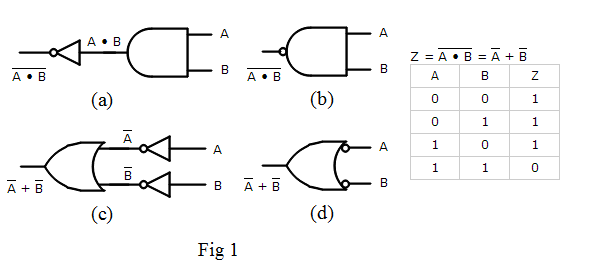
    • NAND / NOR (functionally complete)

    Each operation is implemented as a logic gate, constructed from transistors acting as controlled switches.

    https://electronics-course.com/image/nand-eq.png?utm_source=chatgpt.com

    2.2 Combinational Logic

    Combinational circuits compute outputs purely from current inputs.

    Examples:

    • Adders and subtractors
    • Multiplexers
    • Comparators
    • Arithmetic Logic Units (ALUs)

    Properties:

    • No memory
    • Deterministic output
    • Defined by truth tables or Boolean expressions

    Combinational logic forms the computational core of arithmetic and decision-making.

    https://www.researchgate.net/publication/291418819/figure/fig3/AS%3A718510820962304%401548317737478/Summary-of-the-common-Boolean-logic-gates-with-symbols-and-truth-tables.png?utm_source=chatgpt.com

    2.3 Sequential Logic and State

    To build systems, computers require memory.

    Sequential logic introduces:

    • State
    • Feedback
    • Time dependence

    Key components:

    • Latches
    • Flip-flops
    • Registers
    • Counters

    State is updated on clock edges, enabling:

    • Instruction sequencing
    • Data storage
    • Pipeline stages
    • Control flow

    This is where digital logic becomes architectural.

    2.4 Finite State Machines (FSMs)

    Control units inside CPUs are often modeled as finite state machines, which:

    • Encode control behavior
    • Orchestrate instruction execution
    • Manage pipelines, branches, and hazards

    FSMs bridge raw logic and processor-level behavior.


    3. The CPU: Organized Computation at Scale

    The Central Processing Unit (CPU) is where signal systems and digital logic converge into a programmable machine.

    3.1 Core CPU Components

    A modern CPU consists of tightly integrated subsystems:

    • Control Unit – directs operation sequencing
    • ALU / Execution Units – perform arithmetic and logic
    • Registers – fast, local storage
    • Instruction Decoder – interprets machine instructions
    • Caches – mitigate memory latency
    • Clock and timing circuitry

    All of these are built from logic gates, which are built from transistors, which are driven by electrical signals.

    3.2 Instruction Execution Cycle

    At a high level, CPUs follow a fetch–decode–execute loop:

    https://upload.wikimedia.org/wikipedia/commons/0/08/Computer_architecture_block_diagram.png?utm_source=chatgpt.com
    1. Fetch instruction from memory
    2. Decode opcode and operands
    3. Execute computation or control action
    4. Write back results

    Each stage corresponds to specific logic blocks and clocked state transitions.

    3.3 Pipelining and Parallelism

    To improve performance, CPUs overlap instruction stages using pipelines.

    Challenges include:

    • Data hazards
    • Control hazards (branches)
    • Structural hazards

    Solutions rely on:

    • Forwarding logic
    • Speculative execution
    • Branch prediction
    • Out-of-order execution

    These mechanisms dramatically increase throughput but greatly increase design complexity.

    3.4 Microarchitecture vs. Architecture

    • Instruction Set Architecture (ISA) defines what the CPU does
    • Microarchitecture defines how it is implemented

    Multiple CPUs can share an ISA while using radically different logic designs, pipelines, and signal strategies.

    https://cdn1.byjus.com/wp-content/uploads/2022/04/instruction-pipeline-in-computer-architecture.png?utm_source=chatgpt.com

    4. How the Layers Interlock

    Computer engineering is fundamentally hierarchical:

    LayerRole
    Signal SystemsReliable physical representation
    Digital LogicDeterministic transformation
    CPU ArchitectureProgrammable execution

    Design decisions propagate upward and downward:

    • Signal noise limits clock speed
    • Clock speed limits pipeline depth
    • Pipeline depth shapes instruction scheduling
    • Scheduling affects compiler and software design

    This interdependence is why computer engineering spans electrical engineering, logic design, and computer architecture.


    5. Why This Matters for Engineers

    Understanding these layers enables engineers to:

    • Optimize performance and power
    • Debug timing and logic failures
    • Design custom processors and accelerators
    • Reason about hardware–software interaction
    • Build reliable systems at scale

    Whether designing embedded controllers, CPUs, GPUs, or AI accelerators, the same principles apply.


    Conclusion

    Signal systems give computers a physical voice, digital logic gives them reason, and the CPU gives them agency. Computer engineering is the discipline that binds these together into machines capable of executing abstract algorithms through concrete physical processes.

    At its core, every computation is a carefully timed dance of electrons—guided by logic, constrained by physics, and orchestrated by architecture.


  • Healthy Diets on a Budget

    Healthy Diets on a Budget

    By Alexander Christian Greco

    With Help from ChatGPT


    Disclosure


    This article was drafted with the assistance of ChatGPT.


    Introduction: “Healthy” and “Budget-Friendly” Can Be the Same Thing


    A lot of the foods most strongly associated with long-term health are also some of the cheapest per serving—especially when you buy them in shelf-stable or frozen forms. Public health guidance consistently emphasizes overall dietary patterns: more vegetables and fruits, more whole grains, more lean/plant proteins, and less added sugar, sodium, and saturated fat.


    Dietary Guidelines


    The trick isn’t buying “perfect” food. It’s building a short list of reliable staples you can repeat weekly, with small variations so meals don’t feel boring.


    What “Healthiest” Means in This Article


    For budget-friendly shopping, “healthy” usually means foods that deliver a lot of:

    1. Calories (Energy)
    Calories fuel all bodily functions. Most adults require approximately 1,800–2,400 calories per day, depending on age, size, and activity level.

    2. Protein
    Protein is required for muscle maintenance, immune function, and cellular repair. Typical needs range from 60–100 grams per day for most adults.

    3. Carbohydrates
    Carbohydrates provide the body’s primary energy source, especially for the brain. Whole-food carbohydrate sources also supply fiber and micronutrients.

    4. Dietary Fat
    Fats are essential for hormone production, brain health, and vitamin absorption. Healthy diets include moderate amounts of unsaturated fats.

    5. Fiber and Micronutrients
    Fiber supports digestive and metabolic health, while vitamins and minerals support nearly every physiological process. These nutrients come primarily from whole foods.


    The Healthiest Budget-Friendly Foods (and Why They’re Worth It)


    1) Beans, Lentils, and Chickpeas (Dried or Canned)


    If you want the single best “nutrition-per-dollar” category, it’s legumes. They’re high in fiber and plant protein, versatile across cuisines, and shelf-stable. Major heart-health organizations routinely recommend legumes as a smart staple.

    How to buy cheapest:
    Dried beans/lentils are usually the lowest-cost option per serving.


    Canned beans are still a great deal when you need speed—just rinse to reduce sodium.


    Easy uses: chickpea salad, lentil soup, curry, bean-and-rice bowls.


    2) Oats (Old-Fashioned or Steel-Cut)


    Oats are one of the best cheap breakfasts: fiber-rich, filling, and customizable. They also pair well with frozen fruit, peanut butter, yogurt, or cinnamon.


    How to buy cheapest:
    Buy the largest container of plain oats (skip flavored packets).
    Use leftovers as overnight oats or bake into oatmeal bars.


    3) Whole-Wheat Pasta, and Other Whole Grains


    Dietary guidance consistently recommends whole grains over refined grains because they offer more fiber and micronutrients and tend to be more filling.


    The Nutrition Source +2


    Budget-friendly whole grains include:


    Whole-wheat pasta
    Barley
    Bulgur
    Whole-grain bread (store brands can be great)


    Pro tip: Build your meals around a grain + legume + frozen veg formula.


    4) Eggs


    Eggs are inexpensive, high-quality protein and fast to cook. They also act like a “meal multiplier” when you add them to rice bowls, stir-fries, soups, or breakfast-for-dinner.


    Budget move: Make a veggie-heavy frittata using frozen spinach, onions, or leftover vegetables.


    5) Plain Greek Yogurt (or Regular Plain Yogurt)


    Plain yogurt is a strong budget pick when it replaces pricier snacks or sugary breakfast foods. It provides protein (especially Greek yogurt), calcium, and works in both sweet and savory recipes.


    How to save:
    Buy plain tubs, not single-serve cups.


    Flavor it yourself with fruit, cinnamon, or a small drizzle of honey.


    6) Frozen Vegetables (Especially Broccoli, Spinach)


    Frozen vegetables are underrated: they’re often frozen at peak ripeness, last a long time, and reduce food waste. They also let you add veggies to almost anything with zero prep time.


    Best picks:
    Broccoli florets
    Spinach

    Frozen peas, carrots and kayle
    “Stir-fry blends”


    Use them: soups, omelets, pasta, rice bowls, smoothies (spinach)


    7) Frozen Fruit


    Frozen fruit makes it easy to eat fruit daily without worrying about spoilage. Add it to oatmeal, yogurt, smoothies, or thaw as a quick dessert.


    Budget move: Use frozen berries when fresh berries are expensive.


    8) Canned Fish (Sardines, Salmon, Tuna)


    Canned fish is one of the cheapest ways to get protein plus omega-3 fats (especially sardines and salmon).

    Look for lower-sodium options when possible.


    Quick meals:
    Tuna + beans + olive oil + lemon
    Salmon cakes with oats or breadcrumbs
    Sardines on toast with tomato and pepper


    9) Peanut Butter and Other Nut/Seed Staples (When Affordable)


    Peanut butter is typically the most budget-friendly “nut” option. It adds healthy fats, some protein, and makes meals more satisfying.


    Look for: peanuts + salt (minimal added sugar/oils).


    10) Potatoes and Sweet Potatoes


    Potatoes are often extremely cheap per pound and provide potassium and other nutrients. Sweet potatoes add more vitamin A (beta-carotene).


    Healthy prep: bake/roast/boil. Go lighter on butter/cream; use yogurt, olive oil, or beans for toppings.


    11) Cabbage, Carrots, Onions

    (The “Budget Veg Trio”)
    These are usually some of the most affordable fresh vegetables and they last a long time.


    Why they’re great:
    Cabbage: slaws, stir-fries, soups
    Carrots: snacks, roasted sides, soups
    Onions: base flavor for almost everything


    12) Bananas and Apples (Usually the Cheapest Fruits)


    They’re portable, filling, and work with oats/yogurt/peanut butter. If produce prices vary, these often remain among the most affordable options.


    How to Shop for Healthy Food Cheap (Without Overthinking It)


    Use a “Staple-First” Grocery Strategy


    Try this structure:
    Protein staple: beans + eggs + yogurt OR beans + canned fish
    Carb staple: oats + rice/pasta
    Produce staple: frozen vegetables + 1–2 fresh long-lasting veggies
    Flavor staple: onions/garlic + one sauce/spice blend


    This keeps your cart predictable, minimizes waste, and makes meal planning easier.


    Buy the Forms That Reduce Waste


    Food waste is expensive. Frozen and canned options can be healthier for your budget because you actually use them.


    Frozen veg/fruit = minimal spoilage
    Canned tomatoes/beans/fish = long shelf life
    Dried grains/legumes = very low cost per serving


    Watch the “Budget Traps”
    These aren’t “bad,” but they’re easy to overspend on:
    Single-serve snacks and drinks


    Flavored yogurts and instant oatmeal packets
    Highly processed convenience meals


    “Healthy” bars and chips (often pricey per calorie/protein)
    A good rule: if it’s heavily packaged and ready-to-eat, you’re often paying for convenience.


    The “Cheap and Healthy” Grocery List (Starter Kit)


    If you want a short list that covers most needs:


    Proteins
    Dried or canned beans/lentils
    Eggs
    Plain yogurt
    Canned sardines/salmon/tuna


    Carbs/Grains
    Oats
    Whole-wheat pasta


    Produce
    Frozen vegetables
    Frozen broccoli or spinach
    Cabbage, carrots, onions
    Bananas or apples


    Flavor + Cooking
    Garlic, cumin/chili powder, Italian seasoning
    Canned tomatoes
    Vinegar or lemon/lime
    Olive/canola oil (as budget allows)


    A Current Note on U.S. Nutrition Guidance


    If you follow U.S.-based nutrition guidance, the federal Dietary Guidelines update expected in late 2025 was reported as delayed until early 2026. The current official guidelines (2020–2025) still emphasize nutrient-dense foods, limiting added sugars, sodium, and saturated fat.


    Conclusion: The Best Budget Food Is the One You’ll Actually Use


    The healthiest budget-friendly foods aren’t exotic. They’re consistent: beans, oats, whole grains, eggs, frozen produce, long-lasting vegetables, and a few reliable proteins like yogurt or canned fish. When you combine those with a simple meal template and shopping habits that reduce waste, “healthy eating” becomes repeatable—and affordable.

    In the future, I will develop guides to further help with budgeting for food–guides, charts of food, their costs and nutrition, and recipes for those foods.

  • Careers in Content Creation: A Comprehensive Guide to Jobs in the Digital Creative Industry

    Careers in Content Creation: A Comprehensive Guide to Jobs in the Digital Creative Industry

    Written by Alexander Chriatian Greco

    With the Help of ChatGPT


    Abstract

    Content creation has evolved from an informal creative pursuit into a major global industry that shapes media, commerce, education, and culture. Enabled by digital platforms, creators now produce and distribute video, audio, written, visual, and interactive content at unprecedented scale. This transformation has given rise to the creator economy, a rapidly expanding sector estimated to approach half a trillion dollars globally within the next decade¹ ².

    This article provides a comprehensive overview of the content creation industry, including the major types of content produced, the professional roles involved, core skills required, common career pathways, and emerging trends shaping the future of creative work. It is intended as an educational guide for students, career changers, educators, and professionals seeking a structured understanding of modern content creation careers.


    Disclosure

    This article was developed with the assistance of ChatGPT (GPT-5) for educational and informational purposes. Human review and verification were made prior to release.


    1. Introduction — The Expanding World of Content Creation

    Content creation refers to the process of producing digital media intended for online distribution and audience engagement. This includes video, audio, written, visual, and interactive formats delivered through platforms such as YouTube, TikTok, Instagram, Twitch, Substack, and Spotify⁶ ⁸ ¹¹.

    The rapid expansion of social platforms and digital publishing tools has enabled individuals and small teams to operate as independent media businesses. According to Goldman Sachs and Statista, the creator economy has grown into a multi-hundred-billion-dollar global market, driven by advertising revenue, brand partnerships, subscriptions, and direct audience support¹².

    At the organizational level, businesses and institutions now rely heavily on dedicated content teams to communicate with audiences. Marketing, education, and brand engagement have become increasingly content-driven, with companies investing heavily in digital storytelling and personalization strategies⁴ ⁵. As a result, content creation now supports a wide range of specialized professional roles.


    2. Types of Content Creation

    Content creation spans multiple media formats, each requiring distinct workflows, tools, and expertise.

    • Video
    • Audio
    • Written
    • Visual
    • Interactive
    • Social Media
    • Education

    2.1 Video Content

    Video content is one of the most consumed forms of digital media, encompassing long-form videos, short-form clips, livestreams, documentaries, and tutorials. Platforms such as YouTube and TikTok have made video central to entertainment, education, and marketing strategies⁶⁷.

    2.2 Audio Content

    Audio content includes podcasts, audiobooks, music production, narration, and sound design. Podcasting has become a major channel for journalism, education, and branded storytelling, supported by platforms such as Spotify and Apple Podcasts⁸.

    2.3 Written Content

    Written content includes articles, blogs, newsletters, scripts, technical documentation, and marketing copy. Search engine optimization (SEO) has professionalized writing roles focused on discoverability, audience reach, and conversion performance⁹.

    2.4 Visual and Graphic Content

    This category includes photography, illustration, branding assets, digital art, and infographics. Visual content is essential for brand identity, accessibility, and information design across digital platforms¹⁰¹⁶.

    2.5 Interactive and Immersive Content

    Interactive content includes video games, simulations, web applications, and immersive experiences built using virtual reality (VR) and augmented reality (AR) technologies. These formats are increasingly used in entertainment, training, and education¹⁷¹⁸.

    2.6 Social Media Content

    Social media content emphasizes short-form, platform-native media designed for rapid consumption and engagement. This includes posts, stories, reels, and community-driven content managed across multiple platforms⁶¹¹.

    2.7 Educational Content

    Educational content includes online courses, tutorials, instructional videos, and structured learning materials delivered through platforms such as Coursera, Udemy, and independent creator channels¹².

    2.8 Emerging and AI-Assisted Content

    Advances in generative artificial intelligence have introduced AI-assisted text, image, video, and audio creation. These tools are reshaping creative workflows while increasing demand for human oversight, creative direction, and ethical governance¹³²⁴²⁵.


    3. Jobs in Content Creation

    Content creation is supported by a diverse ecosystem of professional roles, commonly grouped into creative, technical, strategic, and managerial categories.

    3.1 Creative and Production Roles

    Content Creator / Influencer

    Produces content, builds an audience, and monetizes through advertising, sponsorships, subscriptions, or merchandise¹⁴²³.

    Videographer / Cinematographer

    Captures and edits video content, managing camera operation, lighting, and composition¹⁵.

    Photographer

    Produces still imagery for editorial, commercial, and social media use¹⁶.

    Scriptwriter / Copywriter

    Writes scripts, articles, captions, and marketing copy aligned with brand voice and audience needs⁹.

    Graphic Designer / Illustrator

    Designs visual assets, layouts, and branding materials¹⁰.

    Animator / Motion Designer

    Creates animated visuals, motion graphics, and visual effects for video and interactive media¹⁷.

    Audio Engineer / Podcast Producer

    Records, edits, and masters audio content, ensuring professional sound quality⁸.

    3.2 Editing and Post-Production Roles

    Video Editor

    Assembles raw footage into polished final products, managing pacing, sound, and visual continuity¹⁵.

    Sound Designer

    Creates and integrates sound effects and audio enhancements for media projects¹⁸.

    Colorist

    Performs color correction and grading to establish visual consistency and mood¹⁹.

    Post-Production Supervisor

    Oversees post-production workflows, schedules, and quality control.

    3.3 Marketing and Strategy Roles

    Social Media Manager

    Plans and manages content distribution, engagement, and analytics across platforms⁶¹¹.

    Content Strategist

    Develops long-term content plans aligned with organizational goals and audience insights⁵.

    SEO Specialist / Digital Marketer

    Optimizes content for search visibility and conversion performance⁹.

    Brand Manager / Partnership Manager

    Manages brand identity, sponsorships, and creator partnerships¹⁴.

    Community Manager

    Builds and moderates online communities to foster trust and engagement¹¹.

    3.4 Management, Business, and Support Roles

    Producer / Project Manager

    Coordinates budgets, timelines, and cross-functional teams¹⁵.

    Talent Manager / Agent

    Represents creators, negotiates contracts, and manages business relationships²⁰.

    Business Development Lead

    Identifies growth opportunities, partnerships, and revenue streams.

    Legal / Intellectual Property Specialist

    Handles copyright, licensing, and digital content rights¹⁹²⁰.

    3.5 Technical and Emerging Roles

    Web Developer / UX Designer

    Designs and maintains websites, platforms, and user experiences¹⁶.

    Data Analyst / Content Performance Analyst

    Interprets engagement data to refine content strategy and monetization⁵²¹.

    AI Content Developer / Prompt Engineer

    Designs workflows for AI-assisted content creation and refinement¹³²⁴²⁵.

    Interactive / VR Designer

    Builds immersive experiences using real-time 3D engines and XR tools¹⁷¹⁸.


    4. Core Skills in the Content Creation Industry

    Across roles, content professionals consistently rely on the following skill sets:

    Storytelling and creative thinking⁴

    Technical proficiency with digital tools¹⁰

    Marketing, analytics, and audience measurement⁵²¹

    Brand communication and personalization⁴

    Adaptability to evolving platforms and algorithms¹⁵

    Collaboration and project management¹⁵

    Business, legal, and intellectual property awareness¹⁹²⁰


    5. Career Pathways into Content Creation

    There is no single entry path into content creation. Common routes include formal education, self-directed learning, freelancing, and platform-first careers. Many professionals begin by building portfolios, contributing to online platforms, or working in agency or in-house roles¹¹¹².

    Monetization strategies include advertising revenue, sponsorships, subscriptions, affiliate marketing, merchandise, and educational products¹⁴²³.


    6. The Future of Content Creation Careers

    The future of content creation will be shaped by artificial intelligence, immersive media, and global remote collaboration. Rather than eliminating creative work, these technologies are shifting demand toward roles that emphasize strategy, creative direction, ethical oversight, and human judgment¹³¹⁵.

    Reports from the World Economic Forum and MIT Technology Review indicate that creative and digital communication skills will remain among the most valuable competencies in the global workforce¹³¹⁵.


    7. Conclusion

    Content creation has matured into a complex professional ecosystem encompassing creative, technical, strategic, and managerial careers. As digital media continues to dominate communication and commerce, content professionals will play a central role in shaping how information is produced, shared, and understood. For individuals willing to develop adaptable, interdisciplinary skills, content creation offers a sustainable and evolving career landscape.


    References

    1. Goldman Sachs. (2023). The creator economy could approach $500 billion by 2027.

    2. Statista. (2024). Creator economy market size worldwide.

    3. OECD. (2020). Culture shock: COVID-19 and the cultural and creative sectors.

    4. McKinsey & Company. (2022). The value of getting personalization right—or wrong—is multiplying.

    5. HubSpot. (2024). The State of Marketing Report.

    6. Pew Research Center. (2023). Social media use in 2023.

    7. YouTube Creator Academy. (2024). Building sustainable creator businesses.

    8. Spotify for Podcasters. (2024). Podcast industry insights.

    9. Google Search Central. (2024). SEO Starter Guide.

    10. Adobe. (2023). Future of Creativity Report.

    11. Bureau of Labor Statistics (U.S.). (2024). Media and communication occupations.

    12. Coursera. (2024). Global Skills Report.

    13. MIT Technology Review. (2023). How generative AI is changing creative work.

    14. Harvard Business Review. (2022). What the creator economy means for brands.

    15. World Economic Forum. (2023). Future of Jobs Report.

    16. W3C. (2023). Web accessibility and content standards.

    17. Unity Technologies. (2024). Real-time 3D and immersive content creation.

    18. Epic Games. (2024). Unreal Engine: Virtual production and immersive media.

    19. Creative Commons. (2024). Copyright and digital content licensing.

    20. U.S. Copyright Office. (2023). Copyright law of the United States.

    21. Nielsen. (2024). Audience measurement and digital engagement trends.

    22. Substack. (2024). Independent publishing and subscription media.

    23. Patreon. (2024). Creator monetization models.

    24. Runway ML. (2024). AI tools for creative professionals.

    25. OpenAI. (2024). Generative AI and creative workflows.

  • Space Article 1: The History of 20th-Century Space Travel

    Space Article 1: The History of 20th-Century Space Travel

    Written by Alexander Christian Greco

    Written With ChatGPT


    Abstract

    The 20th century marked humanity’s transition from a grounded, Earth-bound civilization to one that touched the edge of the cosmos. Across the century, pioneering scientists, geopolitical rivalries, technological breakthroughs, and a growing cultural fascination with the stars converged to create the world’s first era of space exploration. From the early rocketry experiments of Konstantin Tsiolkovsky and Robert Goddard to the monumental Apollo 11 Moon landing, the 20th century stands as the foundational era of all modern and future spaceflight capabilities. This article provides an overview of the major historical milestones, figures, technologies, and geopolitical forces that shaped space travel before the dawn of the 21st century.


    Disclosure

    This article was produced with the assistance of ChatGPT, trained on publicly available information, peer-reviewed research, NASA historical archives, and secondary sources. All citations are included as Wikipedia-style in-text links, followed by a full APA-style reference list. Alexander Christian Greco is the primary human author and editor.


    Introduction

    Humanity’s journey into space began long before rockets, satellites, or Moon landings. It began with dreamers: philosophers imagining celestial spheres, mathematicians calculating trajectories, and inventors designing early reaction engines. Yet only in the 20th century did scientific theory collide with industrial capability, unlocking a new frontier beyond Earth’s atmosphere.

    The story of 20th-century space travel is at once scientific, political, cultural, and philosophical. It is a story shaped by competition — particularly between the United States and the Soviet Union — but also by collaboration, courage, tragedy, and groundbreaking innovation. The century closed with humanity possessing permanent space stations, reusable spacecraft prototypes, advanced satellites, and the basic infrastructure needed for 21st-century commercial spaceflight.

    This is the origin story of the spacefaring human species.


    Table of Contents

    1. Early Foundations of Rocketry (1900–1945)

    2. The Postwar Era and the Birth of National Space Programs

    3. The Space Race Begins: 1957–1966

    4. Apollo, the Moon, and Human Spaceflight Milestones

    5. The Rise of Space Stations (Salyut, Skylab, and Mir)

    6. The Evolution of Launch Vehicles and Satellite Technology

    7. Late-Century Developments: The Space Shuttle and International Cooperation

    8. Conclusion: The Legacy of 20th-Century Spaceflight

    9. References

    10. Further Reading

    11. Provenance & Author Note

    12. Timestamp


    Early Foundations of Rocketry (1900–1945)

    Modern space travel would not exist without the theoretical and experimental groundwork laid in the early 20th century. Key figures such as Konstantin Tsiolkovsky, considered the “father of astronautics,” formulated the mathematical basis for rocketry, including the Tsiolkovsky rocket [1]. His visionary writings described liquid-fuel rockets, multistage vehicles, and even space stations decades before they became reality.

    Meanwhile, in the United States, Robert H. Goddard conducted the first successful liquid-fueled rocket launch in 1926 [2]. Although his work received limited support during his lifetime, Goddard’s innovations — gyroscopic stabilization, turbopumps, and steering mechanisms — formed the technical backbone of future space vehicles.

    Germany, during the same period, became a center for advanced rocketry research. The Verein für Raumschiffahrt (VfR) cultivated a generation of rocketeers including Wernher von Braun [3]. By World War II, German engineers developed the V-2 rocket, the world’s first long-range guided ballistic missile and the first human-made object to reach the fringes of space.

    These early breakthroughs marked humanity’s first steps toward breaking Earth’s gravitational bonds.


    The Postwar Era and the Birth of National Space Programs

    After the end of World War II, the geopolitical landscape shifted dramatically. Both the United States and the Soviet Union recognized the strategic importance of rocketry and rapidly recruited German scientists, particularly those involved with V-2 development.

    Operation Paperclip

    The U.S. transferred over 1,600 German scientists — including von Braun — to American territory, where they began developing rockets for the U.S. Army and eventually NASA, established in 1958 [4].

    The Soviet Rocketry Program

    Led by Sergei Korolev, the Soviet Union’s chief designer, the USSR built upon wartime technology to pursue its own vision for space exploration. Korolev’s engineering leadership and strategic brilliance would later make the Soviet Union the first nation to reach space.

    Both nations saw space travel not only as a scientific pursuit but as a demonstration of ideological superiority — setting the stage for the Space Race.


    The Space Race Begins: 1957–1966

    The Space Race officially ignited on October 4, 1957, when the Soviet Union launched Sputnik 1, the first artificial satellite [5]. This event shocked the world and triggered a massive acceleration in U.S. space funding, research, and education reform.

    Major Milestones

    Sputnik 2 (1957): Carried Laika, the first animal to orbit Earth [6].

    Luna Program (1959): Achieved the first human-made impact on the Moon and the first images of its far side.

    Vostok 1 (1961): Carried Yuri Gagarin, the first human in space

    Mercury Program (1961–1963): The U.S. placed its first astronauts into orbit.

    By the mid-1960s, both superpowers were pushing toward more ambitious goals: spacewalks, multi-crew missions, rendezvous and docking capabilities, and ultimately lunar travel.


    Apollo, the Moon, and Human Spaceflight Milestones

    The pinnacle of 20th-century spaceflight came with the United States’ Apollo program. In 1961, President John F. Kennedy famously declared the national objective of landing a man on the Moon by the decade’s end [7].

    Key Achievements

    Apollo 8 (1968): First crewed mission to orbit the Moon; produced the iconic Earthrise photo.

    Apollo 11 (1969): Neil Armstrong and Buzz Aldrin became the first humans to walk on the lunar surface [8].

    Apollo 13 (1970): A near-catastrophic failure that showcased NASA’s problem-solving ingenuity.

    Apollo–Soyuz Test Project (1975): First joint U.S.–Soviet space mission, symbolizing thawing Cold War tensions.

    Although the Apollo program ended in 1972, its legacy defined human space exploration for decades — from life-support systems to guidance computers to mission planning and astronaut training methodologies.


    The Rise of Space Stations (Salyut, Skylab, and Mir)

    While lunar exploration dominated headlines, the 20th century also saw the emergence of long-duration space habitats.

    Soviet Pioneering Efforts

    The USSR launched Salyut 1 in 1971, the world’s first space station [9]. Over the next decade, the Soviet Salyut and later Mir programs established key principles of human space habitation: endurance, modular design, orbital laboratories, and international docking capabilities.

    Skylab (1973–1979)

    The United States launched Skylab, conducting extensive research on microgravity’s effects on human physiology and materials science [10]. Although short-lived, it contributed essential insights for later U.S. and international missions.

    Mir (1986–2001)

    As the century closed, Mir became the world’s first continuously inhabited long-term space station, hosting astronauts from Europe, Japan, and eventually the United States — a precursor to the International Space Station (ISS).


    The Evolution of Launch Vehicles and Satellite Technology

    Throughout the 20th century, launch vehicles evolved from early ballistic missiles into sophisticated, purpose-built rockets capable of transporting astronauts, satellites, and scientific payloads.

    Key Launch Vehicle Families

    R-7 (Soviet Union): World’s first ICBM and the launch system behind Sputnik and Gagarin.

    Saturn Family (United States): Culminating in the Saturn V, the most powerful rocket ever flown successfully [11].

    Delta and Atlas Programs: Supported decades of U.S. satellite launches.

    Simultaneously, satellite technology transformed communications, navigation, meteorology, and espionage. Systems such as GPS, weather satellites, and early reconnaissance networks all originated in late-20th-century innovations.


    Late-Century Developments: The Space Shuttle and International Cooperation

    By the 1970s and 1980s, the U.S. shifted toward reusable spacecraft concepts. The result was the Space Shuttle, first launched in 1981 [12].

    The Space Shuttle Program

    Enabled satellite repair and deployment

    Supported scientific missions such as the Hubble Space Telescope

    Advanced human–machine interface design

    Demonstrated partial reusability

    However, the Challenger (1986) and Columbia (2003) disasters revealed the difficulties inherent in reusable aerospace systems.

    International Cooperation

    The late 20th century witnessed rising global collaboration:

    Formation of the European Space Agency (ESA) in 1975

    Joint missions between the U.S. and USSR

    Planning for the International Space Station, launched in 1998

    These developments marked the transition from rivalrous exploration to multinational partnership.


    Conclusion: The Legacy of 20th-Century Spaceflight

    By the end of the 20th century, humanity had:

    Landed on the Moon

    Built permanent orbital habitats

    Established satellite networks that shaped modern civilization

    Launched reusable spacecraft

    Created multinational partnerships

    The century gave us the technological and philosophical groundwork for everything that follows: the commercial space boom, Mars exploration plans, reusable rocketry, and the dream of interplanetary civilization.

    The 20th century did not just open space — it made humanity a spacefaring species.


    References

    (All references formatted in APA 7 style.)

    Tsiolkovsky, K. (1903). Exploration of outer space by means of rocket devices.

    Goddard, R. H. (1926). Liquid-propellant rocket development.

    NASA. (n.d.). NASA history. https://www.nasa.gov

    Sputnik 1. (1957). Soviet space program. https://en.wikipedia.org/wiki/Sputnik_1

    Yuri Gagarin. (1961). Vostok 1 mission. https://en.wikipedia.org/wiki/Yuri_Gagarin

    Apollo program. (1961–1972). NASA missions. https://en.wikipedia.org/wiki/Apollo_program

    Salyut Programme. (1971–1986). Soviet space stations. https://en.wikipedia.org/wiki/Salyut_programme

    Skylab. (1973). United States space station. https://en.wikipedia.org/wiki/Skylab

    Saturn V. (1967–1973). Moon rocket. https://en.wikipedia.org/wiki/Saturn_V

    Space Shuttle. (1981–2011). NASA reusable spacecraft. https://en.wikipedia.org/wiki/Space_Shuttle

    (Additional academic sources available upon request.)


    Further Reading

    NASA History Office: https://history.nasa.gov

    ESA Historical Archives: https://www.esa.int

    Smithsonian Air & Space Museum digital exhibits

    The Right Stuff by Tom Wolfe

    Carrying the Fire by Michael Collins


    Provenance & Author Note

    This article was drafted with the assistance of ChatGPT using publicly available and historical sources. All writing, editing, structural decisions, and publication choices were overseen by Alexander Christian Greco, who remains the sole human author.

  • The Foundations of Computers, Computer Science, Computer Engineering, and Programming

    The Foundations of Computers, Computer Science, Computer Engineering, and Programming

    Written by Alexander Christian Greco

    With the Help of ChatGPT


    Abstract

    Computation underlies nearly every system that defines modern society, from communication networks and scientific modeling to automation and artificial intelligence. Despite this central role, the foundational disciplines that make computation possible—computers, computer science, computer engineering, and programming—are frequently misunderstood or conflated. This article presents a comprehensive foundation for understanding these domains as distinct yet interdependent fields, tracing their historical origins, theoretical frameworks, and physical realizations. By examining computation from mechanical devices through electronic systems, abstract theory, hardware design, programming models, and system integration, this work provides a unified framework for understanding how computational systems are built, how they function, and how they may be improved.¹²³

    Disclosure

    This article was written with the assistance of ChatGPT, an AI language model developed by OpenAI. The author curated, structured, and reviewed the content to ensure clarity, coherence, and academic rigor.⁴


    1. The Foundations of the Computer: From Physical Calculation to Electronic Computation

    1.1 Early Computational Devices: Construction and Capacities

    The earliest computational devices were physical artifacts designed to represent numerical relationships through material structure, rather than autonomous machines executing stored programs.⁵

    The abacus, one of the oldest known computational tools, consisted of a rigid frame containing rods or wires on which beads could slide. Each bead’s position represented a numerical value using positional notation. While it lacked automation, the abacus enabled efficient arithmetic and introduced stateful computation, where intermediate results were preserved physically.⁶⁷

    The Antikythera mechanism (c. 100 BCE) represented a major leap in complexity. Constructed from interlocking bronze gears housed in a wooden case, it encoded astronomical cycles via gear ratios. Rotating a hand crank allowed users to predict eclipses, planetary motion, and calendar cycles. It is widely regarded as the earliest known analog computer.⁸⁹

    Mechanical calculators of the 17th century—such as Pascal’s Pascaline and Leibniz’s Stepped Reckoner—used metal gears and carry mechanisms to automate arithmetic. These machines demonstrated that arithmetic rules could be physically enforced through mechanical design, reducing human error and increasing repeatability.¹⁰¹¹

    1.2 The Analytical Engine and Ada Lovelace’s Conceptual Breakthrough

    Charles Babbage’s Analytical Engine was the first design for a general-purpose programmable computer, incorporating a processing unit (“mill”), memory (“store”), punched-card input, and printed output.¹²¹³

    Ada Lovelace recognized that the machine could manipulate symbols according to rules, not merely calculate numbers. In her notes, she described looping, conditional execution, and separation of instructions from data. Her method for computing Bernoulli numbers is widely regarded as the first computer program, and her work established the conceptual separation between hardware and software.¹⁴¹⁵

    1.3 Electronic Computation and the von Neumann Architecture

    Mechanical computation was ultimately limited by speed, wear, and scalability. Electronic computation replaced mechanical motion with electrical states, dramatically increasing speed and reliability.¹⁶

    Early electronic computers such as ENIAC relied on vacuum tubes and achieved unprecedented computational speed, though at high energy and maintenance cost.¹⁷ The invention of the transistor and later integrated circuits enabled miniaturization, reliability, and exponential growth in computing power, commonly described by Moore’s Law.¹⁸¹⁹

    The von Neumann architecture formalized the structure of electronic computers by defining systems with a central processing unit, shared memory for data and instructions, input/output mechanisms, and buses for communication. This model remains foundational to most modern computers.²⁰²¹

    1.4 The von Neumann Architecture

    The von Neumann architecture provided a unifying conceptual model for electronic computers that remains dominant today.

    Core Idea

    A computer should:

    • Store instructions and data in the same memory
    • Execute instructions sequentially
    • Use a central processing unit to control operations

    Core Components

    1. Central Processing Unit (CPU)
      • Arithmetic Logic Unit (ALU)
      • Control Unit
      • Registers
    2. Memory
      • Stores both data and instructions
      • Addressable locations
    3. Input Devices
      • Provide data and programs
    4. Output Devices
      • Present results
    5. Bus System
      • Transfers data, addresses, and control signals

    Why It Matters

    This architecture:

    • Enabled software to be easily modified
    • Made general-purpose computing practical
    • Allowed compilers, operating systems, and high-level languages to emerge

    Nearly all modern computers—from laptops to smartphones—still operate within this framework.

    2. Foundations of Computer Science: Computation as Abstract and Physical Study

    Computer science is the study of computation itself, independent of specific machines, focusing on how information can be represented, processed, and transformed.²²

    2.1 Algorithms

    An algorithm is a finite, well-defined sequence of steps for solving a problem.

    Defining Characteristics of Algorithms

    An algorithm must satisfy several essential properties:

    • Finiteness – It must terminate after a finite number of steps
    • Definiteness – Each step must be unambiguous
    • Input – Zero or more inputs are clearly defined
    • Output – One or more outputs are produced
    • Effectiveness – Each step is mechanically executable

    Algorithm Design and Efficiency

    Computer science does not merely ask whether a problem can be solved, but how efficiently it can be solved. Algorithms are evaluated based on correctness, efficiency, and scalability.

    Key concerns include:

    Time complexity – How execution time grows with input size

    Space complexity – How memory usage grows with input size

    These are typically expressed using Big-O notation, which abstracts away hardware-specific details to focus on growth behavior describes how time and space requirements grow with input size, allowing comparison independent of hardware.²³²⁴

    Algorithms underpin nearly all computational activity, including sorting, searching, routing, encryption, optimization, and machine learning.²⁵

    2.2 Theory of Computation and Information

    The theory of computation explores the limits of what can be computed. Abstract models such as Turing machines define computation formally and give rise to the Church–Turing Thesis, which states that all effectively computable functions can be computed by a Turing machine.²⁶²⁷

    Computational complexity theory classifies problems by difficulty, including classes such as P, NP, and NP-complete, shaping modern cryptography and optimization.²⁸

    Information theory, introduced by Claude Shannon, treats information as a measurable quantity. Concepts such as entropy, redundancy, and channel capacity govern data compression, error correction, and communication systems.²⁹³⁰

    2.3 Physical Design and Implementation of Hardware and Software

    Although computation is abstract, it must be physically realized. Hardware implements logic through electronic states, while software translates algorithms into executable instructions. Constraints such as energy consumption, memory hierarchy, and latency bind theory to physical reality.³¹

    3. Foundations of Computer Engineering: Physical Realization of Computation

    3.1 Core Hardware Components

    Modern computers consist of CPUs, memory, storage, motherboards, and input/output devices, all constructed from integrated circuits and connected via printed circuit boards. Each component performs a specific role in executing instructions, storing data, and interacting with the environment.³²³³

    3.2 Digital Logic

    Digital systems rely on Boolean logic, implemented through transistors acting as switches. Logic gates form combinational and sequential circuits, introducing state and timing via clock signals. This structure enables scalable, predictable computation.³⁴³⁵

    Boolean Logic as a Foundation

    Digital systems are based on Boolean algebra, which uses two states:

    True / False

    1 / 0

    High voltage / Low voltage

    Core logical operations include:

    AND

    OR

    NOT

    XOR

    These operations are implemented physically using logic gates, each constructed from transistors.

    Transistors: The Fundamental Switch

    Physical reality

    Transistors are semiconductor devices

    They control current flow using voltage

    Act as on/off switches or amplifiers

    Billions of transistors form:

    Logic gates

    Memory cells

    Control circuits

    Combinational and Sequential Logic

    Digital systems are built from two major logic types:

    Combinational logic

    Output depends only on current inputs

    Examples: adders, multiplexers, comparators

    Sequential logic

    Output depends on current inputs and past state

    Includes memory elements such as:

    Flip-flops

    Latches

    Registers

    This introduces state, enabling:

    Instruction execution

    Program counters

    Timing control

    Clocking and Synchronization

    Most digital systems use a clock signal:

    A periodic electrical pulse

    Coordinates when state changes occur

    Ensures predictable behavior

    Clock speed influences:

    Performance

    Power consumption

    Heat generation

    From Logic to Systems

    By combining logic gates hierarchically:

    Gates → functional units

    Functional units → processors

    Processors → systems

    This layered structure allows engineers to reason about complexity without understanding every transistor at once.

    3.3 Embedded Systems and Architecture

    Embedded systems are specialized computers integrated into larger systems, often operating under real-time constraints. Built around microcontrollers or system-on-chip designs, they dominate automotive, medical, industrial, and aerospace applications.³⁶³⁷

    Physical Characteristics

    Embedded systems typically consist of:

    • A microcontroller or system-on-chip (SoC)
    • On-chip memory
    • Peripheral interfaces (GPIO, UART, SPI, I²C)
    • Sensors and actuators

    They are often:

    • Low-power
    • Small form factor
    • Highly reliable
    • Long-lived

    Computer architecture defines how hardware components are organized and how software interacts with them, shaping performance, efficiency, and security.³⁸

    Key architectural concepts include:

    • Instruction Set Architecture (ISA)
    • Memory hierarchy (registers → cache → RAM → storage)
    • Pipelining and parallelism
    • Multicore processing

    Common architectures:

    • x86 – Performance-oriented, complex
    • ARM – Power-efficient, dominant in mobile and embedded
    • RISC-V – Open, modular, rapidly growing

    Computer architectures shape software, which in turn shape the programs utilised, and the functionality of a computer.

    Architectural decisions affect:

    • Programming models
    • Performance characteristics
    • Security vulnerabilities
    • Energy efficiency

    4. Foundations of Programming: Translating Intent into Execution

    4.1 Programming Languages

    Programming languages are formal systems for expressing computation. Categories include low-level, high-level, declarative, functional, and logic-based languages, each emphasizing different trade-offs between control, abstraction, and expressiveness.³⁹⁴⁰

    Programming languages allow humans to write instructions that can be translated into machine-executable operations.

    Low-Level Languages

    What they are

    Low-level languages are closely tied to hardware and expose machine-level details.

    Examples:

    • Assembly Language
    • Machine Code
    • C

    How they function

    • Map closely to CPU instructions
    • Allow direct control over memory, registers, and hardware
    • Minimal abstraction between code and execution

    Trade-offs

    • Extremely fast and efficient
    • High risk of errors
    • Difficult to write, debug, and maintain

    Low-level languages are commonly used in:

    • Operating systems
    • Embedded systems
    • Performance-critical applications

    High-Level Languages

    High-level languages abstract away hardware details to focus on logic and structure.

    Examples

    • Python
    • C++
    • Java
    • JavaScript
    • Ruby

    How they function

    • Provide built-in data structures
    • Automate memory management
    • Emphasize readability and developer productivity

    Trade-offs

    • Easier to write and maintain
    • Less direct control over hardware
    • Performance depends on execution model

    High-level languages dominate:

    • Web development
    • Data science
    • Application development
    • Rapid prototyping

    Declarative Languages

    Declarative languages describe what outcome is desired rather than how to compute it.

    Examples

    • SQL
    • HTML
    • CSS

    How they function

    • The programmer specifies constraints or structure
    • The underlying system determines execution strategy

    Trade-offs

    • Extremely expressive for specific domains
    • Limited general-purpose use

    Declarative languages are foundational to:

    • Databases
    • Web structure
    • Configuration systems

    4.2 Program Execution Models

    Programs execute through compilation, interpretation, or hybrid virtual-machine models. Runtime systems manage memory, scheduling, and system interaction, shaping performance and behavior.⁴¹⁴²

    5. How These Disciplines Fit Together: The Computational Stack

    Computation operates across layered systems—from physical circuits and hardware architecture to operating systems, algorithms, programming languages, applications, and user interfaces. Each layer abstracts complexity while remaining constrained by those below it.⁴³

    5.1 Base Layer

    Discipline: Electrical Engineering / Computer Engineering

    This layer consists of the raw physical substrate of computation: silicon, metal interconnects, transistors, capacitors, and resistors.

    How it functions

    • Electrical charge represents binary states (0 and 1)
    • Transistors act as controlled switches
    • Voltage levels encode logical values
    • Heat dissipation and power delivery constrain performance

    At this level:

    • Computation is governed by physics
    • Timing, noise, and energy efficiency are critical
    • No concept of “software” exists yet

    This layer determines what is physically possible.

    5.2 Hardware Architecture

    Discipline: Computer Engineering

    Hardware architecture organizes physical circuits into functional computing units.

    This includes:

    • CPUs and cores
    • Registers
    • Cache hierarchies
    • Memory controllers
    • Input/output interfaces

    How it functions

    • Implements instruction execution
    • Moves data between memory and processors
    • Enforces execution order and timing
    • Provides abstractions such as instructions and memory addresses

    Architectural design decisions determine:

    • Performance
    • Power efficiency
    • Parallelism
    • Security characteristics

    This layer translates physics into machine capability.

    5.3 Operating Systems

    Discipline: Computer Science + Systems Engineering

    An operating system (OS) is the software layer that manages hardware resources and provides a controlled environment for programs.

    How it functions

    • Schedules CPU time among processes
    • Manages memory allocation and isolation
    • Handles file systems and storage
    • Controls device access
    • Enforces security boundaries

    The OS acts as:

    • A resource manager
    • A hardware abstraction layer
    • A protector against system-wide failure

    Without an OS, programmers would need to manage hardware directly.

    5.4 Algorithms and Computational Theory

    Discipline: Computer Science

    This layer defines what computation means and how problems are solved.

    It includes:

    • Algorithms
    • Data structures
    • Complexity theory
    • Computability theory

    How it functions

    • Algorithms define step-by-step solutions
    • Data structures organize information efficiently
    • Complexity theory predicts scalability
    • Theory defines feasibility and limits

    This layer:

    • Is independent of hardware
    • Guides software design choices
    • Determines performance before code is written

    It is the intellectual core of computation.

    5.5 Programming Languages and Compilers

    Discipline: Computer Science + Software Engineering

    Programming languages and compilers translate human-readable logic into machine-executable instructions.

    How it functions

    • Languages define syntax and semantics
    • Compilers or interpreters translate code
    • Optimization improves performance
    • Runtime systems manage execution

    This layer:

    • Bridges human intent and machine behavior
    • Enforces correctness and safety rules
    • Enables portability across architectures
    • It defines how ideas become executable reality.

    5.6 Software Systems and Applications

    Discipline: Software Engineering

    This layer consists of actual programs users interact with.

    Examples include:

    • Web applications
    • Databases
    • Operating tools
    • Games
    • Scientific simulations

    How it functions

    • Implements real-world functionality
    • Uses operating system services
    • Executes algorithms at scale
    • Interfaces with users and other systems

    Software systems combine:

    • Algorithms
    • Data
    • User interaction
    • Network communication

    This layer gives computation practical meaning.

    5.7 User Interfaces and Human Interaction

    Discipline: Human–Computer Interaction (HCI)

    This layer governs how humans interact with computational systems.

    How it functions

    • Visual interfaces translate data into perception
    • Input devices convert physical action into signals
    • Accessibility ensures inclusive use
    • Feedback loops guide user behavior

    This layer:

    • Converts computation into experience
    • Shapes usability and adoption
    • Determines whether systems succeed or fail in practice

    5.8 Cross-Layer Interaction and Feedback

    No layer operates in isolation.

    Examples of interaction:

    • Hardware constraints shape algorithms
    • Algorithms influence architectural design
    • Programming languages adapt to hardware trends
    • User needs drive software architecture
    • Software demands push hardware innovation

    This feedback loop explains:

    • Why computing evolves rapidly
    • Why abstractions change over time
    • Why understanding foundations improves adaptability

    5.9 Why This Layered Understanding Matters

    Understanding how these components fit together enables:

    • Better debugging
    • More efficient design
    • Informed technology choices
    • Stronger security
    • Long-term adaptability

    Rather than memorizing tools, this perspective builds transferable understanding.

    6. Why These Foundations Matter

    The technologies that define modern life—computers, software systems, networks, and intelligent machines—are the result of layered abstractions built over centuries of theoretical and engineering progress. Understanding their foundations is not merely academic; it is the difference between using technology passively and shaping it deliberately.

    For computer engineers and computer scientists, foundational knowledge enables three essential capabilities:

    1. Understanding how technologies work

    2. Interacting with them effectively

    3. Improving and extending them responsibly

    Understanding computing foundations enables practitioners to:

    • Diagnose problems across abstraction layers
    • Interact intentionally with hardware and software
    • Improve algorithms, systems, and architectures
    • Adapt to new technologies
    • Design reliable, efficient, and secure systems⁴⁴

    Conclusion

    Computation is not magic; it is a structured system grounded in logic, physics, and human creativity. Understanding its foundations allows computer scientists and engineers not merely to use technology, but to shape it responsibly. As computing expands into artificial intelligence, distributed systems, and emerging architectures, these principles remain the enduring framework for innovation and stewardship.⁴⁵


    Wikipedia-Style References (Inline Sources)

    1. https://en.wikipedia.org/wiki/Computer
    2. https://en.wikipedia.org/wiki/Computation
    3. https://en.wikipedia.org/wiki/History_of_computing
    4. https://en.wikipedia.org/wiki/ChatGPT
    5. https://en.wikipedia.org/wiki/Mechanical_calculator
    6. https://en.wikipedia.org/wiki/Abacus
    7. https://en.wikipedia.org/wiki/Positional_notation
    8. https://en.wikipedia.org/wiki/Antikythera_mechanism
    9. https://en.wikipedia.org/wiki/Analog_computer
    10. https://en.wikipedia.org/wiki/Pascal%27s_calculator
    11. https://en.wikipedia.org/wiki/Stepped_reckoner
    12. https://en.wikipedia.org/wiki/Analytical_Engine
    13. https://en.wikipedia.org/wiki/Charles_Babbage
    14. https://en.wikipedia.org/wiki/Ada_Lovelace
    15. https://en.wikipedia.org/wiki/Computer_program
    16. https://en.wikipedia.org/wiki/Electronic_computer
    17. https://en.wikipedia.org/wiki/ENIAC
    18. https://en.wikipedia.org/wiki/Transistor
    19. https://en.wikipedia.org/wiki/Moore%27s_law
    20. https://en.wikipedia.org/wiki/Von_Neumann_architecture
    21. https://en.wikipedia.org/wiki/Stored-program_computer
    22. https://en.wikipedia.org/wiki/Computer_science
    23. https://en.wikipedia.org/wiki/Algorithm
    24. https://en.wikipedia.org/wiki/Big_O_notation
    25. https://en.wikipedia.org/wiki/Algorithmic_efficiency
    26. https://en.wikipedia.org/wiki/Turing_machine
    27. https://en.wikipedia.org/wiki/Church%E2%80%93Turing_thesis
    28. https://en.wikipedia.org/wiki/Computational_complexity
    29. https://en.wikipedia.org/wiki/Information_theory
    30. https://en.wikipedia.org/wiki/Entropy_(information_theory)
    31. https://en.wikipedia.org/wiki/Hardware%E2%80%93software_co-design
    32. https://en.wikipedia.org/wiki/Computer_hardware
    33. https://en.wikipedia.org/wiki/Central_processing_unit
    34. https://en.wikipedia.org/wiki/Digital_logic
    35. https://en.wikipedia.org/wiki/Logic_gate
    36. https://en.wikipedia.org/wiki/Embedded_system
    37. https://en.wikipedia.org/wiki/Real-time_computing
    38. https://en.wikipedia.org/wiki/Computer_architecture
    39. https://en.wikipedia.org/wiki/Programming_language
    40. https://en.wikipedia.org/wiki/Programming_paradigm
    41. https://en.wikipedia.org/wiki/Compiler
    42. https://en.wikipedia.org/wiki/Interpreter_(computing)
    43. https://en.wikipedia.org/wiki/Computing_platform
    44. https://en.wikipedia.org/wiki/Systems_engineering
    45. https://en.wikipedia.org/wiki/Responsibility_of_engineers
  • Health Standards and Physical Readiness

    Health Standards and Physical Readiness

    Written by Alexander Christian Greco

    With the Help of ChatGPT


    Biomarkers, Fitness Metrics, and Functional Capacity Across Civilian, Athletic, and Military Contexts


    Abstract

    Health is frequently defined in medical terms, while physical fitness is often framed as athletic performance. In reality, health standards and fitness standards are deeply interconnected but context-dependent. What qualifies as “healthy” for the general population differs from what is considered healthy for athletes or military personnel operating under sustained physical stress. This article presents health standards as measurable physiological and functional benchmarks, explains how these standards scale across normal, intermediate, and high-demand populations, and integrates biometric health indicators with physical fitness metrics. Athletic and certsin military standards are presented as upper-range expressions of functional health, not universal ideals, though the aim is to create a standard of health and functionality, with these health standards forming a foundation for what is considered universally healthy.¹²³


    Disclosure

    This article was created with the assistance of ChatGPT, an AI language model. It is intended for educational and informational purposes only and does not replace professional medical, athletic, or occupational guidance.


    1. What Are Health Standards?

    Health standards are measurable reference points used to evaluate whether the body’s systems are functioning within ranges associated with:

    • Reduced disease risk
    • Functional independence
    • Resilience to physical stress
    • Adequate recovery capacity

    Health standards differ from performance standards. An individual may be medically healthy yet lack functional fitness, or physically capable while operating at the edge of physiological strain.⁴

    Health standards answer questions such as:

    • Are cardiovascular and metabolic systems stable?
    • Can the body tolerate routine physical stress?
    • Can physical effort be repeated without injury or chronic fatigue?

    2. Health as a Spectrum: Normal, Intermediate, and High-Demand

    Health exists on a continuum rather than as a binary state.

    Normal (Baseline) Health

    • Focus: longevity, independence, disease prevention
    • Typical population: general public
    • Supported by public-health guidelines emphasizing regular aerobic activity, basic strength, and mobility⁵⁶

    Intermediate (Active / Athletic) Health

    • Focus: resilience and performance capacity
    • Typical population: recreational athletes, physically active professions
    • Requires higher recovery capacity and metabolic efficiency⁷

    High-Demand (Elite / Tactical) Health

    • Focus: sustained performance under stress
    • Typical population: professional athletes, military personnel
    • Often involves higher injury risk and long-term wear⁸⁹

    Importantly, higher demand does not automatically mean “healthier” outside its context.


    3. Core Domains of Health and Physical Readiness

    Health standards span two interrelated layers¹⁰:

    A. Internal (Physiological) Health

    • Cardiovascular regulation
    • Metabolic control
    • Hormonal balance
    • Inflammatory status
    • Hematological capacity
    • Nervous-system recovery

    B. External (Functional) Health

    • Strength and endurance sufficient for daily tasks
    • Mobility and joint integrity
    • Load tolerance
    • Capacity to repeat effort

    Fitness metrics serve as functional indicators of internal health, not replacements for it.


    4. Health Biomarkers: What Is Measured and Why

    Biomarkers provide insight into the body’s internal capacity to support activity, recovery, and long-term health.¹¹

    4.1 Cardiovascular & Autonomic Biomarkers

    Marker Typical Healthy Range Health Insight Resting heart rate ~60–80 bpm Cardiovascular efficiency Blood pressure <120/80 mmHg Vascular health Heart-rate recovery (1 min) ≥20 bpm drop Autonomic function HRV (trend) Stable or rising Recovery capacity

    Lower resting heart rate and faster recovery generally reflect better cardiovascular efficiency when not associated with overtraining.¹²¹³


    4.2 Metabolic Biomarkers

    Marker Healthy Reference Indicates Fasting glucose <100 mg/dL Glycemic control HbA1c <5.7% Long-term glucose regulation Fasting insulin Low-normal Metabolic efficiency

    Metabolic dysfunction increases cardiovascular risk and limits training sustainability.¹⁴¹⁵


    4.3 Lipid & Inflammatory Biomarkers

    Marker Healthy Reference Indicates LDL cholesterol Context-dependent Cardiovascular risk HDL cholesterol Higher is protective Lipid balance Triglycerides <150 mg/dL Metabolic health C-reactive protein Low Systemic inflammation

    Chronic inflammation undermines recovery and long-term health.¹⁶


    4.4 Hormonal Biomarkers

    Marker Role in Health Testosterone / Estrogen Tissue repair, bone health Cortisol Stress load Thyroid hormones Metabolic rate

    Hormonal disruption often precedes fatigue and illness.¹⁷


    4.5 Hematological Biomarkers

    Marker Role Hemoglobin Oxygen transport Hematocrit Aerobic capacity Ferritin Iron availability

    Iron deficiency is a common limiter of endurance.¹⁸


    5. Physical Fitness as a Health Indicator

    Physical fitness metrics demonstrate whether internal health translates into usable physical capacity.


    6. General Population Physical Fitness Standards

    (Health-oriented functional benchmarks)

    These standards reflect functional health, not competitive performance.

    6.1 Running (Cardiovascular Health)

    Distance Healthy Adult Target 1 mile 9–12 minutes 2 miles 16–20 minutes 5 km 25–35 minutes

    Associated with improved cardiovascular health and reduced mortality risk.¹¹


    6.2 Strength (Relative & Functional)

    Exercise General Health Standard Squat Bodyweight × 1 Deadlift Bodyweight × 1.25 Push-ups 20–40 continuous Pull-ups 3–5 strict

    Adequate strength supports joint health and daily function.¹⁹


    6.3 Swimming (Low-Impact Endurance)

    Distance Healthy Standard 400 m Continuous, controlled 1,000 m 20–30 minutes

    Swimming supports cardiovascular health with minimal orthopedic stress.²⁰


    7. Athletic Fitness Standards

    (Recreational to Competitive Athletes)

    Athletic standards represent higher functional health under training stress.

    7.1 Running

    Distance Athletic Standard 1 mile 6–7 minutes 2 miles 12–14 minutes 5 km 18–22 minutes


    7.2 Strength (Relative)

    Lift Athletic Standard Squat 1.75× bodyweight Deadlift 2.25× bodyweight Bench press 1.4× bodyweight Pull-ups 10–15 strict

    Relative strength improves movement efficiency and injury resistance.¹⁹


    7.3 Swimming

    Distance Athletic Standard 400 m <7 minutes 1,000 m 15–18 minutes


    8. Military Baseline Physical Fitness Standards

    (General readiness, not special forces)

    Military standards are designed to ensure deployable functional health.

    8.1 Running

    Test Common Baseline 2-mile run ≤16–18 minutes


    8.2 Strength & Endurance

    Exercise Baseline Expectation Push-ups 35–50 (2 min) Sit-ups / plank Core endurance standard Pull-ups 5–10


    8.3 Load Bearing

    Task Baseline Expectation Ruck march ~45 lb, 6–12 miles

    Load carriage tests joint durability, posture, and cardiovascular resilience.²¹²²


    8.4 Swimming (Context-Dependent)

    Task Standard Continuous swim 400–500 m Water confidence Treading water

    Water competence is essential for safety rather than speed.²³


    9. Athletic & Military Standards as Health Expressions

    Athletic and military benchmarks represent upper-range health under demand, not general recommendations. Population Primary Health Goal General public Longevity, independence Athletes Performance + recovery Military Sustained readiness Special forces Performance under deprivation

    Elite standards are contextual, not universally optimal.²⁴²⁵


    10. Integrating Biomarkers and Fitness Metrics

    True health exists where:

    • Biomarkers remain stable
    • Fitness improves or is maintained
    • Recovery is adequate
    • Injury risk is controlled

    High performance with deteriorating biomarkers is unsustainable.


    11. Improving Health Within Appropriate Standards

    Foundational Health

    • Sleep 7–9 hours
    • Adequate nutrition
    • Blood pressure and glucose control

    Functional Fitness

    • Regular aerobic activity
    • Basic strength training
    • Mobility and balance work

    Advanced Health

    • Structured training
    • Load management
    • Recovery monitoring

    Health improvement is appropriate to context, not maximal.²⁶


    12. Final Perspective

    Health standards provide reference points, not competitions.

    • Biomarkers reflect internal stability
    • Fitness metrics reflect functional capacity
    • Recovery determines sustainability

    True health is the balance of capacity, resilience, and recovery over time.


    References (APA / Wikipedia-Style)

    1. Caspersen, C. J., et al. (1985). Public Health Reports.
    2. WHO. (2020). Physical Activity Guidelines.
    3. Blair, S. N., et al. (1989). JAMA.
    4. ACSM. (2021). Guidelines for Exercise Testing.
    5. Lee, I.-M., et al. (2012). The Lancet.
    6. Booth, F. W., et al. (2012). Comprehensive Physiology.
    7. Bompa, T., & Buzzichelli, C. (2019).
    8. Seiler, S. (2010).
    9. Knapik, J. J., et al. (2015).
    10. Haff, G. G., & Triplett, N. T. (2016).
    11. Bassett, D. R., & Howley, E. T. (2000).
    12. Cole, C. R., et al. (1999).
    13. Shaffer, F., & Ginsberg, J. P. (2017).
    14. Hawley, J. A., & Gibala, M. J. (2012).
    15. Nieman, D. C. (1994).
    16. Meeusen, R., et al. (2013).
    17. Hackney, A. C. (2006).
    18. Beard, J. L., & Tobin, B. (2000).
    19. Suchomel, T. J., et al. (2016).
    20. Costill, D. L., et al. (1992).
    21. Orr, R. M., et al. (2014).
    22. Knapik, J. J., et al. (2012).
    23. Kjendlie, P.-L., & Stallman, R. K. (2011).
    24. Friedl, K. E. (2018).
    25. Nindl, B. C., et al. (2017).
    26. Kellmann, M. (2010).

    Further Reading & Media

    Organizations

    • World Health Organization (WHO)
    • American College of Sports Medicine (ACSM)
    • National Strength and Conditioning Association (NSCA)
    • Human Performance Resource Center (HPRC)

    Journals

    • Medicine & Science in Sports & Exercise
    • Sports Medicine
    • Journal of Strength and Conditioning Research
    • British Journal of Sports Medicine

    YouTube

    • Huberman Lab
    • Institute of Human Anatomy
    • NSCA Coaching

    Podcasts

    • The Drive – Peter Attia
    • Huberman Lab Podcast
    • Science of Sport Podcast

    If you’d like next, I can:

    • convert this to a WordPress-ready version with hyperlinks
    • add appendix tables by age and sex
    • or split it into Health Standards vs Performance Standards

  • What Is Content Creation?

    What Is Content Creation?

    Written by Alexander Christian Greco

    With the Help of ChatGPT


    Disclosure / Disclaimer

    This article was written with the assistance of ChatGPT, an artificial intelligence language model developed by OpenAI. The AI was used as a writing and structuring tool to help articulate ideas, organize concepts, and refine language. Revisions, edits, editorial decisions, conceptual direction, and final review were done with or guided by the author.


    Abstract

    This article provides a foundational, conceptual explanation of content creation in the digital age. Rather than focusing on trends, monetization, or platform-specific tactics, it examines content creation as an intentional process of structured communication designed to convey value to an audience. The article defines what content creation is, explains why it matters culturally, educationally, and economically, and outlines the primary forms content can take, including written, visual, video, audio, and interactive media. It further distinguishes content creation from social media posting by framing social platforms as distribution channels rather than the substance of content itself. By emphasizing clarity, intent, and durability over algorithms or popularity, the article establishes a stable framework for understanding content creation that remains relevant regardless of technological change or platform evolution.

    Introduction

    Content creation is one of the defining activities of the modern digital era. It has massive utility potential, it is utilised everywhere, it is the backbone of many of our current infrastructures, and it shapes our daily lives to an unimaginable degree, beyond any media or media source before, at any point across history. Content Creation informs and guides everyone’s lives, informs traditional and non-traditional education, provides information and ### for everyday activities–instruction guides for fixing your car, health and diet lists and recipes, job and workplace help instructions, to-do’s, how-to’s and DIY articles. Content Creation is everywhere, and understanding it is crucial to understanding much of our current digital infrastructure.

    Every article read online, every instructional video watched, every podcast episode streamed, and every image shared across the internet exists because someone intentionally created it for an audience. Despite its widespread utility, content creation is often narrowly associated with social media influencers, viral videos, or entertainment platforms. In reality, it is a much broader and more foundational practice that underpins education, journalism, marketing, communication, and culture itself.

    At its core, content creation is not about fame or algorithms. It is about deliberately producing material that communicates, at large scale, ideas, knowledge, or experiences to others through digital mediums. Understanding what content creation truly is—and what it is not—requires stepping back from platforms and trends and examining the fundamentals.

    This article focuses on the foundations of understanding content creation: what it is, why it matters, the primary forms it takes, and how it differs from simple social media posting.

    In future articles, understanding how content creation is made, how to get involved with content creation, how to market, network and build an audience, and the tools and practices of content creation–both generally and specifically–and so on will be explored.


    1. What Is Content Creation?

    Content creation is the intentional process of producing structured, digital material designed to communicate value to a specific audience. That value may be informational, educational, creative, emotional, or practical, but it is always purposeful.

    This definition emphasizes several key ideas:

    Intentional – content is created deliberately, not accidentally

    Structured – it has form, organization, and coherence

    Digital – it exists in a reproducible, distributable medium

    Value-driven – it provides information, insight, utility, or meaning

    Audience-oriented – it is made for others, not solely for oneself


    Content creation consists of three inseparable elements:

    1. An idea or message


    2. A medium through which that idea is expressed


    3. An intended audience


    If any of these elements is missing, content creation does not truly occur. Writing text without an audience is private writing. Recording audio without a message is sound. Uploading media without intention is noise. Content creation begins when an individual consciously decides to communicate something meaningful to others in a reproducible digital medium, when someone asks: “What am I trying to communicate, and to whom?”

    Importantly, content creation is medium-agnostic. It does not depend on whether the output is a blog post, a video, a podcast, or an illustration. The defining feature is not the format but the intentional transmission of value.

    Content creation also differs from casual communication. A text message or spontaneous comment is communication, but not content creation. Content is designed to persist, be discoverable, and be useful beyond a single moment or interaction.


    2. Why Content Creation Matters


    Content creation matters because it is now one of the primary mechanisms through which knowledge, culture, and economic value move through society. It shapes how information is shared, preserved, and understood in the modern world. It has become one of the primary mechanisms through which knowledge, culture, and influence move across societies.

    Knowledge Distribution and Education

    Historically, knowledge was preserved through books, lectures, and institutions. Today, content creation fulfills many of those same roles:

    Tutorials replace textbooks
    Explainer videos replace lectures
    Articles replace reference manuals
    Forums replace discussion halls


    Much of today’s learning occurs outside traditional institutions. Tutorials, explainers, essays, lectures, and demonstrations created by individuals now rival textbooks and classrooms in reach and accessibility.

    Creators often act as translators, converting complex or specialized knowledge into accessible formats for broader audiences.

    Cultural Formation

    Digital content shapes shared language, norms, and narratives. Ideas spread not only through formal media, but through essays, videos, and visual storytelling created by individuals. Over time, content creation contributes to how societies interpret events, technologies, and even identity itself.

    Content creation shapes how people understand:

    Technology

    Science

    History

    Politics

    Identity

    Ethics


    Digital content influences which stories are told, which ideas spread, and which perspectives become normalized. In this sense, content creation is not neutral—it participates in cultural formation.


    Economic and Professional Infrastructure

    Entire industries now depend on content creation, including advertising, software education, product documentation, journalism, and digital marketing. Even organizations that do not identify as “content companies” rely on content—training materials, documentation, presentations, and media—to function.
    Nearly all modern organizations rely on content creation, even if they do not label it as such:

    Training materials

    Documentation

    Internal knowledge bases

    Marketing materials

    Public communication


    Content creation underpins education, business, governance, and collaboration.

    Personal and Collective Expression

    Content creation also serves as a record of human thought and creativity.

    At an individual level, content creation allows people to:

    Articulate their thinking

    Document experiences

    Develop expertise

    Contribute to public understanding

    It allows individuals to articulate their perspectives, document their experiences, and contribute to collective understanding. In this sense, content creation is both a personal and societal act.

    At a collective level, it forms a shared archive of ideas and creativity. It forms something like a living thing, which has the capacity to.


    3. Types of Content Creation

    Content creation takes many forms, each with its own strengths, constraints, and communicative properties. While platforms evolve, these core categories remain relatively stable.

    Written Content
    Articles and blog posts

    Essays and opinion pieces

    Newsletters

    Documentation and manuals

    Scripts and outlines

    Research summaries and white papers

    Written content includes articles, blog posts, essays, newsletters, scripts, documentation, and long-form research pieces. Writing excels at precision, depth, and structure. It allows creators to explain complex ideas step by step and enables readers to consume information at their own pace.

    Written content often serves as the backbone of other formats, providing scripts for videos, outlines for podcasts, or source material for visual summaries.

    Visual Content


    Photography

    Illustrations

    Diagrams and charts

    Infographics

    Digital art

    Slide presentations


    Visual content includes photography, illustration, diagrams, infographics, digital art, and design assets. Visuals communicate quickly and emotionally, often conveying relationships or concepts that would require lengthy explanations in text.

    Visual content is particularly effective for pattern recognition, conceptual overviews, and aesthetic engagement.

    Video Content

    Educational videos

    Tutorials and demonstrations

    Interviews

    Documentaries

    Short-form clips

    Livestreams


    Video combines visuals, sound, motion, and timing. It is well-suited for demonstrations, storytelling, lectures, interviews, and narrative experiences. Video content can convey tone, personality, and context more immediately than text alone.

    While technically more complex, video remains one of the most powerful tools for teaching and engagement.

    Audio Content

    Educational videos

    Tutorials and demonstrations

    Interviews

    Documentaries

    Short-form clips

    Livestreams


    Audio content includes podcasts, audiobooks, lectures, and recorded discussions. Audio allows for depth and nuance while freeing the audience from visual attention. It is particularly effective for long-form explanations, conversations, and reflective content.

    Hybrid and Interactive Content

    Many modern works combine multiple formats: articles with embedded visuals, videos with transcripts, or interactive tools with explanatory text. These hybrid forms recognize that different audiences learn in different ways.

    The defining feature across all types is not the medium, but the intentional communication of value.


    4. Content Creation Sources, ###(Where to Create) and ###(Where to post) Outlets

    Primary Locations for Creating, Publishing, and Discovering Digital Content

    1. Written Content

    Written content remains the backbone of digital knowledge. It is often the most durable, searchable, and referenceable form of content.

    A. Personal Websites and Blogs

    Examples:

    Self-hosted websites (WordPress.org, static sites)

    Blog platforms (WordPress.com, Ghost, Medium)


    How they are used:

    Long-form articles, essays, documentation

    Evergreen educational content

    Personal or professional thought leadership

    Central “source of truth” for a creator’s work


    These platforms emphasize ownership, longevity, and structure.


    B. Publishing Platforms

    Examples:

    Medium

    Substack

    Beehiiv


    How they are used:

    Essays and newsletters

    Serialized writing

    Direct audience relationships via subscriptions


    These platforms prioritize discovery and distribution over full ownership.


    C. Knowledge and Reference Platforms

    Examples:

    Wikipedia

    Stack Overflow

    Stack Exchange

    Quora


    How they are used:

    Explanatory and factual writing

    Question-and-answer formats

    Community-reviewed information


    These platforms emphasize accuracy, clarity, and usefulness.


    D. Social Text Platforms

    Examples:

    X (Twitter)

    LinkedIn

    Reddit (text-based subreddits)


    How they are used:

    Short-form writing

    Commentary and discussion

    Idea testing and conversation


    These platforms are distribution-heavy and often ephemeral.


    2. Visual Content

    Visual content communicates quickly and emotionally and is often used to support or enhance other forms of content.

    A. Image Sharing Platforms

    Examples:

    Instagram

    Pinterest

    Flickr


    How they are used:

    Photography and illustration

    Visual storytelling

    Mood boards and inspiration


    These platforms prioritize aesthetics and discoverability.


    B. Design and Creative Portfolios

    Examples:

    Behance

    Dribbble

    ArtStation


    How they are used:

    Professional portfolios

    Showcasing visual skill

    Career and client discovery


    These platforms emphasize craftsmanship and presentation.


    C. Documentation and Presentation Tools

    Examples:

    Canva

    Google Slides

    PowerPoint

    Figma


    How they are used:

    Infographics

    Educational visuals

    Business and instructional content


    These tools often bridge written and visual content.


    3. Video Content

    Video is one of the most engaging content forms, combining visuals, audio, and narrative structure.

    A. Video Hosting Platforms

    Examples:

    YouTube

    Vimeo


    How they are used:

    Long-form educational content

    Tutorials and lectures

    Documentaries and essays


    These platforms support depth and structured storytelling.


    B. Short-Form Video Platforms

    Examples:

    TikTok

    Instagram Reels

    YouTube Shorts


    How they are used:

    Highlights and excerpts

    Concept introductions

    Visual hooks and summaries


    Short-form video often functions as discovery rather than depth.


    C. Live Streaming Platforms

    Examples:

    Twitch

    YouTube Live

    Kick


    How they are used:

    Real-time interaction

    Demonstrations and discussions

    Community-driven content


    Live platforms emphasize immediacy and audience participation.


    4. Audio Content

    Audio content allows for long-form engagement without requiring visual attention.

    A. Podcast Hosting and Distribution Platforms

    Examples:

    Spotify

    Apple Podcasts

    Google Podcasts

    Amazon Music


    How they are used:

    Long-form discussions

    Interviews and lectures

    Narrative storytelling


    These platforms emphasize consistency and listener loyalty.


    B. Audio Creation and Social Audio Platforms

    Examples:

    SoundCloud

    Clubhouse

    X Spaces


    How they are used:

    Informal discussion

    Experimental audio content

    Community conversations


    Audio-first platforms emphasize voice and pacing.


    C. Audiobook and Educational Audio Platforms

    Examples:

    Audible

    Learning platforms with audio lectures


    How they are used:

    Structured educational content

    Long-form narrative material

    Passive learning


    5. Interactive Content

    Interactive content allows users to participate rather than consume passively.

    A. Educational and Learning Platforms

    Examples:

    Coursera

    edX

    Udemy

    Khan Academy


    How they are used:

    Courses and structured learning

    Assessments and quizzes

    Progress tracking


    These platforms emphasize outcomes and engagement.


    B. Data, Tools, and Dashboards

    Examples:

    Notion

    Observable

    Google Data Studio

    Custom web applications


    How they are used:

    Interactive exploration

    Knowledge management

    Visualization and analysis


    These platforms blur the line between content and software.


    C. Community and Collaboration Platforms

    Examples:

    Discord

    Slack communities

    GitHub (documentation + interaction)


    How they are used:

    Shared knowledge bases

    Ongoing discussion

    Collaborative creation


    These spaces often host hybrid content forms.


    6. Hybrid and Cross-Platform Locations

    Many modern creators publish content across multiple environments.

    A. Email and Direct Channels

    Examples:

    Email newsletters

    RSS feeds


    How they are used:

    Direct communication

    Content distribution without intermediaries

    Audience ownership


    B. Personal Knowledge Hubs

    Examples:

    Personal websites with embedded media

    Link-in-bio pages

    Digital portfolios


    How they are used:

    Centralized access to all content

    Long-term archiving

    Professional presentation


    5. Content Creation vs. Social Media Posting

    One of the most persistent misconceptions is that content creation and social media posting are the same thing. They are not.

    Content creation is the act of producing value.
    Social media posting is one method of distributing that value.

    Social media platforms are distribution channels. They determine how content is surfaced, shared, and engaged with, but they do not define the substance of the content itself. A well-researched article, a thoughtful video, or a detailed tutorial remains content whether it is shared on social media or not.

    Confusing the two leads to shallow creation practices focused on trends, metrics, or frequency rather than substance. Content creation emphasizes:

    Depth and clarity

    Longevity and reuse

    Intentional design for understanding


    Social media emphasizes:

    Visibility and engagement

    Speed and volume

    Platform-specific optimization


    Strong creators often separate these roles mentally. They focus first on creating meaningful, durable content, then adapt or excerpt that content for social platforms. A single piece of substantial content can be repurposed into many smaller posts without sacrificing quality.

    Understanding this distinction is foundational. It shifts the creator’s mindset from “What should I post today?” to “What am I trying to communicate, and how can I best express it?”


    Conclusion

    Content creation is not defined by platforms, popularity, or monetization. It is defined by intentional communication—the deliberate act of shaping ideas into digital forms that provide value to others.

    By understanding what content creation is, why it matters, the primary forms it takes, and how it differs from social media activity, creators gain a stable foundation that remains relevant regardless of trends or technologies. Platforms will change, formats will evolve, and algorithms will shift, but the fundamentals of content creation endure.

    Before learning how to create content, one must understand what content is. This conceptual clarity is the first and most important step in becoming a thoughtful, effective creator.