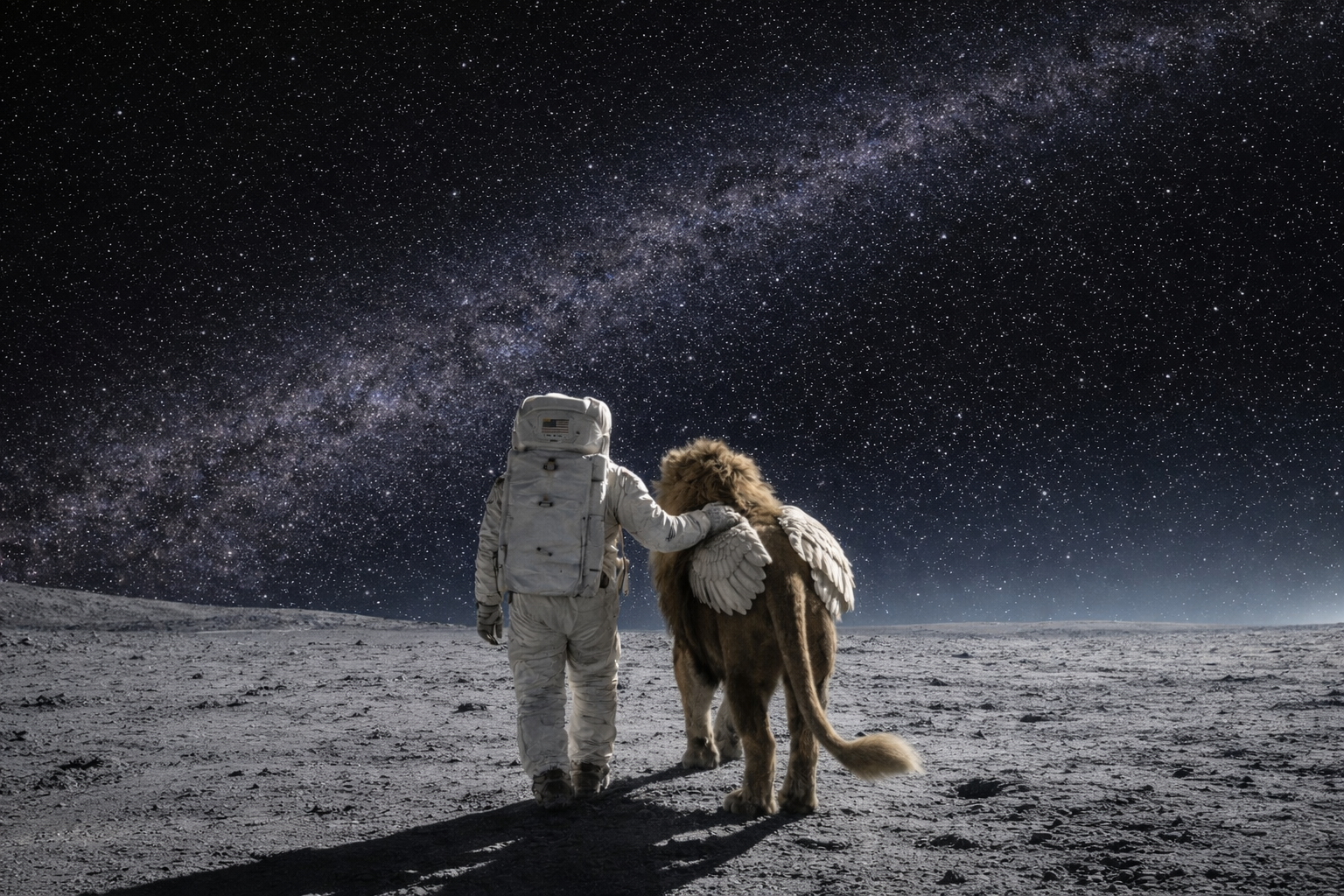
Written by Alexander Christian Greco
With Help of ChatGPT
Abstract
Space travel in the 2020s is undergoing its most transformative era since the Apollo missions. Unlike earlier decades—dominated by nation-states—today’s space industry is a hybrid ecosystem of government agencies, private corporations, multinational partnerships, and research institutions. This article provides a comprehensive overview of where space travel stands today, including the status of the International Space Station, the rise of reusable launch vehicles, the emergence of new spacefaring nations, the commercialization of low Earth orbit, the rapid expansion in lunar missions, and major developments in propulsion, robotics, and deep-space planning. These developments collectively represent the foundation of humanity’s next phase in the cosmos.
Disclosure
This article was produced with the assistance of ChatGPT using public scientific archives, NASA/ESA/JAXA/CSA/CNSA sources, historical materials, and technical literature. Human authorship, structure, and final editing decisions were completed by Alexander Christian Greco.
Introduction
Human space travel has entered a new era defined by reusability, rapid innovation, public–private collaboration, and intensified global competition. As of the 2020s, humanity has established permanent orbital infrastructure, deployed dozens of Mars, lunar, and asteroid missions, and begun preparing for sustained lunar presence through programs like NASA’s Artemis, China’s lunar strategy, and growing commercial partnerships.
Space is no longer a distant frontier. It is an active, expanding economic and scientific domain—emerging as a genuine extension of human civilization.
Table of Contents
- The International Space Station and Orbital Infrastructure
- Commercial Spaceflight and the “NewSpace” Economy
- Reusable Rockets, Heavy-Lift Vehicles, and New Launch Systems
- Lunar Programs and the Return to the Moon
- Mars Missions and Robotic Exploration
- Emerging Spacefaring Nations
- Space Habitats, Stations, and Commercial Orbital Platforms
- Breakthroughs in Robotics, Propulsion, and Deep-Space Planning
- The Growing Space Economy
- Conclusion
- References
- Further Reading
- Provenance & Author Note
- Timestamp
The International Space Station and Orbital Infrastructure
The International Space Station (ISS) remains the world’s primary hub for long-duration human spaceflight[1]. Operated by NASA, Roscosmos, ESA, JAXA, and the Canadian Space Agency, the ISS has hosted continuous crews since 2000.
Current Roles of the ISS
- Microgravity biomedical research
- Materials science and fluid physics
- Earth observation and climate monitoring
- Astronaut training for deep-space missions
- Testing life-support and radiation-protection technologies
The ISS is scheduled to retire in the early 2030s, with its scientific legacy continuing through commercial space stations and multinational successors.
Commercial Spaceflight and the “NewSpace” Economy
The modern space industry is dominated not only by national space agencies but increasingly by commercial launch providers and orbital service companies.
Key Commercial Leaders
- SpaceX — Reusable rockets, Starship development, commercial crew missions[2]
- Blue Origin — Suborbital tourism, New Glenn launch vehicle
- Rocket Lab — Small-lift rockets and dedicated payload launches
- Axiom Space — Commercial space station modules
- Virgin Galactic — Suborbital human spaceflight
Major Achievements
- Routine booster landings
- Regular commercial crew transport to the ISS
- Rapid cadences of satellite launches
- Space tourism becoming viable
Private companies have dramatically lowered launch costs, enabling a global boom in satellite constellations and commercial missions.
Reusable Rockets, Heavy-Lift Vehicles, and New Launch Systems
Reusability is the defining engineering advancement of the 21st century.
Reusable Launch Vehicles
- Falcon 9 pioneered first-stage vertical landings (2015–present).
- Falcon Heavy is one of the most powerful active rockets worldwide.
- Starship aims for full reusability and interplanetary capacity[3].
Government Heavy-Lift Systems
- NASA’s Space Launch System (SLS)[4] for Artemis missions
- China’s Long March 5 and future Long March 9
- ESA’s Ariane 6
More nations are now developing indigenous launch capabilities, reducing reliance on foreign suppliers.
Lunar Programs and the Return to the Moon
The Moon is once again the central focus of international space exploration.
NASA’s Artemis Program
Artemis aims to:
- Return astronauts to the Moon
- Establish a sustainable base
- Build the Lunar Gateway space station
- Prepare for Mars-bound missions
Artemis I successfully completed a lunar flyby in 2022[5].
China’s Lunar Ambitions
China’s rapid progress includes:
- Chang’e missions (sample return, landers, rovers)[6]
- Construction of its own International Lunar Research Station (ILRS) with Russia
- Plans for crewed lunar landings in the 2030s
Other Contributors
- India: Chandrayaan program
- Japan: SLIM lander and lunar partnerships
- Commercial lunar landers (Astrobotic, ispace)
The Moon has become a multipolar zone of exploration.
Mars Missions and Robotic Exploration
Mars remains the centerpiece of planetary science.
Recent Missions
- Perseverance rover and Ingenuity helicopter[7]
- Tianwen-1, China’s first Mars orbiter/lander/rover mission
- Mars Reconnaissance Orbiter, mapping the planet in high detail
Scientific Goals
- Searching for signs of past microbial life
- Understanding climate and geological changes
- Collecting samples for return to Earth
- Testing in-situ resource utilization (ISRU)
Future Plans
NASA and ESA are jointly preparing a Mars Sample Return mission, a major milestone for planetary science.
Emerging Spacefaring Nations
Space access is rapidly expanding.
Key New Players
- United Arab Emirates (UAE) — Hope Mars Mission (2020)
- South Korea — Nuri rocket launches
- Iran — Indigenous satellite launchers
- Turkey, Argentina, Brazil — Early-stage launch programs
- Israel — Beresheet lunar lander
This diversification signals a global shift from superpower dominance to widespread international capability.
Space Habitats, Stations, and Commercial Orbital Platforms
With the ISS retiring soon, the next frontier will be commercial space stations.
Major Projects
- Axiom Space Station — Modular, privately operated outpost
- Blue Origin’s Orbital Reef — Mixed-use commercial platform
- Northrop Grumman’s Free Flyer
NASA is actively transitioning low Earth orbit operations to private companies to reduce long-term costs.
Breakthroughs in Robotics, Propulsion, and Deep-Space Planning
Modern space capabilities are advancing rapidly.
Propulsion Developments
- Hall-effect ion thrusters
- Solar-electric propulsion
- Early-stage nuclear-thermal propulsion research
- Solar sail missions
Robotic Innovations
- Autonomous landing systems
- AI-driven navigation
- Swarm satellites for distributed sensing
Deep-Space Initiatives
- NASA’s Dragonfly mission to Titan
- Europa Clipper
- China’s asteroid sample-return missions
These technologies pave the way for future human exploration of Mars and beyond.
The Growing Space Economy
The global space economy is now valued at $500+ billion, projected to exceed $1 trillion by 2040.
Key Sectors
- Launch services
- Satellite internet (e.g., Starlink)[8]
- Earth observation
- Space tourism
- Commercial research
- Defense and security
Space is becoming an integral part of global economic infrastructure.
Conclusion
Humanity stands at a critical inflection point: space travel is no longer a theoretical or symbolic pursuit — it is a functioning, expanding ecosystem. Modern developments in reusability, international collaboration, robotic exploration, commercial space stations, and lunar programs are laying the foundation for a permanent human presence beyond Earth.
The stage is now set for Article 4: The Future of Space Travel and Interplanetary Technology, where we explore what comes next.
References
(APA style)
International Space Station. (n.d.). Wikipedia. https://en.wikipedia.org/wiki/International_Space_Station
SpaceX. (n.d.). Wikipedia. https://en.wikipedia.org/wiki/SpaceX
SpaceX Starship. (n.d.). Wikipedia. https://en.wikipedia.org/wiki/SpaceX_Starship
Space Launch System. (n.d.). Wikipedia. https://en.wikipedia.org/wiki/Space_Launch_System
Artemis I. (2022). Wikipedia. https://en.wikipedia.org/wiki/Artemis_1
Chang’e Program. (n.d.). Wikipedia. https://en.wikipedia.org/wiki/Chang%27e_program
Perseverance Rover. (2021). Wikipedia. https://en.wikipedia.org/wiki/Perseverance_(rover)
Starlink. (n.d.). Wikipedia. https://en.wikipedia.org/wiki/Starlink
Further Reading
- NASA 2020s Exploration Roadmap
- ESA Space Safety and Exploration Programs
- CNSA Lunar and Mars Missions
- MIT Space Systems Engineering Curriculum
Provenance & Author Note
This article was produced with the assistance of ChatGPT using publicly accessible sources, with all writing, organization, and editorial decisions overseen by Alexander Christian Greco.
Timestamp
Completed: 1 December 2025, 01:10 UTC
Leave a Reply