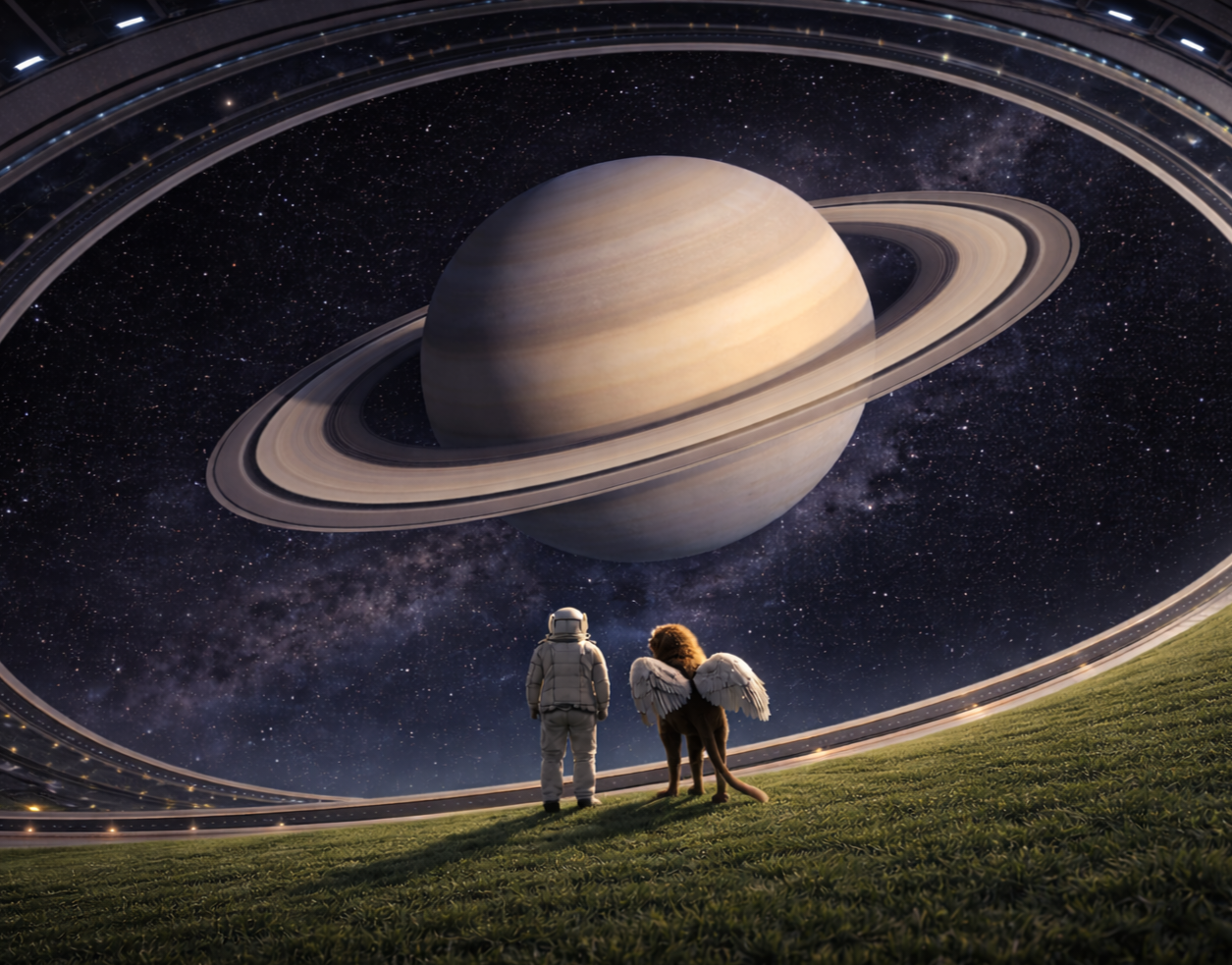
Written by Alexander Christian Greco
With the Help of ChatGPT

Abstract
The future of space travel represents one of the most profound transitions in human history: the shift from a single-planet civilization to a distributed, multi-planetary species. Advances in propulsion, robotics, artificial intelligence, materials science, and life-support systems are converging to make long-duration habitation beyond Earth increasingly feasible. Over the next century, space travel will evolve from exploration and research into settlement, industry, governance, and culture. This article examines the future of space travel across near-term (2025–2050), mid-term (2050–2100), and long-term (2100+) horizons, addressing technological pathways, economic drivers, ethical challenges, and the implications of humanity becoming a permanent presence beyond Earth.
Disclosure
This article was developed with the assistance of ChatGPT, an AI language model created by OpenAI, as a drafting and research support tool. The author reviewed, edited, structured, and contextualized the material for accuracy, clarity, and educational value. Readers are encouraged to consult official space agency publications and peer-reviewed research for primary verification.
Table of Contents
- Introduction: Space as Humanity’s Next Environment
- Near-Term Futures (2025–2050): From Missions to Infrastructure
- Cis-Lunar Space and Permanent Lunar Settlement
- Mars Settlement and the Limits of Planetary Engineering
- Space Habitats and Artificial Gravity Civilizations
- Propulsion Breakthroughs and Deep-Space Travel
- Automation, AI, and the Transformation of Spaceflight
- Space Economy, Industry, and Resource Utilization
- Governance, Ethics, and the Law of Space
- Long-Term Futures (2100+): Interstellar Civilization
- Conclusion: A Species in Transition
- References
- Further Reading & Learning Resources
1. Introduction: Space as Humanity’s Next Environment
For most of human history, space was an abstraction—an unreachable backdrop to life on Earth. The late 20th century transformed space into a destination, while the early 21st century began turning it into an operational domain. The future of space travel extends this trajectory further: space as a lived environment rather than a frontier.
This shift is driven by several converging pressures: technological maturity, economic incentives, geopolitical competition, environmental vulnerability on Earth, and the long-term survival of human civilization [1]. Rather than asking whether humanity will expand beyond Earth, the central questions now concern how, when, and under what rules.
2. Near-Term Futures (2025–2050): From Missions to Infrastructure

The next 25 years will focus on operational continuity rather than speculative leaps. The core objective is to make spaceflight routine, reliable, and scalable.
Key developments include:
- Regular crewed missions to the Moon through the Artemis program [2]
- Transition from the ISS to privately operated orbital stations [3]
- Long-duration Mars transit missions, initially without permanent settlement
- Growth of orbital manufacturing, assembly, and refueling infrastructure
Organizations such as NASA, alongside private companies like SpaceX, are building logistics networks that resemble early maritime trade routes rather than isolated expeditions [4].
3. Cis-Lunar Space and Permanent Lunar Settlement

The Moon will serve as humanity’s first permanent off-world settlement zone. Its proximity to Earth—only three days away—makes it uniquely suited for iterative development and risk mitigation.
Strategic Functions of the Moon
- Fuel production using polar water ice [5]
- Construction of deep-space vehicles using lunar materials
- Scientific observation free from Earth’s atmosphere
- Testing long-term life-support and radiation shielding systems
Habitats will likely be buried beneath regolith for radiation protection, while surface infrastructure supports power generation, mining, and transport. Cis-lunar space—the region between Earth and the Moon—will become an increasingly active economic and transportation corridor.
4. Mars Settlement and the Limits of Planetary Engineering

Mars represents a fundamentally different challenge. Unlike the Moon, Mars offers gravity, an atmosphere (albeit thin), and long-term settlement potential—but at far greater cost and risk.
Early Mars Settlement Characteristics
- Underground or lava-tube habitats
- Nuclear-powered energy systems
- Closed ecological life-support loops
- Extensive robotic pre-deployment [6]
Terraforming Mars remains largely theoretical. While proposals exist to thicken the atmosphere or warm the planet, current science suggests such processes would require centuries to millennia, if achievable at all [7]. As a result, Mars is more likely to host contained civilizations rather than Earth-like ecosystems.
5. Space Habitats and Artificial Gravity Civilizations
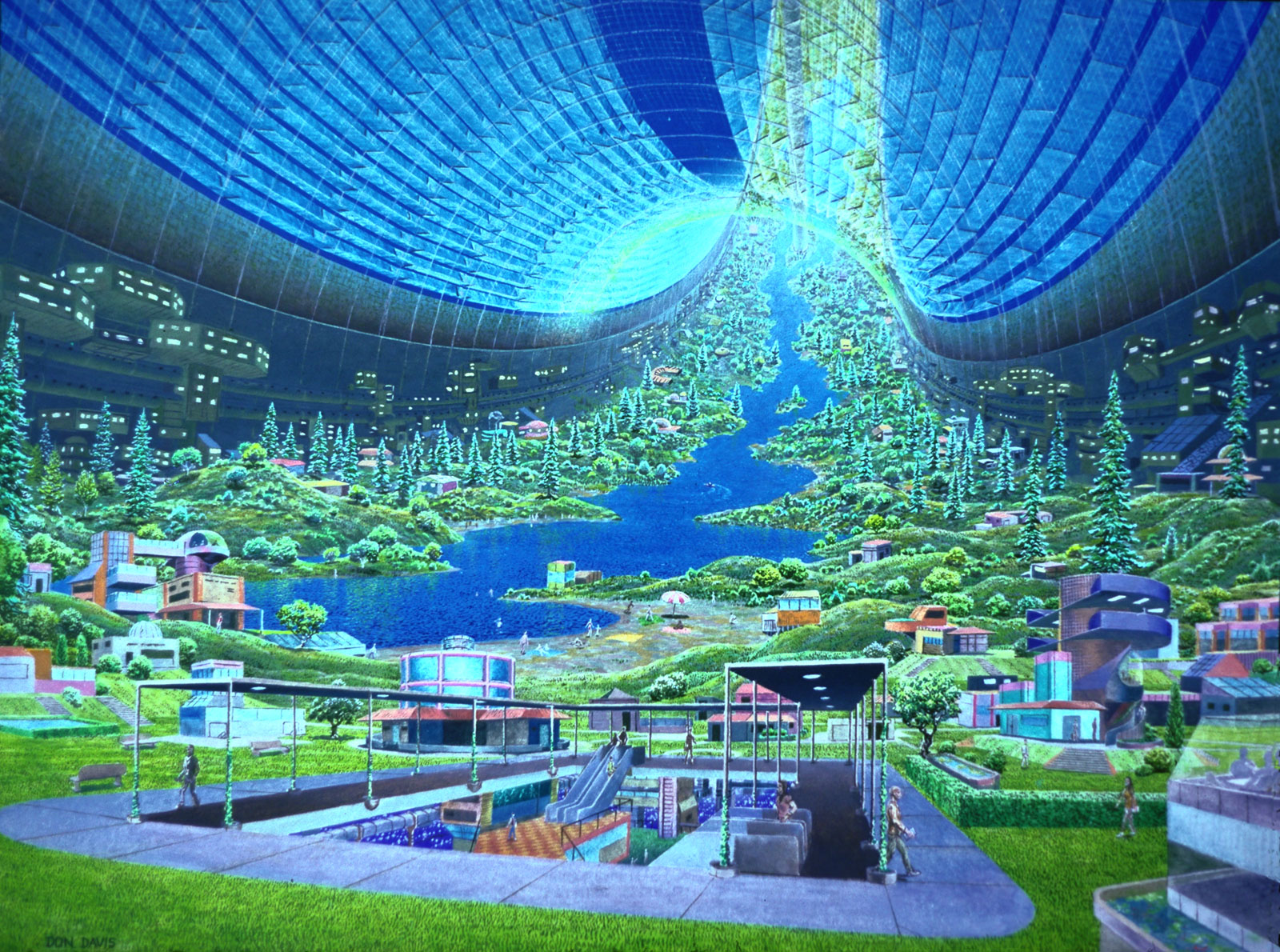
Beyond planets, the most scalable model for human expansion may be free-floating space habitats.
Proposed designs include:
- Stanford torus habitats
- O’Neill cylinders
- Modular rotating ring stations [8]
These structures use rotation to generate artificial gravity, mitigating long-term health effects such as bone loss and muscle atrophy. Unlike planetary colonies, space habitats can be constructed anywhere resources are available, allowing civilization to expand independently of planetary surfaces.
6. Propulsion Breakthroughs and Deep-Space Travel

4
Future space travel depends critically on propulsion innovation.
Promising Technologies
- Nuclear thermal propulsion (NTP)
- Nuclear electric propulsion (NEP)
- Fusion-based experimental drives
- Laser-propelled light sails for interstellar probes [9]
While faster-than-light travel remains speculative, these technologies drastically reduce travel time within the Solar System and enable missions to the outer planets and Kuiper Belt within human lifespans.
7. Automation, AI, and the Transformation of Spaceflight
Human expansion into space will be preceded—and increasingly accompanied—by machines.
Roles of automation and AI include:
- Autonomous construction of habitats
- Continuous monitoring and repair of life-support systems
- Scientific exploration at scale
- Reduced human risk exposure [10]
In the long term, human-machine hybrids, advanced robotics, and fully autonomous probes may travel where humans cannot, extending civilization’s reach beyond biological constraints.
8. Space Economy, Industry, and Resource Utilization
The economic foundation of space travel is shifting from government funding to self-sustaining industry.
Key sectors include:
- Asteroid mining for metals and volatiles
- Orbital manufacturing of high-precision materials
- Energy generation via space-based solar power
- Transportation, logistics, and construction services [11]
As costs fall, space will increasingly resemble an industrial ecosystem rather than a scientific outpost.
9. Governance, Ethics, and the Law of Space
Expansion into space raises unprecedented ethical and legal questions:
- Who owns extraterrestrial resources?
- How are disputes resolved beyond Earth?
- What rights do space-born humans possess?
- How do we prevent ecological harm on other worlds? [12]
Existing treaties, such as the Outer Space Treaty, were not designed for large-scale settlement or commerce. New governance frameworks will be essential to prevent conflict and exploitation.

10. Long-Term Futures (2100+): Interstellar Civilization

Beyond 2100, humanity may:
- Exist across multiple planetary systems
- Launch generation ships to nearby stars
- Develop post-biological forms of intelligence
- Treat Earth as one node within a distributed civilization [13]
At this scale, space travel becomes civilizational infrastructure, shaping identity, culture, and evolution itself.
11. Conclusion: A Species in Transition
The future of space travel is not simply a technological challenge—it is a civilizational transformation. Humanity’s expansion beyond Earth will redefine economics, politics, biology, and philosophy. Whether this expansion leads to cooperation or conflict, sustainability or exploitation, depends on decisions made in the coming decades. Space is no longer a distant horizon; it is humanity’s next environment.
References
- Dyson, F. (1979). Disturbing the Universe.
- NASA. (2023). Artemis Program Overview.
- ESA. (2022). Commercial Space Station Concepts.
- SpaceX. (2023). Starship Development Updates.
- Anand, M. et al. (2012). Lunar water resources. Nature.
- Zubrin, R. (2011). The Case for Mars.
- Jakosky, B., & Edwards, C. (2018). Mars terraforming limitations. Nature Astronomy.
- O’Neill, G. (1976). The High Frontier.
- National Academies. (2021). Space Nuclear Propulsion.
- Russell, S., & Norvig, P. (2020). Artificial Intelligence: A Modern Approach.
- Elvis, M. (2014). Asteroid mining economics. Planetary and Space Science.
- United Nations. (1967). Outer Space Treaty.
- Stapledon, O. (1937). Star Maker.
Further Reading & Learning Resources
Space Agencies & Programs
- NASA Human Exploration Roadmaps
- ESA Future Missions Portal
Books
- A City on Mars — Kelly & Zach Weinersmith
- The Case for Space — Robert Zubrin
- The High Frontier — Gerard K. O’Neill
Journals & Reports
- Acta Astronautica
- Nature Astronomy
- National Academies Space Studies
Multimedia
- NASA JPL YouTube Channel
- ESA Space Science Podcast
- PBS Space Time
Leave a Reply