Category: Uncategorized

  • Gardening and Small-Scale Agriculture: Types, Core Skills, and Practical Basics

    Gardening and Small-Scale Agriculture: Types, Core Skills, and Practical Basics

    Written by Alexander Christian Greco

    With the Help of ChatGPT

    https://cdn.mos.cms.futurecdn.net/fWttLb7PWemhiSPkSmTT78.jpg

    Introduction

    Agriculture is the practice of cultivating plants and animals for food, fiber, fuel, and other human needs. While agriculture is often associated with large-scale industrial farming, the majority of people who engage directly with food production do so through gardening and small-scale agricultural systems rather than industrial operations. These smaller systems operate on limited land, rely on human-scale labor, and are closely tied to household, community, or local food needs rather than global markets (Food and Agriculture Organization of the United Nations).

    https://www.southernliving.com/thmb/4LVlzOp4IO3M1BhLo-bDhVcX-nY%3D/1500x0/filters%3Ano_upscale%28%29%3Amax_bytes%28150000%29%3Astrip_icc%28%29/rmasey_vegetable_garden_overall_2491901_ramse_0391-2000-de885ad0dacc412e9cb8cd57d6ee7910.jpg

    This article is designed as a beginner-focused foundation for people interested in gardening, homesteading, or small-scale farming. It explains:

    1. The major types of agriculture and gardening systems
    2. The core methods, skills, and knowledge shared across these systems
    3. The practical basics required to successfully plant, grow, and manage crops

    The focus is on systems that individuals can realistically participate in, rather than on large-scale industrial agriculture.


    Section 1: Types of Agriculture and Gardening Systems

    https://www.bootstrapfarmer.com/cdn/shop/articles/MarketGardening.jpg?v=1724348108

    Large-Scale (Industrial) Agriculture

    Large-scale agriculture is designed to maximize yields across extensive land areas, often using monoculture cropping systems, heavy mechanization, and standardized inputs. These operations typically rely on synthetic fertilizers, chemical pest control, and global distribution networks. While this model produces large quantities of food, it requires significant capital investment, specialized equipment, and access to large tracts of land, making it inaccessible to most beginners (United States Department of Agriculture).


    Small-Scale Agriculture and Gardening

    Small-scale agriculture includes all food production systems that operate on limited land and are managed directly by individuals, families, or communities. These systems emphasize flexibility, biological diversity, and close interaction with soil and plants. Although they vary in scale and purpose, they share common ecological and biological foundations.

    Subsistence Farming

    Subsistence farming focuses on producing food primarily for household consumption rather than sale. Crops are selected to meet basic dietary needs, and production is diversified to reduce risk. This form of agriculture represents the most fundamental expression of food production and remains widespread globally (FAO, 2023).

    Smallholder Farming

    Smallholder farming operates on small plots of land and typically produces food for both household use and limited market sale. These systems often involve mixed cropping and family labor and play a critical role in regional food security worldwide.

    Home and Hobby Gardening

    Home and hobby gardening involve small plots such as backyards, raised beds, or containers and are often pursued for enjoyment, learning, or supplemental food. These systems are the most common entry point for beginners and provide foundational experience with plant growth, soil care, and seasonal cycles.

    https://www.lenexa.com/files/sharedassets/city/v/1/parks-places/parks-outdoors/images/park-electric-community-garden.jpg?dimension=pageimage&w=1140

    Urban Gardening and Urban Agriculture

    Urban agriculture adapts food production to cities through rooftops, balconies, community gardens, and vacant lots. These systems emphasize efficient land use, local food access, and community engagement, demonstrating that agriculture is not limited to rural environments.

    Market Gardening

    Market gardening is a small-scale commercial system that produces high-value crops intensively on limited land. It relies on careful planning, succession planting, and direct sales through farmers’ markets, restaurants, or subscription-based models.

    Homesteading

    Homesteading integrates gardening with broader self-sufficiency practices such as food preservation, composting, and sometimes small livestock. While not always income-focused, homesteading emphasizes resilience, skill-building, and reduced reliance on external systems.


    Section 2: Core Methods, Skills, and Knowledge Shared Across All Systems

    https://www.pennington.com/all-products/fertilizer/resources/-/media/Project/OneWeb/Pennington/Images/blog/fertilizer/how-to-prepare-garden-soil-for-planting/soil-preparation.jpg

    Despite differences in scale and purpose, all forms of small-scale agriculture rely on the same foundational principles.

    Soil Management

    Healthy soil is the foundation of productive agriculture. Soil structure, organic matter content, and biological activity determine water retention, nutrient availability, and root development. Research consistently shows that soils rich in organic matter support higher yields and greater resilience to drought and disease (Brady & Weil, 2016).

    Sunlight and Space Planning

    Plants require adequate sunlight for photosynthesis. Most food crops need six to eight hours of direct sun per day, while leafy greens can tolerate partial shade. Proper spacing improves airflow, reduces disease pressure, and allows plants to access sufficient nutrients.

    Water Management

    https://www.bhg.com/thmb/OX-gja78Pqt1uX3uYZ3ZhAXMudQ%3D/1280x0/filters%3Ano_upscale%28%29%3Astrip_icc%28%29/watering-vegetable-garden-with-watering-can-f3304023a1704347a5f4fe3f9fe054b8.jpg

    Water availability directly affects plant growth and yield. Deep, consistent watering encourages strong root systems, while mulching reduces evaporation and moderates soil temperature. Irregular watering is one of the most common causes of crop failure in beginner gardens.

    Plant Selection and Timing

    Successful growing begins with selecting crops appropriate for local climate and season. Beginners benefit from starting with fast-growing, resilient crops and limiting the number of new varieties grown each season. Aligning planting times with frost dates and temperature thresholds is essential.

    Observation and Adaptation

    Small-scale agriculture relies heavily on observation. Changes in leaf color, growth rate, and pest presence provide immediate feedback. Regular monitoring allows growers to adjust practices before minor problems become serious.


    Section 3: Practical Growing Basics — Cycles, Tools, Inputs, and Management

    https://cdn.shopify.com/s/files/1/0603/4892/4151/files/crop-rotation-diagram_web_rev.jpg

    Growing Cycles and Seasons

    Plants follow predictable biological cycles influenced by temperature, daylight, and moisture. Cool-season crops thrive in spring and fall, while warm-season crops require summer heat. Annual plants complete their life cycle in one season, while perennials return year after year. Understanding local frost dates is essential for planning (National Gardening Association, 2021).

    Crop Rotation and Succession Planting

    Crop rotation reduces nutrient depletion and disease buildup by avoiding repeated planting of the same crop families in one location. Succession planting staggers sowing dates to produce continuous harvests throughout the growing season.

    Tools for Small-Scale Systems

    https://growfully.com/wp-content/uploads/2021/03/must-have-hand-tools-gardeners.jpg

    Most beginners require only basic hand tools such as trowels, pruners, hoes, and watering equipment. Skill, consistency, and observation are more important than advanced equipment at small scales.

    Fertilizers and Soil Amendments

    Plants require nutrients, but excess inputs can be harmful. Compost provides slow-release nutrition while improving soil structure and microbial activity. Organic fertilizers support long-term soil health, whereas overuse of synthetic fertilizers can lead to nutrient imbalance and pest pressure (Gliessman, 2015).

    Chemicals and Pest Management

    Healthy soil and plant diversity reduce pest pressure naturally. Integrated approaches—such as physical barriers, crop rotation, and beneficial insects—are preferred in small-scale systems. Chemical controls are typically used only as a last resort.

    Yield Expectations and Learning Curve

    Beginners should expect gradual improvement over time. Inconsistent yields and occasional crop failures are part of the learning process. Skills compound over multiple seasons as soil health improves and experience grows.


    Conclusion

    https://www.creativevegetablegardener.com/wp-content/uploads/2018/05/organic-garden-fertilizer.png

    Gardening and small-scale agriculture encompass a wide range of systems, from simple hobby gardens to productive homesteads and market gardens. While these systems differ in scale and purpose, they share the same foundational requirements: healthy soil, adequate light and water, appropriate plant selection, and consistent observation.

    By understanding the different agricultural pathways available and mastering these basic principles, beginners can confidently begin growing food in almost any environment. Small-scale agriculture is not defined by land size or technology, but by attention, care, and respect for biological systems.


    References

    • Food and Agriculture Organization of the United Nations. (2023). Smallholder and family farming systems.
    • United States Department of Agriculture. (2022). Home gardening and small farm resources.
    • Brady, N. C., & Weil, R. R. (2016). The Nature and Properties of Soils. Pearson Education.
    • Gliessman, S. R. (2015). Agroecology: The Ecology of Sustainable Food Systems. CRC Press.
    • National Gardening Association. (2021). Gardening basics and plant care.

    Further Reading

    • Coleman, E. (2018). The New Organic Grower. Chelsea Green Publishing.
    • Jeavons, J. (2012). How to Grow More Vegetables. Ten Speed Press.
    • Hemenway, T. (2015). Gaia’s Garden: A Guide to Home-Scale Permaculture. Chelsea Green.
    • Rodale Institute. Soil health and organic farming research.
    • FAO. Urban agriculture and food security reports.

  • Content Creation III: Traditional Jobs and Their Role in the Content Creation Economy

    Content Creation III: Traditional Jobs and Their Role in the Content Creation Economy

    How Established Professions Sustain, Scale, and Stabilize Digital Media Businesses

    Written by Alexander Christian Greco

    With the Help ChatGPT


    Table of Contents

    1. Introduction: Why Traditional Jobs Matter in Content Creation
    2. Business & Operations Roles
    3. Finance, Accounting & Economic Control
    4. Legal, Compliance & Intellectual Property
    5. Sales, Partnerships & Revenue Operations
    6. Manufacturing, Logistics & Physical Distribution
    7. Human Resources, Talent & Organizational Design
    8. Entry Pathways Across Traditional Content-Adjacent Roles
    9. Closing Perspective
    10. References

    1. Introduction: Why Traditional Jobs Matter in Content Creation

    Content creation is often portrayed as an individual or personality-driven endeavor. In reality, once content becomes monetized and consistent, it begins to resemble a small media company—with recurring revenue, intellectual property, contractors, platforms, deadlines, and legal exposure. Media-economics research consistently shows that creative industries stabilize only when supported by formal organizational labor such as finance, law, operations, and logistics [1][2].

    Traditional jobs do not disappear in the content economy; they reassert themselves as scale increases. This article examines how those roles function inside content-creation businesses and how professionals enter these markets without needing to become creators themselves.


    2. Business & Operations Roles

    https://www.cflowapps.com/wp-content/uploads/2021/03/Purchasing_process.png
    https://www.slideteam.net/media/catalog/product/cache/1280x720/7/_/7_weeks_project_management_gantt_chart_slide01.jpg
    https://www.onit.com/wp-content/uploads/2025/03/ProcessMap.jpg

    5

    What These Jobs Do in a Content Creation Setting

    Business and operations professionals convert creative output into repeatable, manageable systems.

    In a content-creation business, these roles typically:

    • Build publishing and production schedules
    • Coordinate creators, editors, designers, and contractors
    • Manage platform deadlines and deliverables
    • Oversee budgeting and operational planning
    • Translate creative goals into executable plans

    Key Roles

    • Business Manager – Oversees strategy, budgets, growth planning, and monetization alignment
    • Operations Manager – Designs workflows for content production, publishing, and delivery
    • Project Manager – Manages launches, campaigns, series, and cross-platform initiatives
    • Operations / Office Administrator – Handles scheduling, documentation, and coordination

    These roles reduce chaos and burnout by replacing ad-hoc decisions with structured processes [3].

    Job Market Context

    Business and financial occupations are projected to grow faster than the overall labor market, with hundreds of thousands of annual openings driven by organizational demand across sectors [4].

    How to Join This Industry / Market

    1. Enter through standard business roles (operations, admin, project coordination)
    2. Learn project management tools and workflow systems
    3. Gain experience in small businesses or agencies
    4. Transition into media, publishing, or creator-led organizations
    5. Reframe experience as media operations rather than general administration

    Further Reading

    • Küng, Strategic Management in the Media
    • Doyle, Understanding Media Economics
    • Harvard Business Review – operations & organizational systems

    3. Finance, Accounting & Economic Control

    https://www.smartsheet.com/sites/default/files/IC-Family-Budget-Planner-Template.jpg
    https://www.calxa.com/wp-content/uploads/2018/05/Report-CashflowForecastChart.png
    https://marketplace.canva.com/EAFbyVLb7PE/1/0/1131w/canva-elegant-and-clean-monthly-budget-planner-sheet-gzGFRzqEU84.jpg

    5

    What These Jobs Do in a Content Creation Setting

    Finance professionals impose economic discipline on an otherwise volatile industry.

    In content businesses, finance roles:

    • Track multi-source revenue (ads, sponsorships, products, services)
    • Manage irregular income and cash-flow timing
    • Handle taxes, contractor payments, and compliance
    • Forecast revenue and pricing strategy
    • Identify unsustainable growth patterns early

    Key Roles

    • Accountant / Bookkeeper – Tracks income, expenses, and tax obligations
    • Financial Analyst – Analyzes revenue trends and monetization performance
    • Payroll / Payments Specialist – Manages contractor and freelancer compensation

    Research shows that many creator-led businesses fail not from lack of audience, but from poor financial management [5].

    Job Market Context

    Accounting and auditing roles maintain steady growth with wages above the national median, reflecting persistent demand across digital and non-digital industries alike [6].

    How to Join This Industry / Market

    1. Obtain a degree in accounting or finance (typical, but not always required)
    2. Enter through junior accounting or analyst roles
    3. Develop expertise in digital revenue models
    4. Specialize later in media or creator-focused finance
    5. Certifications (CPA, CMA) significantly improve mobility

    Further Reading

    • Picard, The Economics and Financing of Media Companies
    • OECD – creative sector financing reports
    • Journal of Cultural Economics

    4. Legal, Compliance & Intellectual Property

    https://plus.unsplash.com/premium_photo-1726837265016-a17d81347e59?fm=jpg&ixid=M3wxMjA3fDB8MHxwaG90by1yZWxhdGVkfDE2fHx8ZW58MHx8fHx8&ixlib=rb-4.1.0&q=60&w=3000
    https://www.researchgate.net/publication/368852518/figure/fig1/AS%3A11431281166178356%401686208171515/Types-of-Intellectual-Property-Rights.png
    https://www.internationaltrade.law/uploads/3/8/8/4/38847635/s628878544442326341_p41_i1_w1354.png

    5

    What These Jobs Do in a Content Creation Setting

    Content creation is fundamentally an intellectual-property business.

    Legal professionals in this space:

    • Draft and manage sponsorship and service contracts
    • Ensure copyright and licensing compliance
    • Protect trademarks and original works
    • Manage platform terms and disclosure requirements
    • Reduce legal and financial risk as businesses scale

    Key Roles

    • Contract Manager – Drafts and tracks agreements
    • Paralegal / Legal Assistant – Supports documentation and compliance
    • IP / Licensing Specialist – Manages rights, usage, and permissions
    • Compliance Officer – Ensures regulatory and platform compliance

    Without legal structure, content businesses face revenue clawbacks, platform penalties, and litigation [7].

    Job Market Context

    Demand for IP, licensing, and compliance roles has grown alongside digital publishing and global distribution complexity [8].

    How to Join This Industry / Market

    1. Study legal studies, paralegal programs, or law
    2. Enter through law firms or corporate legal departments
    3. Specialize in IP, advertising, or digital media law
    4. Transition into in-house roles at media or platform companies

    Further Reading

    • Lessig, Free Culture
    • World Intellectual Property Organization (WIPO)
    • New Media & Society

    5. Sales, Partnerships & Revenue Operations

    https://blog.infodiagram.com/wp-content/uploads/2016/05/sales_funnel_labeled_chart_icon_ppt.png
    https://upload.wikimedia.org/wikipedia/commons/thumb/3/36/Data_and_Media_Partnerships_Workflow_v2.svg/600px-Data_and_Media_Partnerships_Workflow_v2.svg.png
    https://www.highspot.com/wp-content/uploads/2025/03/HS_Infographics_RevOps_Framework_Image_20250220_PS.png

    5

    What These Jobs Do in a Content Creation Setting

    Revenue does not scale automatically with audience size.

    Sales and partnerships professionals:

    • Convert attention into contracts and recurring income
    • Negotiate sponsorships and brand deals
    • Build long-term advertiser relationships
    • Reduce dependence on volatile platform advertising
    • Design repeatable revenue pipelines

    Key Roles

    • Sales Representative – Closes advertising and sponsorship deals
    • Account Manager – Maintains partner relationships
    • Partnerships Manager – Develops strategic collaborations
    • Revenue Operations Analyst – Optimizes monetization systems

    These roles professionalize monetization and stabilize income streams [9].

    Job Market Context

    Sales and revenue roles remain among the most consistently available professional positions, especially in digital and advertising-adjacent industries [10].

    How to Join This Industry / Market

    1. Enter through sales or account support roles
    2. Learn CRM tools and negotiation fundamentals
    3. Gain experience in digital advertising models
    4. Specialize in media-based revenue systems

    Further Reading

    • Davenport & Beck, The Attention Economy
    • Stratechery (platform economics)
    • Journal of Media Business Studies

    6. Manufacturing, Logistics & Physical Distribution

    https://storage.icograms.com/templates/preview/logistics-supply-chain-diagram.png
    https://fulfillrite.com/wp-content/uploads/How-Ecommerce-Order-Fulfillment-Works-in-11-Steps.png
    https://blogstudio.s3.amazonaws.com/the-dairy/3b002826f489e70c9d2d86ed1d3be4fd.png

    What These Jobs Do in a Content Creation Setting

    As creators diversify revenue, many sell physical products.

    Logistics professionals:

    • Manage inventory and fulfillment
    • Coordinate manufacturing timelines
    • Ensure quality control
    • Optimize shipping and cost structures

    Key Roles

    • Product / Packaging Designer
    • Supply Chain Manager
    • Fulfillment Manager
    • Quality Control Specialist

    These roles apply industrial discipline to creator-led retail ventures [11].

    Job Market Context

    Logistics and supply-chain roles have experienced accelerated demand due to e-commerce growth [12].

    How to Join This Industry / Market

    1. Study logistics, supply chain, or operations
    2. Enter through warehouse or operations roles
    3. Gain experience with e-commerce systems
    4. Transition into creator-led product businesses

    Further Reading

    • Levinson, The Box
    • MIT Center for Transportation & Logistics
    • Journal of Business Logistics

    7. Human Resources, Talent & Organizational Design

    https://d3n817fwly711g.cloudfront.net/uploads/2014/07/Line-Organizational-Structure-1.png
    https://i1.rgstatic.net/publication/385074170_Remote_work_and_human_resource_management_Challenges_and_solutions/links/6713d41768ac3041499fbf06/largepreview.png
    https://images.template.net/282228/Contractor-Onboarding-Checklist-edit-online-2.jpg

    What These Jobs Do in a Content Creation Setting

    Content businesses rely heavily on freelancers and remote teams.

    HR professionals:

    • Manage contractor compliance
    • Coordinate recruitment and onboarding
    • Reduce turnover and burnout
    • Ensure labor law compliance

    Key Roles

    • HR Generalist
    • Recruiter
    • Talent Coordinator
    • Contractor Manager

    These roles provide continuity in a highly fragmented labor model [13].
    Job Market Context

    HR management roles show steady growth and strong median wages, especially in knowledge-based industries [14].

    How to Join This Industry / Market

    1. Study HR, business, or psychology
    2. Enter through HR assistant or recruiter roles
    3. Learn remote workforce compliance
    4. Transition into media or agency organizations

    Further Reading

    • Kalleberg, Precarious Lives
    • SHRM publications
    • Journal of Organizational Behavior

    8. Entry Pathways Across Traditional Content-Adjacent Roles

    Across all traditional roles, the dominant entry pattern is indirect:

    1. Enter through standard job markets
    2. Build transferable professional skills
    3. Learn media-specific constraints (platforms, IP, volatility)
    4. Transition into content-driven organizations

    This pathway preserves cross-industry mobility, offering long-term career resilience [15].


    9. Closing Perspective

    Content creation does not eliminate traditional professions—it depends on them.

    Creators generate attention, but traditional roles:

    • Stabilize revenue
    • Protect intellectual property
    • Enable scale
    • Sustain long-term operations

    For many professionals, the most durable path into the content economy is through established expertise, not visibility.


    References

    1. Towse, R. (2010). A Textbook of Cultural Economics.
    2. Hesmondhalgh, D. (2019). The Cultural Industries.
    3. Küng, L. (2017). Strategic Management in the Media.
    4. U.S. Bureau of Labor Statistics. Business and Financial Occupations.
    5. Picard, R. (2011). The Economics and Financing of Media Companies.
    6. U.S. Bureau of Labor Statistics. Accountants and Auditors.
    7. Lessig, L. (2004). Free Culture.
    8. World Intellectual Property Organization. Copyright in the Digital Economy.
    9. Davenport, T. & Beck, J. (2001). The Attention Economy.
    10. Harvard Business Review. Revenue Operations Research.
    11. Levinson, M. (2006). The Box.
    12. MIT Center for Transportation & Logistics.
    13. Kalleberg, A. (2018). Precarious Lives.
    14. U.S. Bureau of Labor Statistics. Human Resources Managers.
    15. OECD. (2020). Career Mobility and Skill Transfer.
  • Space Travel III: The Future of Space Travel and Human Expansion Beyond Earth

    Space Travel III: The Future of Space Travel and Human Expansion Beyond Earth

    Written by Alexander Christian Greco

    With the Help of ChatGPT

    https://cdn.mos.cms.futurecdn.net/AQh73c64EohNEyuNhcqsQf.jpg

    Abstract

    The future of space travel represents one of the most profound transitions in human history: the shift from a single-planet civilization to a distributed, multi-planetary species. Advances in propulsion, robotics, artificial intelligence, materials science, and life-support systems are converging to make long-duration habitation beyond Earth increasingly feasible. Over the next century, space travel will evolve from exploration and research into settlement, industry, governance, and culture. This article examines the future of space travel across near-term (2025–2050), mid-term (2050–2100), and long-term (2100+) horizons, addressing technological pathways, economic drivers, ethical challenges, and the implications of humanity becoming a permanent presence beyond Earth.


    Disclosure

    This article was developed with the assistance of ChatGPT, an AI language model created by OpenAI, as a drafting and research support tool. The author reviewed, edited, structured, and contextualized the material for accuracy, clarity, and educational value. Readers are encouraged to consult official space agency publications and peer-reviewed research for primary verification.


    Table of Contents

    1. Introduction: Space as Humanity’s Next Environment
    2. Near-Term Futures (2025–2050): From Missions to Infrastructure
    3. Cis-Lunar Space and Permanent Lunar Settlement
    4. Mars Settlement and the Limits of Planetary Engineering
    5. Space Habitats and Artificial Gravity Civilizations
    6. Propulsion Breakthroughs and Deep-Space Travel
    7. Automation, AI, and the Transformation of Spaceflight
    8. Space Economy, Industry, and Resource Utilization
    9. Governance, Ethics, and the Law of Space
    10. Long-Term Futures (2100+): Interstellar Civilization
    11. Conclusion: A Species in Transition
    12. References
    13. Further Reading & Learning Resources

    1. Introduction: Space as Humanity’s Next Environment

    For most of human history, space was an abstraction—an unreachable backdrop to life on Earth. The late 20th century transformed space into a destination, while the early 21st century began turning it into an operational domain. The future of space travel extends this trajectory further: space as a lived environment rather than a frontier.

    This shift is driven by several converging pressures: technological maturity, economic incentives, geopolitical competition, environmental vulnerability on Earth, and the long-term survival of human civilization [1]. Rather than asking whether humanity will expand beyond Earth, the central questions now concern how, when, and under what rules.


    2. Near-Term Futures (2025–2050): From Missions to Infrastructure

    https://www.nasa.gov/wp-content/uploads/2025/04/axiom-station-rendering-primary-earth.png

    The next 25 years will focus on operational continuity rather than speculative leaps. The core objective is to make spaceflight routine, reliable, and scalable.

    Key developments include:

    • Regular crewed missions to the Moon through the Artemis program [2]
    • Transition from the ISS to privately operated orbital stations [3]
    • Long-duration Mars transit missions, initially without permanent settlement
    • Growth of orbital manufacturing, assembly, and refueling infrastructure

    Organizations such as NASA, alongside private companies like SpaceX, are building logistics networks that resemble early maritime trade routes rather than isolated expeditions [4].


    3. Cis-Lunar Space and Permanent Lunar Settlement

    https://scitechdaily.com/images/Lunar-Base.jpg

    The Moon will serve as humanity’s first permanent off-world settlement zone. Its proximity to Earth—only three days away—makes it uniquely suited for iterative development and risk mitigation.

    Strategic Functions of the Moon

    • Fuel production using polar water ice [5]
    • Construction of deep-space vehicles using lunar materials
    • Scientific observation free from Earth’s atmosphere
    • Testing long-term life-support and radiation shielding systems

    Habitats will likely be buried beneath regolith for radiation protection, while surface infrastructure supports power generation, mining, and transport. Cis-lunar space—the region between Earth and the Moon—will become an increasingly active economic and transportation corridor.


    4. Mars Settlement and the Limits of Planetary Engineering

    https://futurism.com/wp-content/uploads/2020/06/Architectural-Concept-Martian-City-Breathtaking.jpg?quality=85&w=1152

    Mars represents a fundamentally different challenge. Unlike the Moon, Mars offers gravity, an atmosphere (albeit thin), and long-term settlement potential—but at far greater cost and risk.

    Early Mars Settlement Characteristics

    • Underground or lava-tube habitats
    • Nuclear-powered energy systems
    • Closed ecological life-support loops
    • Extensive robotic pre-deployment [6]

    Terraforming Mars remains largely theoretical. While proposals exist to thicken the atmosphere or warm the planet, current science suggests such processes would require centuries to millennia, if achievable at all [7]. As a result, Mars is more likely to host contained civilizations rather than Earth-like ecosystems.


    5. Space Habitats and Artificial Gravity Civilizations

    https://upload.wikimedia.org/wikipedia/commons/f/fc/Internal_view_of_the_Stanford_torus.jpg

    Beyond planets, the most scalable model for human expansion may be free-floating space habitats.

    Proposed designs include:

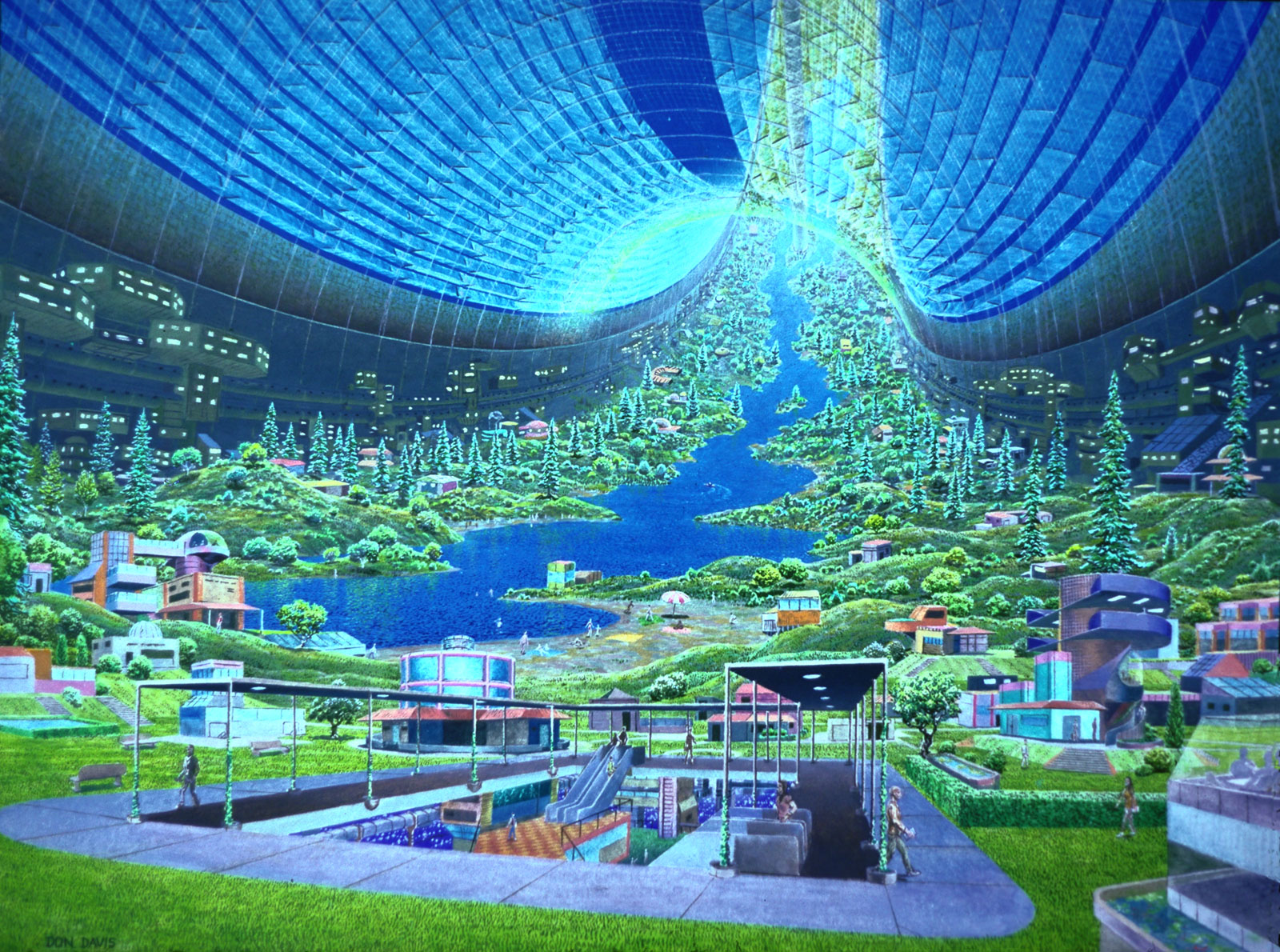
    • Stanford torus habitats
    • O’Neill cylinders
    • Modular rotating ring stations [8]

    These structures use rotation to generate artificial gravity, mitigating long-term health effects such as bone loss and muscle atrophy. Unlike planetary colonies, space habitats can be constructed anywhere resources are available, allowing civilization to expand independently of planetary surfaces.


    6. Propulsion Breakthroughs and Deep-Space Travel

    https://www.nasa.gov/wp-content/uploads/2021/07/nuclear_thermal_propulsion-concept.jpeg

    4

    Future space travel depends critically on propulsion innovation.

    Promising Technologies

    • Nuclear thermal propulsion (NTP)
    • Nuclear electric propulsion (NEP)
    • Fusion-based experimental drives
    • Laser-propelled light sails for interstellar probes [9]

    While faster-than-light travel remains speculative, these technologies drastically reduce travel time within the Solar System and enable missions to the outer planets and Kuiper Belt within human lifespans.


    7. Automation, AI, and the Transformation of Spaceflight

    https://bigthink.com/wp-content/uploads/2024/02/space-robots.jpg?resize=1200%2C630

    Human expansion into space will be preceded—and increasingly accompanied—by machines.

    Roles of automation and AI include:

    • Autonomous construction of habitats
    • Continuous monitoring and repair of life-support systems
    • Scientific exploration at scale
    • Reduced human risk exposure [10]

    In the long term, human-machine hybrids, advanced robotics, and fully autonomous probes may travel where humans cannot, extending civilization’s reach beyond biological constraints.


    8. Space Economy, Industry, and Resource Utilization

    The economic foundation of space travel is shifting from government funding to self-sustaining industry.

    Key sectors include:

    • Asteroid mining for metals and volatiles
    • Orbital manufacturing of high-precision materials
    • Energy generation via space-based solar power
    • Transportation, logistics, and construction services [11]

    As costs fall, space will increasingly resemble an industrial ecosystem rather than a scientific outpost.


    9. Governance, Ethics, and the Law of Space

    https://substackcdn.com/image/fetch/%24s_%211eC0%21%2Cf_auto%2Cq_auto%3Abest%2Cfl_progressive%3Asteep/https%3A%2F%2Fspaceambition.substack.com%2Fapi%2Fv1%2Fpost_preview%2F99127972%2Ftwitter.jpg%3Fversion%3D4

    Expansion into space raises unprecedented ethical and legal questions:

    • Who owns extraterrestrial resources?
    • How are disputes resolved beyond Earth?
    • What rights do space-born humans possess?
    • How do we prevent ecological harm on other worlds? [12]

    Existing treaties, such as the Outer Space Treaty, were not designed for large-scale settlement or commerce. New governance frameworks will be essential to prevent conflict and exploitation.

    https://www.fortworthtexas.gov/files/assets/public/v/1/news/images/city-news-future-city-hall-update-council-chamber.png?w=1200

    10. Long-Term Futures (2100+): Interstellar Civilization

    https://cdn.mos.cms.futurecdn.net/v2/t%3A0%2Cl%3A437%2Ccw%3A1125%2Cch%3A1125%2Cq%3A80%2Cw%3A1125/TaZ4pvT76N5MBwY5p68bBJ.jpg

    Beyond 2100, humanity may:

    • Exist across multiple planetary systems
    • Launch generation ships to nearby stars
    • Develop post-biological forms of intelligence
    • Treat Earth as one node within a distributed civilization [13]

    At this scale, space travel becomes civilizational infrastructure, shaping identity, culture, and evolution itself.


    11. Conclusion: A Species in Transition

    The future of space travel is not simply a technological challenge—it is a civilizational transformation. Humanity’s expansion beyond Earth will redefine economics, politics, biology, and philosophy. Whether this expansion leads to cooperation or conflict, sustainability or exploitation, depends on decisions made in the coming decades. Space is no longer a distant horizon; it is humanity’s next environment.


    References

    1. Dyson, F. (1979). Disturbing the Universe.
    2. NASA. (2023). Artemis Program Overview.
    3. ESA. (2022). Commercial Space Station Concepts.
    4. SpaceX. (2023). Starship Development Updates.
    5. Anand, M. et al. (2012). Lunar water resources. Nature.
    6. Zubrin, R. (2011). The Case for Mars.
    7. Jakosky, B., & Edwards, C. (2018). Mars terraforming limitations. Nature Astronomy.
    8. O’Neill, G. (1976). The High Frontier.
    9. National Academies. (2021). Space Nuclear Propulsion.
    10. Russell, S., & Norvig, P. (2020). Artificial Intelligence: A Modern Approach.
    11. Elvis, M. (2014). Asteroid mining economics. Planetary and Space Science.
    12. United Nations. (1967). Outer Space Treaty.
    13. Stapledon, O. (1937). Star Maker.

    Further Reading & Learning Resources

    Space Agencies & Programs

    • NASA Human Exploration Roadmaps
    • ESA Future Missions Portal

    Books

    • A City on Mars — Kelly & Zach Weinersmith
    • The Case for Space — Robert Zubrin
    • The High Frontier — Gerard K. O’Neill

    Journals & Reports

    • Acta Astronautica
    • Nature Astronomy
    • National Academies Space Studies

    Multimedia

    • NASA JPL YouTube Channel
    • ESA Space Science Podcast
    • PBS Space Time
  • Fundamentals of Computers Part III: How Computers Are Built

    Fundamentals of Computers Part III: How Computers Are Built

    https://bisconticomputers.com/wp-content/uploads/2014/12/pc_components.jpg

    Abstract

    In the previous article, we examined the functional structure of computers—how data flows through processors, memory, storage, and input/output systems. This follow-up continues from that foundation by focusing on computer engineering as a physical discipline. Rather than abstractions, this article explains how computers are physically constructed, from semiconductor materials and integrated circuits to printed circuit boards, power systems, cooling solutions, and final assembly. The goal is to provide readers with a concrete understanding of how modern computers exist as engineered objects in the real world.


    https://angstromtechnology.com/wp-content/uploads/2023/04/semiconductor-cleanroom-1080x675.jpg

    1. Computer Engineering Beyond Abstraction

    Computer engineering bridges theory and physical reality. While software defines instructions and logic, hardware defines electrical limits, physical constraints, and performance ceilings. Every computation depends on:

    • Electron flow through conductive materials
    • Voltage thresholds that represent binary states
    • Timing constraints imposed by physical distance
    • Heat generation from electrical resistance

    At its core, a computer is a carefully synchronized electromechanical system, engineered to operate reliably at microscopic scales.


    2. Silicon and Semiconductor Foundations

    https://cdn.prod.website-files.com/60a3c1fc44c5715c395770e7/60df7de63067ba78b72f29a8_Depositphotos_5935701_l-2015-1.jpeg

    2.1 Why Silicon Is Used

    Silicon is the dominant semiconductor material because it:

    • Can be precisely doped to control conductivity
    • Forms a stable insulating oxide
    • Operates efficiently at room temperature
    • Is abundant and cost-effective

    By introducing impurities (boron or phosphorus), engineers create p-type and n-type regions, forming the basis of transistors.

    https://i.sstatic.net/whWVa.jpg

    2.2 Transistors as Physical Switches

    A transistor is a voltage-controlled gate that allows or blocks current flow. Modern processors contain billions of transistors, each measuring only a few nanometers wide. Their physical arrangement determines:

    • Switching speed
    • Power efficiency
    • Heat concentration

    2.3 Integrated Circuit Fabrication

    Semiconductor manufacturing uses photolithography to build chips layer by layer:

    1. Silicon wafers are polished
    2. Light-sensitive resist is applied
    3. Ultraviolet light transfers circuit patterns
    4. Chemical etching removes material
    5. Metal layers form interconnects

    This process is repeated dozens of times to build complex, multi-layered circuits.

    https://hyperphysics.phy-astr.gsu.edu/hbase/Electronic/ietron/and4.gif

    3. Central Processing Units (CPUs)

    https://upload.wikimedia.org/wikipedia/commons/thumb/a/a4/Intel_Core_i9-13900K_Labelled_Die_Shot.jpg/1280px-Intel_Core_i9-13900K_Labelled_Die_Shot.jpg

    The CPU is the primary computation engine of a computer. Physically, it consists of:

    • Arithmetic Logic Units (ALUs) for calculations
    • Control logic to manage instruction flow
    • Registers for ultra-fast temporary storage
    • Cache memory embedded directly on the die
    https://upload.wikimedia.org/wikipedia/commons/0/08/Computer_architecture_block_diagram.png

    Physical Considerations

    CPU performance is limited by:

    • Clock distribution across the die
    • Heat dissipation density
    • Electrical signal delay
    https://cdn.mos.cms.futurecdn.net/yVSrUGpYTxjrKcA954VBJG.png

    Modern CPUs use large metal heat spreaders and require direct contact with cooling systems to prevent thermal throttling.


    4. Graphics Processing Units (GPUs)

    https://www.servethehome.com/wp-content/uploads/2021/04/NVIDIA-Grace-GTC-2021-CPU-and-GPU-Close-Up.jpg

    GPUs are optimized for massive parallelism. Physically, they feature:

    • Thousands of small compute cores
    • Wide memory interfaces
    • Large PCB footprints

    Graphics cards also include:

    • Dedicated voltage regulators
    • Multiple power connectors
    • Complex cooling assemblies

    Their size and power requirements reflect the extreme electrical and thermal demands of parallel computation.


    5. Motherboards and Chipsets

    https://upload.wikimedia.org/wikipedia/commons/b/bd/Motherboard_diagram.svg

    The motherboard is the structural backbone of a computer.

    5.1 Printed Circuit Board Structure

    Motherboards are multi-layer PCBs containing:

    • Copper signal layers
    • Power and ground planes
    • Insulating dielectric layers

    High-end boards may have 10–16 layers, allowing dense routing and stable power delivery.

    5.2 Chipsets and Controllers

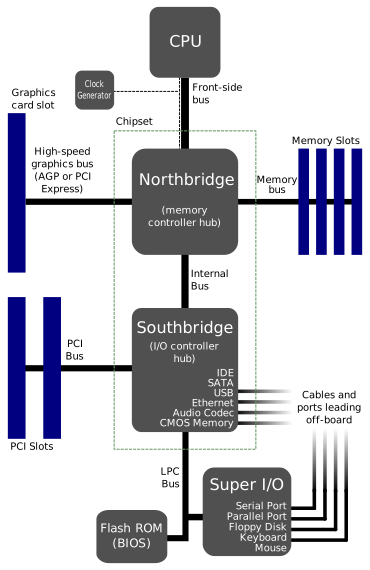
    The chipset coordinates communication between:

    • CPU
    • Memory
    • Storage
    • Expansion devices

    Its physical placement minimizes signal delay and electrical interference.


    6. Memory Hardware (RAM)

    https://static1.howtogeekimages.com/wordpress/wp-content/uploads/2013/11/img_528005656b8e5.jpg

    Dynamic RAM (DRAM) stores data using tiny capacitors that must be refreshed continuously.

    Physically, RAM modules include:

    • Memory chips mounted on a PCB
    • Edge connectors for the motherboard
    • Timing-sensitive trace layouts

    RAM performance depends on:

    • Signal integrity
    • Electrical noise suppression
    • Precise synchronization with the CPU

    7. Storage Devices

    https://upload.wikimedia.org/wikipedia/commons/c/ca/Apertura_hard_disk_04.jpg

    7.1 Hard Disk Drives (HDDs)

    HDDs are electromechanical devices containing:

    • Spinning magnetic platters
    • Precision actuator arms
    • Read/write heads floating nanometers above the surface

    7.2 Solid State Drives (SSDs)

    SSDs replace mechanical parts with:

    • NAND flash memory chips
    • Controllers managing wear leveling
    • High-speed interfaces like NVMe

    Physically, SSDs are compact PCBs optimized for signal speed and heat dissipation.


    8. Power Supply Units and Voltage Regulation

    https://static.righto.com/images/atx/labeled-w700.jpg

    Computers require multiple voltage levels. The PSU converts wall power into regulated DC outputs, while Voltage Regulation Modules (VRMs) on the motherboard fine-tune power delivery.

    Poor power regulation leads to:

    • Instability
    • Data corruption
    • Hardware failure

    Power engineering is critical for system reliability.

    https://gamemaxpc.com/static/upload/image/20250425/1745560098958821.png

    9. Cooling and Thermal Management

    https://us.aorus.com/upload/Product/F_202012091718593FTf3H.JPG

    Heat is the primary physical limiter of performance.

    Cooling systems include:

    • Heat sinks
    • Fans
    • Heat pipes
    • Liquid cooling loops

    Thermal paste improves heat transfer between chips and coolers. Proper airflow design prevents hot spots and extends component lifespan.


    10. Mechanical Design and Enclosures

    Enclosures provide:

    • Structural integrity
    • Electromagnetic shielding
    • Airflow management

    Form factors (desktop, laptop, server) impose different mechanical constraints that influence component layout and cooling strategy.


    Conclusion: Computing as Engineered Matter

    Computers are not abstract machines—they are precision-engineered physical systems. Every software instruction depends on materials science, electrical design, mechanical structure, and thermal control. Computer engineering transforms raw materials into reliable computational platforms, making modern digital life possible.

  • Content Creation II:   Content Creation Jobs and Careers

    Content Creation II:   Content Creation Jobs and Careers

    Written by Alexander Christian Greco

    With the Help of ChatGPT

    https://gamedev.tv/_next/image?q=50&url=https%3A%2F%2Fgamedev-files.b-cdn.net%2Fasset_packs%2Fkqnhjae49eej.png&w=3840

    Introduction: Content Creation as a Working Industry, Not a Fantasy

    Content creation is often treated as a speculative pursuit—something dependent on attention, algorithms, or luck. In practice, it functions as a distributed labor market composed of ordinary, recognizable jobs embedded inside companies, institutions, agencies, and public organizations.

    Most people earning stable income from content creation are not public personalities. They are writers, editors, analysts, educators, designers, managers, researchers, marketers, and technologists whose work supports communication, education, marketing, and documentation at scale.

    This article expands on that reality by explaining what these jobs actually involve, how people enter them, and why they are economically sustainable, while also situating each role within the broader labor market.


    Disclosure

    This article was written with the assistance of ChatGPT, an AI language model developed by OpenAI, and has been edited and structured by the author to reflect current labor-market research, industry norms, and professional practice.
    All job descriptions, salary ranges, and market outlooks are educational estimates, intended to provide general guidance rather than guarantees. Readers should consult region-specific labor statistics and employers when making career decisions.


    1. Writing and Editorial CareersSection 1–2: Writing, Editorial, Research Roles

    https://profiletree.com/wp-content/uploads/2024/06/image-426.jpeg

    Represents:

    What These Jobs Do

    Writing and editorial professionals translate complex ideas into clear, usable language. Roles include:

    • Content and blog writers
    • Technical and documentation writers
    • UX writers and product copywriters
    • Marketing and sales copywriters
    • Grant, policy, medical, and scientific writers
    • Editors (copy, developmental, managing)

    These roles exist wherever organizations need explanation, instruction, or persuasion.

    How to Enter

    • Choose a domain (technology, healthcare, education, finance, policy)
    • Build 5–10 strong writing samples solving real problems
    • Learn editorial standards, version control, and basic SEO
    • Apply to junior roles or freelance directly for organizations

    How to Be Successful

    • Specialize in complex or regulated topics
    • Write clearly for non-experts
    • Be reliable and deadline-driven
    • Collaborate well with subject-matter experts

    Long-Term Income Sustainability

    • Salaried corporate or institutional roles
    • Retainer-based freelance contracts
    • Advancement into senior editor, lead writer, or content strategist positions

    Labor-Market Snapshot

    • Typical salary (US): $55,000–$95,000 (senior specialists $100k+)
    • Workforce size: Hundreds of thousands across industries
    • Job growth: Steady; driven by digital transformation and regulation
    • Feasibility: High — writing skills are broadly transferable

    2. Research, Documentation, and Knowledge Roles

    What These Jobs Do

    These professionals ensure accuracy, credibility, and institutional memory:

    • Research assistants and analysts
    • Fact-checkers
    • Documentation specialists
    • Knowledge managers and content librarians

    They support writers, engineers, educators, and leadership teams.

    How to Enter

    • Build research summaries or annotated bibliographies
    • Learn citation and documentation standards
    • Apply to academic, nonprofit, government, or technical organizations

    How to Be Successful

    • Precision and verification discipline
    • Strong organizational systems
    • Comfort working behind the scenes

    Long-Term Income Sustainability

    • Institutional employment
    • Long-term documentation and compliance work
    • Advancement into content governance or operations

    Labor-Market Snapshot

    • Typical salary: $50,000–$85,000
    • Workforce size: Tens of thousands (often under different titles)
    • Job growth: Stable; tied to regulation, research, and compliance
    • Feasibility: High in institutional settings

    3. Video, Film, and Media Production Jobs

    https://ca-times.brightspotcdn.com/dims4/default/98622df/2147483647/strip/true/crop/2409x1606%2B716%2B0/resize/1200x800%21/quality/75/?url=https%3A%2F%2Fcalifornia-times-brightspot.s3.amazonaws.com%2F78%2Ff7%2F68d652434391b13e8373242afea2%2Fmurderbot-photo-010301.jpg

    What These Jobs Do

    Most video professionals are not on camera. They:

    • Edit footage
    • Create motion graphics
    • Manage lighting, sound, and post-production
    • Coordinate production workflows

    Content is often distributed on platforms such as YouTube, but produced for companies, agencies, and schools.

    How to Enter

    • Learn professional editing tools
    • Build a focused demo reel (3–5 projects)
    • Assist agencies or freelance editors
    • Transition into in-house roles
    https://cdn.mos.cms.futurecdn.net/ZrwYeduXDmXn7x8isrfpLm.jpg

    How to Be Successful

    • Speed and consistency
    • Understanding brand guidelines
    • Strong collaboration skills

    Long-Term Income Sustainability

    • Full-time media production jobs
    • Retainer-based freelance editing
    • Advancement into production management

    Labor-Market Snapshot

    • Typical salary: $50,000–$90,000
    • Workforce size: Large and growing
    • Job growth: Strong, driven by video-first communication
    • Feasibility: High for skilled editors

    4. Audio, Podcasting, and Voice Careers

    What These Jobs Do

    Audio professionals handle:

    • Podcast editing and production
    • Sound design
    • Voiceover and narration
    • Audiobook recording

    Distribution platforms like Spotify host content, but income usually comes from clients.

    https://signatureboston.s3.amazonaws.com/made/img/2024-09-11_bcec_podcast_studio_09_36_14_-_28de80_-_5ad8979939083dcf957da727c93eb7444378f73a.jpg

    How to Enter

    • Learn audio editing software
    • Practice editing raw audio
    • Offer services to podcasters or brands

    Long-Term Income Sustainability

    • Retainer podcast clients
    • Studio or production company employment

    Labor-Market Snapshot

    • Typical salary: $45,000–$85,000
    • Workforce size: Smaller but specialized
    • Job growth: Moderate, stable
    • Feasibility: Good for technical specialists

    5. Graphic Design, Visual Art, and Image Creation

    What These Jobs Do

    Visual professionals create:

    • Brand identities
    • Illustrations and infographics
    • Presentation and marketing visuals
    • Product and editorial imagery

    Tools from companies like Adobe are standard.


    How to Enter

    1. Learn design fundamentals and tools
    2. Build a focused portfolio
    3. Freelance or apply to junior design roles
    4. Specialize in a niche

    How to Be Successful

    • Consistent visual language
    • Understanding user needs
    • Strong collaboration

    Labor-Market Snapshot

    • Typical salary: $50,000–$90,000
    • Workforce size: Hundreds of thousands
    • Job growth: Steady; tied to branding and UX
    • Feasibility: High with specialization

    (Steps, success factors, and sustainability follow the same structure as above.)


    6. Social Media and Platform-Specific Content Roles

    https://api.army.mil/e2/c/images/2024/01/19/f81ce9e0/max1200.jpg

    What These Jobs Do

    They adapt content to specific platforms:

    • Social media managers
    • Platform-specific editors
    • Short-form video specialists
    • Trend and engagement analysts

    How to Enter

    1. Learn platform mechanics and analytics
    2. Manage real accounts or campaigns
    3. Demonstrate measurable growth
    4. Apply to agency or brand roles

    How to Be Successful

    • Data-informed creativity
    • Consistent output
    • Audience awareness

    Labor-Market Snapshot

    • Typical salary: $45,000–$85,000
    • Workforce size: Large and growing
    • Job growth: High but platform-dependent
    • Feasibility: Moderate–high when paired with analytics

    7. Community, Membership, and Audience Management

    https://madsciblog.tradoc.army.mil/wp-content/uploads/2019/01/Future-City.jpg

    What These Jobs Do

    Community professionals manage:

    • Forums and memberships
    • Discord and Slack communities
    • Customer engagement ecosystems

    How to Enter

    1. Moderate or manage small communities
    2. Learn engagement and conflict resolution
    3. Apply to SaaS, education, or creator businesses

    How to Be Successful

    • Empathy and consistency
    • Clear rules and communication
    • Long-term relationship building

    Labor-Market Snapshot

    • Typical salary: $55,000–$95,000
    • Workforce size: Tens of thousands
    • Job growth: Strong in SaaS and education
    • Feasibility: High, low visibility risk

    8. Content Strategy, Operations, and Management

    What These Jobs Do

    They design and manage content systems:

    • Planning pipelines
    • Managing teams
    • Aligning content with business goals

    How to Enter

    1. Start as a writer, editor, or marketer
    2. Learn project management tools
    3. Demonstrate organizational leadership

    How to Be Successful

    • Systems thinking
    • Clear communication
    • Cross-team collaboration

    Labor-Market Snapshot

    • Typical salary: $70,000–$120,000+
    • Workforce size: Smaller but senior
    • Job growth: Strong, driven by content scale
    • Feasibility: Very high

    9. SEO, Analytics, and Performance-Driven Roles

    What These Jobs Do

    They ensure content is found and optimized:

    • SEO optimization
    • Analytics and reporting
    • Conversion testing

    They frequently work with tools from Google.


    How to Enter

    1. Learn SEO and analytics fundamentals
    2. Optimize real projects
    3. Show measurable results

    How to Be Successful

    • Data literacy
    • Continuous learning
    • Clear reporting

    Often working with tools from Google.

    Labor-Market Snapshot

    • Typical salary: $65,000–$110,000
    • Workforce size: Large
    • Job growth: Strong, data-driven
    • Feasibility: Very high

    10. Business, Monetization, and Commercial Content Jobs

    What These Jobs Do

    They convert content into revenue:

    • Sponsorship management
    • Licensing and rights
    • Merchandising
    • Affiliate operations

    How to Enter

    1. Learn digital business fundamentals
    2. Assist sales or partnerships teams
    3. Build negotiation skills

    How to Be Successful

    • Business literacy
    • Ethical negotiation
    • Revenue forecasting

    Labor-Market Snapshot

    • Typical salary: $65,000–$120,000+ (often salary + commission)
    • Workforce size: Moderate
    • Job growth: Strong where content is monetized
    • Feasibility: High for business-oriented professionals

    11. Education, Training, and Instructional Content Careers

    What These Jobs Do

    They create structured learning:

    • Courses and curricula
    • Corporate training
    • Educational media

    How to Enter

    1. Learn instructional design principles
    2. Build sample lessons
    3. Work with schools or companies

    How to Be Successful

    • Pedagogical clarity
    • Structured thinking

    Labor-Market Snapshot

    • Typical salary: $60,000–$100,000
    • Workforce size: Large and institutional
    • Job growth: Stable to strong
    • Feasibility: Very high

    12. Technical, Data, and Platform-Infrastructure Roles

    Section 12: Technical, Platform & Infrastructure Roles

    https://devopedia.org/images/article/462/5413.1690115930.jpg

    Represents:

    What These Jobs Do

    They maintain content systems:

    • CMS management
    • Data analysis
    • Automation workflows
    https://emt.gartnerweb.com/ngw/globalassets/en/infrastructure-and-operations/images/infographics/diagram-of-platform-engineering.png

    How to Enter

    1. Learn CMS and analytics tools
    2. Work on real systems

    How to Be Successful

    • Systems thinking
    • Documentation discipline

    Labor-Market Snapshot

    • Typical salary: $70,000–$130,000
    • Workforce size: Large
    • Job growth: Strong
    • Feasibility: Extremely high

    13. Freelance, Salaried, and Hybrid Career Models (Expanded)

    Section 13–14: Career Models & Economic Sustainability

    https://miro.medium.com/v2/resize%3Afit%3A1400/1%2Ao8_eWcyDNNkns60DmEkX_A.jpeg

    Represents:

    Most sustainable content careers are not single-track.

    Common Models

    • Salaried specialist (writer, analyst, designer)
    • Freelancer with retainers
    • Hybrid professional (full-time role + consulting)
    • Educator-practitioner (teaching + production)

    Why Hybrid Models Work

    • Reduce income volatility
    • Allow skill stacking
    • Increase bargaining power

    Feasibility increases when content work is treated as professional labor, not speculative media.

    How to Join

    This section outlines practical, repeatable entry paths into the most common content-creation career models. These paths reflect how people actually enter the field, rather than idealized or viral narratives.

    1. Salaried Content Professional (Corporate or Institutional)

    Who this model fits:
    Individuals seeking stability, benefits, predictable income, and long-term career growth.

    How to get started:

    1. Choose a function, not a platform (writing, editing, analytics, design, education, operations).
    2. Build a portfolio focused on organizational value, not personal expression.
    3. Apply to roles inside companies, universities, healthcare systems, nonprofits, and government agencies.
    4. Emphasize reliability, collaboration, and documentation skills during interviews.

    Common entry roles:

    • Junior writer or editor
    • Marketing or content coordinator
    • Instructional design assistant
    • Media production assistant
    • SEO or analytics associate

    Why this works:
    These roles are funded through budgets, not views or virality. They exist regardless of platform trends.


    2. Freelance Specialist (Retainer-Based)

    Who this model fits:
    Professionals with a specific, in-demand skill who want flexibility without instability.

    How to get started:

    1. Choose one narrow service (e.g., technical writing, video editing, SEO audits).
    2. Create clear service packages, not open-ended offers.
    3. Start with short contracts and convert reliable clients into monthly retainers.
    4. Limit the number of clients to maintain quality and prevent burnout.

    Key success strategy:
    Avoid gig-based work whenever possible. Retainers stabilize income and reduce time spent selling.


    3. Hybrid Model (Salaried + Freelance or Consulting)

    Who this model fits:
    Mid-career professionals looking to increase income while maintaining security.

    How to get started:

    1. Secure a primary salaried role with predictable hours.
    2. Offer freelance or consulting services outside employer scope.
    3. Focus side work on higher-leverage tasks (strategy, audits, training, documentation).
    4. Gradually scale consulting if demand grows.

    Why this model is common:
    It allows professionals to test entrepreneurship without financial risk.


    4. Educator-Practitioner Model

    Who this model fits:
    Professionals with experience who want to monetize expertise and extend career longevity.

    How to get started:

    1. Work first as a practitioner (writer, strategist, analyst, designer).
    2. Document processes and frameworks while working.
    3. Teach through courses, workshops, internal training, or consulting.
    4. Combine instruction with ongoing professional work.

    Economic advantage:
    Education income is often evergreen and reinforces professional authority.


    5. Creator-Led Business With Employees or Contractors

    Who this model fits:
    Experienced professionals with systems, demand, and operational discipline.

    How to get started:

    1. Establish consistent demand for a service or product.
    2. Standardize workflows and documentation.
    3. Hire contractors before employees.
    4. Separate personal identity from business operations.

    Key risk mitigation:
    This model requires management skills and should be pursued after financial stability is achieved elsewhere.


    14. Why These Jobs Are Economically Sustainable (Expanded)

    https://www.apu.apus.edu/images/site/apu/protecting-critical-infrastructure.jpg

    These roles persist because they:

    1. Solve real organizational problems
    2. Produce measurable outcomes
    3. Exist across multiple industries
    4. Are not dependent on personal fame

    Unlike influencer income, these careers are tied to budgets, headcount, compliance, education, and revenue, which makes them durable even when platforms change.

    This section explains why content-related careers persist economically and what professionals must do to maintain long-term stability.


    Why These Roles Are Economically Sustainable

    These roles endure because they are tied to structural organizational needs, not trends.

    Content-related jobs persist because organizations must continuously:

    • Communicate with customers and employees
    • Document systems, policies, and processes
    • Educate users, clients, and staff
    • Market products and services
    • Maintain compliance and public trust

    These needs exist in:

    • Corporations
    • Healthcare systems
    • Universities
    • Government agencies
    • Nonprofits
    • Technology companies

    As long as institutions exist, these roles exist.


    What Makes These Jobs Different From “Influencer” Income

    Influencer IncomeContent Professional Income
    Platform-dependentInstitution-dependent
    VolatileBudgeted
    Attention-drivenUtility-driven
    Personality-centricRole-centric
    UnpredictableContractual or salaried

    Economic sustainability comes from being embedded in systems, not chasing attention.


    How Professionals Maintain Long-Term Economic Sustainability

    1. Specialization Over Generality

    Generalists compete on price. Specialists compete on value.

    Sustainable professionals:

    • Focus on regulated, technical, or complex domains
    • Solve specific problems repeatedly
    • Become difficult to replace

    2. Portfolio and Documentation Discipline

    Professionals maintain:

    • Updated portfolios
    • Process documentation
    • Case studies with outcomes

    This reduces job search friction and increases negotiating power.


    3. Income Diversification (Without Overextension)

    Sustainable careers rarely rely on a single income source.

    Common diversification:

    • Salary + consulting
    • Freelance + teaching
    • Retainers + project work

    Diversification works when systems are simple and repeatable.


    4. Skill Renewal and Market Awareness

    Content tools change. Core skills do not.

    Sustainable professionals:

    • Update tools, not fundamentals
    • Track hiring trends
    • Adjust offerings based on demand signals

    5. Treating Content as Labor, Not Identity

    Economic sustainability improves when content work is treated as:

    • A profession
    • A service
    • A problem-solving function

    Not:

    • A personal brand gamble
    • A popularity contest
    • A lifestyle experiment

    The Core Sustainability Principle

    Visibility creates opportunity.
    Utility creates income.
    Systems create longevity.

    Professionals who focus on utility and systems rather than exposure are the ones who build careers that last decades rather than months.


    Conclusion: Content Creation as a Legitimate Career Domain

    Content creation is not a fantasy economy. It is a communication and knowledge labor market embedded in modern institutions. While visibility attracts attention, utility sustains careers.

    Understanding the full ecosystem—jobs, entry paths, salaries, and growth—reveals that making a living from content creation is not only possible, but common when approached deliberately.

  • Start as a Content Creator I: Strategy, Skills, and Sustainable Growth

    Start as a Content Creator I: Strategy, Skills, and Sustainable Growth

    Written by Alexander Christian Greco

    With Help from ChatGPT

    Abstract

    Content creation has evolved into a legitimate and durable form of professional work across media, education, entertainment, and commerce. Despite its visibility, entry into content creation is often misunderstood. New creators frequently focus on virality, monetization, or platform growth before developing the foundational skills and systems required for long-term sustainability. This article provides a practical, strategy-driven guide to starting as a content creator, emphasizing skill development, consistency, audience value, and sustainable habits. Rather than focusing on platform-specific tactics or adjacent industries, this guide centers on the creator’s early-stage decisions and mindset.


    Disclosure

    This article was developed with the assistance of artificial intelligence (ChatGPT) as a drafting and editorial support tool. All content has been reviewed and structured to prioritize accuracy, clarity, and educational usefulness. Readers are encouraged to validate information independently and adapt strategies to their specific goals and contexts.


    Table of Contents

    1. Defining Content Creation
    2. Choosing a Direction Without Over-Specializing
    3. Platforms as Distribution Tools, Not Identities
    4. Foundational Skills for Content Creators
    5. Building Sustainable Creation Habits
    6. Content Strategy: What to Create and Why
    7. Quantity, Quality, and Skill Development
    8. Feedback, Iteration, and Learning Loops
    9. Avoiding Burnout and Common Creator Pitfalls
    10. Developing a Long-Term Creator Mindset
    11. Preparing for Expansion and Future Roles

    1. Defining Content Creation

    Content creation is the intentional production of media designed to communicate value to an audience. This value may take the form of education, entertainment, commentary, storytelling, or practical utility. Importantly, content creation is not defined by audience size, income, or platform reach, but by consistent, purposeful communication (Katz & Lazarsfeld, 1955).

    A person producing thoughtful, structured content for a small audience is engaging in the same core practice as a large-scale creator. The difference lies in scale, not substance. Research on media production consistently shows that long-term success is correlated more strongly with persistence and skill acquisition than with early popularity (Ericsson, Krampe, & Tesch-Römer, 1993).


    2. Choosing a Direction Without Over-Specializing

    New creators are often advised to “find a niche” immediately. While specialization is important, doing so too early can hinder experimentation and learning. Early-stage creators benefit more from directional clarity than rigid specialization (Ries, 2011).

    A practical framework for choosing an initial direction includes:

    • Interest: Topics that naturally sustain curiosity
    • Developing competence: Areas of learning or skill acquisition
    • Audience usefulness: Problems others actively seek help with

    This exploratory phase allows creators to test formats, tones, and subject matter while gathering feedback. Studies in creative skill development emphasize that early variation accelerates mastery by revealing strengths and weaknesses more quickly (Sawyer, 2012).


    3. Platforms as Distribution Tools, Not Identities

    Platforms such as video, audio, or written publishing environments function as distribution mechanisms, not definitions of creative identity. Over-identifying with a single platform increases vulnerability to algorithm changes and platform decline (Napoli, 2011).

    Creators should instead focus on:

    • Selecting a primary format aligned with their strengths
    • Developing transferable skills (writing, speaking, storytelling)
    • Viewing platforms as interchangeable channels

    Media theory research suggests that creators who prioritize format-agnostic skills adapt more successfully across technological shifts (Jenkins, 2006).


    4. Foundational Skills for Content Creators

    Regardless of medium, successful creators develop several core competencies.

    Communication and Clarity

    Clear communication is the foundation of audience trust. Content that reduces cognitive load and structures ideas logically is more likely to be retained and shared (Sweller, 1988).

    Audience Perspective

    Effective creators anticipate audience questions and misunderstandings. This aligns with educational research showing that teaching effectiveness increases when instructors model learner perspectives (Chi et al., 1994).

    Production Literacy

    Basic familiarity with recording, editing, and formatting tools reduces friction and increases consistency. Importantly, technical mastery is secondary to communicative clarity.

    Consistency and Reliability

    Consistency builds audience expectation and trust. Longitudinal studies of creative professionals indicate that regular output correlates strongly with skill improvement and opportunity discovery (Amabile, 1996).


    5. Building Sustainable Creation Habits

    Motivation is unreliable; systems are durable. Habit research demonstrates that consistent routines outperform intention-based productivity strategies over time (Clear, 2018).

    Effective habits include:

    • Setting minimum viable output goals
    • Separating creation from publishing
    • Reducing friction through templates and batching

    Sustainable creators design workflows that accommodate low-energy periods without collapsing entirely.


    6. Content Strategy: What to Create and Why

    Early-stage creators benefit from a rotational content strategy:

    1. Foundational content: Explaining basic concepts
    2. Process documentation: Sharing learning journeys
    3. Reflective analysis: Synthesizing lessons learned

    This approach aligns with research on peer learning, which shows that audiences often benefit more from near-peer explanations than expert-level abstraction (Vygotsky, 1978).

    Each piece of content should answer at least one question:

    • What problem does this solve?
    • What confusion does this reduce?
    • What insight does this provide?

    7. Quantity, Quality, and Skill Development

    The perceived tension between quantity and quality is misleading. Early in a creator’s development, quantity enables quality by accelerating feedback cycles (Gladwell, 2008).

    Deliberate practice research suggests that repeated execution with reflection produces faster improvement than isolated attempts at perfection (Ericsson et al., 1993). Early content should therefore be treated as training data rather than final output.


    8. Feedback, Iteration, and Learning Loops

    Creators improve through iterative feedback loops. Useful feedback sources include:

    • Audience questions and comments
    • Retention and engagement patterns
    • Self-review and revision

    Overemphasis on vanity metrics can distort learning. Media analytics research emphasizes qualitative feedback over raw reach during early growth stages (Napoli, 2011).


    9. Avoiding Burnout and Common Creator Pitfalls

    Burnout among creators is well-documented and often results from:

    • Overproduction without recovery
    • Algorithm-driven identity loss
    • Monetization pressure too early in the process

    Psychological research on creative labor highlights the importance of autonomy, pacing, and intrinsic motivation in sustaining output (Deci & Ryan, 2000).


    10. Developing a Long-Term Creator Mindset

    Successful creators adopt a long-term orientation, prioritizing trust and cumulative value over short-term visibility. This mirrors findings in reputation economics, where consistent quality compounds more reliably than sporadic attention spikes (Fombrun, 1996).

    Key mindset shifts include:

    • From virality to usefulness
    • From metrics to mastery
    • From platforms to people

    11. Preparing for Expansion and Future Roles

    This article focuses deliberately on starting as a creator. As skills mature, creators often branch into adjacent roles involving editing, strategy, production, analytics, or education. These pathways will be explored in future articles to maintain conceptual clarity between creation and infrastructure.


    References

    Amabile, T. M. (1996). Creativity in context. Westview Press.

    Chi, M. T. H., Bassok, M., Lewis, M. W., Reimann, P., & Glaser, R. (1994). Self-explanations: How students study and use examples. Cognitive Science, 18(2), 145–182.

    Clear, J. (2018). Atomic habits. Avery.

    Deci, E. L., & Ryan, R. M. (2000). The “what” and “why” of goal pursuits. Psychological Inquiry, 11(4), 227–268.

    Ericsson, K. A., Krampe, R. T., & Tesch-Römer, C. (1993). The role of deliberate practice in the acquisition of expert performance. Psychological Review, 100(3), 363–406.

    Fombrun, C. J. (1996). Reputation: Realizing value from the corporate image. Harvard Business School Press.

    Gladwell, M. (2008). Outliers. Little, Brown and Company.

    Jenkins, H. (2006). Convergence culture. NYU Press.

    Napoli, P. M. (2011). Audience evolution. Columbia University Press.

    Ries, E. (2011). The lean startup. Crown Publishing.

    Sawyer, R. K. (2012). Explaining creativity. Oxford University Press.

    Sweller, J. (1988). Cognitive load during problem solving. Cognitive Science, 12(2), 257–285.

    Vygotsky, L. S. (1978). Mind in society. Harvard University Press.


    Further Reading & Resources

    General Content Creation

    • Show Your Work! — Austin Kleon
    • The Creative Habit — Twyla Tharp
    • Content Inc. — Joe Pulizzi
    • Nielsen Norman Group: usability and communication research
    • Pew Research Center: media and creator economy studies

    Role-Specific / Job-Adjacent Paths (Preview for Future Articles)

    • Editing & Post-Production:
      • In the Blink of an Eye — Walter Murch
    • Content Strategy & Planning:
      • Made to Stick — Heath & Heath
    • Educational Content Creation:
      • Understanding by Design — Wiggins & McTighe
    • Analytics & Audience Research:
      • Everybody Lies — Seth Stephens-Davidowitz
  • Content Creation I: Content Creation Jobs and Their Related Markets

    Content Creation I: Content Creation Jobs and Their Related Markets

    Written by Alexander Christian Greco

    With the Help of ChatGPT


    1. Introduction

    Content creation has evolved from a niche hobby into a global economic engine. What was once dominated by bloggers and early video platforms is now a vast, interconnected job market spanning media, technology, marketing, education, entertainment, and commerce. Today, content creators are not only writers or performers—they are strategists, analysts, educators, designers, engineers, and entrepreneurs.

    This article provides a comprehensive overview of content creation jobs, followed by an examination of the related job markets that support, scale, and monetize content ecosystems. Rather than focusing narrowly on influencer culture, this guide maps the full professional landscape and establishes a foundation for deeper exploration in future articles.


    Table of Contents

    1. Introduction

    Core Content Creation Roles

    2.1 Writers and Editorial Creators

    2.2 Video Creators and Visual Storytellers

    2.3 Audio Creators and Podcasters

    Creative Design and Visual Content Jobs

    3.1 Graphic Designers and Visual Artists

    3.2 Photography and Image Creation

    Social Media and Community-Focused Roles

    4.1 Social Media Content Creators

    4.2 Community Builders and Audience Managers

    Strategic and Managerial Content Roles

    5.1 Content Strategists and Editors

    5.2 SEO, Analytics, and Performance Specialists

    Education, Knowledge, and Instructional Content Jobs

    6.1 Educational Content Creators

    6.2 Technical and Specialized Content Experts

    Monetization, Business, and Creator-Economy Roles

    7.1 Creator Entrepreneurs

    7.2 Support and Infrastructure Roles

    Technology, AI, and Emerging Content Roles

    8.1 AI-Assisted Content Roles

    8.2 Platform and Tool Builders

    9. Related Job Markets and Industry Overlap

    10. Conclusion

    Future Articles: Expanded Job Lists, Training Pathways, and Market Growth

    Conclusion


    2. Core Content Creation Roles

    2.1 Writers and Editorial Creators

    Writing remains foundational to content creation, even in an increasingly visual and automated world. Writers shape ideas, translate complex concepts, and provide structure across nearly all content formats.

    Common roles include:

    • Blog and article writers
    • Technical writers
    • Copywriters (marketing, UX, sales)
    • Ghostwriters
    • Scriptwriters (video, podcast, advertising)
    • Newsletter writers and editors

    These roles exist across publishing, technology, healthcare, finance, education, and government sectors.

    2.2 Video Creators and Visual Storytellers

    Video is one of the fastest-growing content formats, driven by platforms such as YouTube, TikTok, and Instagram.

    Key roles include:

    • Video producers
    • Video editors
    • Cinematographers
    • Motion graphics designers
    • Short-form video specialists

    Video creators increasingly combine storytelling with analytics, platform optimization, and monetization strategy.

    2.3 Audio Creators and Podcasters

    Audio content has expanded through podcasts, audiobooks, and voice-driven media.

    Roles include:

    • Podcast hosts and producers
    • Audio editors and sound engineers
    • Voiceover artists
    • Audiobook narrators

    Platforms such as Spotify and Apple Podcasts support a growing professional audio ecosystem.


    3. Creative Design and Visual Content Jobs

    3.1 Graphic Designers and Visual Artists

    Visual design gives content its identity and usability.

    Roles include:

    • Graphic designers
    • Brand identity designers
    • Illustrators
    • Infographic designers
    • Presentation designers

    Designers work closely with writers, marketers, and developers to create cohesive experiences.

    3.2 Photography and Image Creation

    Still imagery remains critical for branding, journalism, and commerce.

    Roles include:

    • Commercial photographers
    • Editorial photographers
    • Product photographers
    • Stock image contributors

    Tools from companies such as Adobe have expanded both creative control and technical expectations.


    4. Social Media and Community-Focused Roles

    4.1 Social Media Content Creators

    These professionals adapt content to platform-specific cultures and algorithms.

    Roles include:

    • Social media managers
    • Platform-specific creators
    • Short-form video editors
    • Trend and engagement specialists

    4.2 Community Builders and Audience Managers

    Content increasingly succeeds through community, not just reach.

    Roles include:

    • Community managers
    • Forum and membership moderators
    • Discord and Slack administrators

    5. Strategic and Managerial Content Roles

    5.1 Content Strategists and Editors

    Strategists ensure consistency, quality, and alignment with organizational goals.

    Roles include:

    • Content strategists
    • Managing editors
    • Editorial directors
    • Content operations managers

    5.2 SEO, Analytics, and Performance Specialists

    Content performance is deeply data-driven.

    Roles include:

    • SEO specialists
    • Content analysts
    • Growth marketers

    Conversion optimization experts

    They frequently work with platforms such as Google to optimize discoverability.


    6. Education, Knowledge, and Instructional Content Jobs

    6.1 Educational Content Creators

    Education is one of the most stable and scalable content markets.

    Roles include:

    • Online course creators
    • Curriculum designers
    • Instructional designers
    • Educational video creators

    6.2 Technical and Specialized Content Experts

    Highly regulated and technical fields require specialized creators.

    Roles include:

    • Technical educators
    • Scientific communicators
    • Financial, legal, and medical writers

    7. Monetization, Business, and Creator-Economy Roles

    7.1 Creator Entrepreneurs

    Many creators operate as independent businesses.

    Roles include:

    • Independent creators
    • Newsletter founders
    • Digital product sellers
    • Membership and subscription operators

    7.2 Support and Infrastructure Roles

    Behind creators are professionals who enable scale.

    Roles include:

    • Talent managers
    • Brand partnership managers
    • Sponsorship sales specialists
    • Rights and licensing professionals

    8. Technology, AI, and Emerging Content Roles

    8.1 AI-Assisted Content Roles

    AI reshapes workflows rather than replacing creativity.

    Emerging roles include:

    • AI content editors
    • Prompt engineers
    • Automation and workflow designers
    • Synthetic media specialists

    8.2 Platform and Tool Builders

    Content ecosystems depend on software and infrastructure.

    Roles include:

    • Creator-tool developers
    • Product managers
    • UX researchers

    9. Related Job Markets and Industry Overlap

    Content creation overlaps heavily with:

    • Marketing and advertising
    • Software and AI development
    • Education and workforce training
    • Journalism and public information
    • Entertainment and gaming
    • E-commerce and direct-to-consumer brands

    This overlap makes content skills highly transferable across industries.


    10. Conclusion

    This concludes the first article in this series, with a focus on establishing a baseline of what jobs are in the content creation industry, and what jobs are available tangentially to the industry.

    In the future, I will develop articles expanding on these ideas, and articles developing ways to get certifications, training and education related to content creation, and related to tangential industries. With that said, I hope you enjoyed going through this, I hope it helped, and please keep up with the articles and series!

    Future Articles: Expanded Job Lists, Training Pathways, and Market Growth

    This article serves as a foundational overview. Future articles in this series will expand on each major category with greater depth and practical guidance, including:

    • Elaborated job lists for each role category, broken down by junior, mid-level, and senior positions
    • Required and recommended skills, tools, and software stacks
    • Training pathways, including degrees, certifications, bootcamps, self-directed learning, and portfolio development
    • Industry-specific applications, such as content roles in healthcare, finance, education, technology, and entertainment
    • Job market analysis, including hiring trends, freelance vs. salaried demand, and geographic considerations
    • Market growth discussions, examining how creator-economy platforms, AI tools, and digital media consumption are shaping future demand

    Together, these future articles will function as a career-navigation guide, helping readers understand not only what content creation jobs exist, but how to realistically enter, grow, and specialize within them.

    Conclusion

    The content creation job market is no longer a single career path—it is a network of creative, technical, strategic, and entrepreneurial roles embedded across nearly every modern industry. From writers and video creators to analysts, educators, and AI-assisted specialists, content professionals shape how information, culture, and value move through the digital economy.

    As platforms evolve and industries continue to digitize, content creation is becoming a core professional skill set rather than a niche occupation. Understanding this ecosystem is the first step toward navigating the future of work itself.

  • Healthy Diets on a Budget

    Healthy Diets on a Budget

    By Alexander Christian Greco

    With Help from ChatGPT


    Disclosure


    This article was drafted with the assistance of ChatGPT.


    Introduction: “Healthy” and “Budget-Friendly” Can Be the Same Thing


    A lot of the foods most strongly associated with long-term health are also some of the cheapest per serving—especially when you buy them in shelf-stable or frozen forms. Public health guidance consistently emphasizes overall dietary patterns: more vegetables and fruits, more whole grains, more lean/plant proteins, and less added sugar, sodium, and saturated fat.


    Dietary Guidelines


    The trick isn’t buying “perfect” food. It’s building a short list of reliable staples you can repeat weekly, with small variations so meals don’t feel boring.


    What “Healthiest” Means in This Article


    For budget-friendly shopping, “healthy” usually means foods that deliver a lot of:

    1. Calories (Energy)
    Calories fuel all bodily functions. Most adults require approximately 1,800–2,400 calories per day, depending on age, size, and activity level.

    2. Protein
    Protein is required for muscle maintenance, immune function, and cellular repair. Typical needs range from 60–100 grams per day for most adults.

    3. Carbohydrates
    Carbohydrates provide the body’s primary energy source, especially for the brain. Whole-food carbohydrate sources also supply fiber and micronutrients.

    4. Dietary Fat
    Fats are essential for hormone production, brain health, and vitamin absorption. Healthy diets include moderate amounts of unsaturated fats.

    5. Fiber and Micronutrients
    Fiber supports digestive and metabolic health, while vitamins and minerals support nearly every physiological process. These nutrients come primarily from whole foods.


    The Healthiest Budget-Friendly Foods (and Why They’re Worth It)


    1) Beans, Lentils, and Chickpeas (Dried or Canned)


    If you want the single best “nutrition-per-dollar” category, it’s legumes. They’re high in fiber and plant protein, versatile across cuisines, and shelf-stable. Major heart-health organizations routinely recommend legumes as a smart staple.

    How to buy cheapest:
    Dried beans/lentils are usually the lowest-cost option per serving.


    Canned beans are still a great deal when you need speed—just rinse to reduce sodium.


    Easy uses: chickpea salad, lentil soup, curry, bean-and-rice bowls.


    2) Oats (Old-Fashioned or Steel-Cut)


    Oats are one of the best cheap breakfasts: fiber-rich, filling, and customizable. They also pair well with frozen fruit, peanut butter, yogurt, or cinnamon.


    How to buy cheapest:
    Buy the largest container of plain oats (skip flavored packets).
    Use leftovers as overnight oats or bake into oatmeal bars.


    3) Whole-Wheat Pasta, and Other Whole Grains


    Dietary guidance consistently recommends whole grains over refined grains because they offer more fiber and micronutrients and tend to be more filling.


    The Nutrition Source +2


    Budget-friendly whole grains include:


    Whole-wheat pasta
    Barley
    Bulgur
    Whole-grain bread (store brands can be great)


    Pro tip: Build your meals around a grain + legume + frozen veg formula.


    4) Eggs


    Eggs are inexpensive, high-quality protein and fast to cook. They also act like a “meal multiplier” when you add them to rice bowls, stir-fries, soups, or breakfast-for-dinner.


    Budget move: Make a veggie-heavy frittata using frozen spinach, onions, or leftover vegetables.


    5) Plain Greek Yogurt (or Regular Plain Yogurt)


    Plain yogurt is a strong budget pick when it replaces pricier snacks or sugary breakfast foods. It provides protein (especially Greek yogurt), calcium, and works in both sweet and savory recipes.


    How to save:
    Buy plain tubs, not single-serve cups.


    Flavor it yourself with fruit, cinnamon, or a small drizzle of honey.


    6) Frozen Vegetables (Especially Broccoli, Spinach)


    Frozen vegetables are underrated: they’re often frozen at peak ripeness, last a long time, and reduce food waste. They also let you add veggies to almost anything with zero prep time.


    Best picks:
    Broccoli florets
    Spinach

    Frozen peas, carrots and kayle
    “Stir-fry blends”


    Use them: soups, omelets, pasta, rice bowls, smoothies (spinach)


    7) Frozen Fruit


    Frozen fruit makes it easy to eat fruit daily without worrying about spoilage. Add it to oatmeal, yogurt, smoothies, or thaw as a quick dessert.


    Budget move: Use frozen berries when fresh berries are expensive.


    8) Canned Fish (Sardines, Salmon, Tuna)


    Canned fish is one of the cheapest ways to get protein plus omega-3 fats (especially sardines and salmon).

    Look for lower-sodium options when possible.


    Quick meals:
    Tuna + beans + olive oil + lemon
    Salmon cakes with oats or breadcrumbs
    Sardines on toast with tomato and pepper


    9) Peanut Butter and Other Nut/Seed Staples (When Affordable)


    Peanut butter is typically the most budget-friendly “nut” option. It adds healthy fats, some protein, and makes meals more satisfying.


    Look for: peanuts + salt (minimal added sugar/oils).


    10) Potatoes and Sweet Potatoes


    Potatoes are often extremely cheap per pound and provide potassium and other nutrients. Sweet potatoes add more vitamin A (beta-carotene).


    Healthy prep: bake/roast/boil. Go lighter on butter/cream; use yogurt, olive oil, or beans for toppings.


    11) Cabbage, Carrots, Onions

    (The “Budget Veg Trio”)
    These are usually some of the most affordable fresh vegetables and they last a long time.


    Why they’re great:
    Cabbage: slaws, stir-fries, soups
    Carrots: snacks, roasted sides, soups
    Onions: base flavor for almost everything


    12) Bananas and Apples (Usually the Cheapest Fruits)


    They’re portable, filling, and work with oats/yogurt/peanut butter. If produce prices vary, these often remain among the most affordable options.


    How to Shop for Healthy Food Cheap (Without Overthinking It)


    Use a “Staple-First” Grocery Strategy


    Try this structure:
    Protein staple: beans + eggs + yogurt OR beans + canned fish
    Carb staple: oats + rice/pasta
    Produce staple: frozen vegetables + 1–2 fresh long-lasting veggies
    Flavor staple: onions/garlic + one sauce/spice blend


    This keeps your cart predictable, minimizes waste, and makes meal planning easier.


    Buy the Forms That Reduce Waste


    Food waste is expensive. Frozen and canned options can be healthier for your budget because you actually use them.


    Frozen veg/fruit = minimal spoilage
    Canned tomatoes/beans/fish = long shelf life
    Dried grains/legumes = very low cost per serving


    Watch the “Budget Traps”
    These aren’t “bad,” but they’re easy to overspend on:
    Single-serve snacks and drinks


    Flavored yogurts and instant oatmeal packets
    Highly processed convenience meals


    “Healthy” bars and chips (often pricey per calorie/protein)
    A good rule: if it’s heavily packaged and ready-to-eat, you’re often paying for convenience.


    The “Cheap and Healthy” Grocery List (Starter Kit)


    If you want a short list that covers most needs:


    Proteins
    Dried or canned beans/lentils
    Eggs
    Plain yogurt
    Canned sardines/salmon/tuna


    Carbs/Grains
    Oats
    Whole-wheat pasta


    Produce
    Frozen vegetables
    Frozen broccoli or spinach
    Cabbage, carrots, onions
    Bananas or apples


    Flavor + Cooking
    Garlic, cumin/chili powder, Italian seasoning
    Canned tomatoes
    Vinegar or lemon/lime
    Olive/canola oil (as budget allows)


    A Current Note on U.S. Nutrition Guidance


    If you follow U.S.-based nutrition guidance, the federal Dietary Guidelines update expected in late 2025 was reported as delayed until early 2026. The current official guidelines (2020–2025) still emphasize nutrient-dense foods, limiting added sugars, sodium, and saturated fat.


    Conclusion: The Best Budget Food Is the One You’ll Actually Use


    The healthiest budget-friendly foods aren’t exotic. They’re consistent: beans, oats, whole grains, eggs, frozen produce, long-lasting vegetables, and a few reliable proteins like yogurt or canned fish. When you combine those with a simple meal template and shopping habits that reduce waste, “healthy eating” becomes repeatable—and affordable.

    In the future, I will develop guides to further help with budgeting for food–guides, charts of food, their costs and nutrition, and recipes for those foods.