Category: Arts and Content

  • Caroline Phillips Interview

    Caroline Phillips Interview

    Written by Alexander Christian Greco

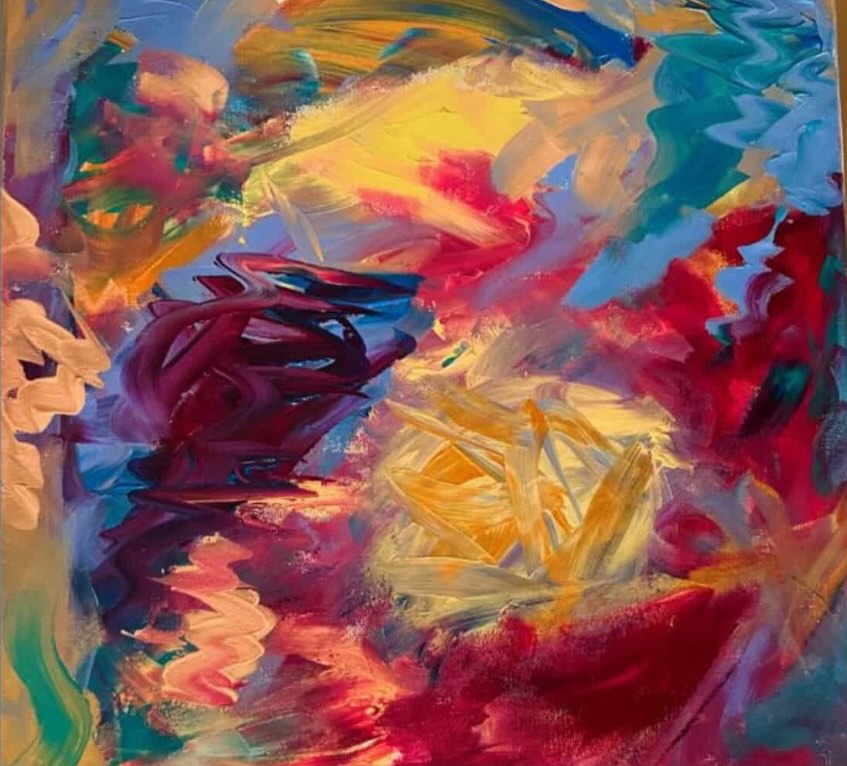
    I’ve had the distinct honor of talking to Caroline Phillips—artist and CEO of Lingual Muse, a remote language learning company. As an artist, her work concentrates on the portrayal of transient energy structures of life, primarily as a method of recovery. As a business owner, and as one of the coaches of her company, Caroline has a company dedicated to developing language skills through cultural immersion, and personally teaches German, French and English. We’ve spoken together quite a lot the last few months, there’s an endless amount to learn from Caroline, her art and her business, and, while this article has only partially transcribed our discussions, hopefully this article serves as a good first foothold for future conversations.

    When we first began our conversation, the primary concentration was on Caroline’s artwork. She describes her artwork as “intuitive abstract paintings”, which she creates as “conversations”. To me, knowing Caroline’s background with language, and knowing her art serves as a conversation, I immediately began to see her artwork as a form of linguistic projection of geometric shapes as a form of language. I think it’s genius.

    The shapes and structures of the geometric forms act as linguistic projections of ideas—the shape acts as a way to communicate something. The patterns might be patterns of emotions, patterns of networks of ideas, patterns of interlocking ideas forming a chart, diagram or map of ideas, concepts, emotions, projections.

    Her self-description of her art is as “Intuitive Abstract Paintings”, and she consistently describes these as conversations. What is the conversation being had, and what is the language? What is the language Caroline is speaking with, and how can we understand the structure of that language? Now, with this being intuitive, I’m sure a large part of the artwork is meant to confer something without strict definition and structure, and to communicate ideas that maybe adapt to each viewer—Caroline intuits the shape of the idea and the structure of the connections of shapes and thoughts, and the viewer intuits their own adapted meaning.

    However, with this too, Caroline’s art is primarily designed—or, at least, was initially designed—to act as a recovery tool. Caroline suffered a major injury at an early age, and art—particularly intuitive abstract art—served as a way to communicate ideas with her self, and to recover from the traumatic injury.

    Me: Who are you?

    Phillips: I am Caroline Phillips—an abstract artist, photographer, and the co-founder of LingualMuse. I was raised in a bilingual German and French family and have spent my life navigating the intersection of language, culture, and visual expression.

    Me: What sort of art do you create, and what is the inspiration and purpose for it?

    Phillips: I create intuitive abstract paintings and photography. My work is a “conversation” with the canvas, focusing on themes of impermanence, resilience, and healing. The purpose is to capture the transient energy of life—a process that became my lifeline after a serious accident at 19 turned art into my primary tool for recovery.

    Caroline Phillips activities aren’t limited to just her artwork though—Caroline is a linguistic expert who has formerly worked for the Foreign Service Institute in Washington DC, and has brought her knowledge of language to her own small business—Lingual Muse. Lingual Muse functions as a language coaching team that is dedicated to the hands-on, immersive language acquisition of her students. Rather than a broad, downloadable app, the business develops one-on-one linguistic coaching, and focuses on remote learning centered on the individual or personalized coaching model for each student and their specific goals.

    Me: What is your business?

    Phillips: My business is LingualMuse, a boutique online language school. We provide personalized, one-on-one coaching in over 18 languages, moving far beyond the limitations of standard apps to offer true cultural immersion.

    Generally, cultural and language immersion is created through face-to-face conversations . This is generally done in person, and this in-person immersion is then turned into real-life experiences designed to simulate what an actual conversation or event where you’d need to apply the language would be like. However, through Lingual Muse, this is all done remotely, with a team of coaches whose specific goal is to tailor individual, immersive learning environments for each individual student’s goals.

    Me: What is some of the background of your business?

    Phillips: It is rooted in high-level pedagogy. Before starting the company, I worked at the Foreign Service Institute (FSI) in D.C., training U.S. delegates for diplomatic missions. That experience in rapid, high-stakes language acquisition forms the backbone of our teaching methodology.

    While working with the Foreign Service Institute, the goals of teaching languages to individuals were much more fast-paced, in environments that required few errors, and language acquisition at the highest level of professionalism. These language acquisition timelines were much stricter, and the necessity for high-level language acquisition was paramount—there could be no room for miscommincation, understanding the nuances of how to speak politely, professionally and formally were paramount to everything being taught.

    It wasn’t just a matter of language acquisition at the highest level, it was learning etiquette, learning professionalism and learning how to navigate an entirely different culture. These peripheral skills all formed the backbone of how Caroline Phillips founded her company and how Caroline Phillip’s language acquisition coaching methods were formed.

    Me: How did you get started?

    Phillips: In 2016, my partner Joe Galea and I decided to take my years of independent teaching and FSI experience and scale it into a formal digital platform. We combined my linguistic expertise with his administrative background to build a school that could reach students anywhere.

    Me: What made you want to start?

    Phillips: I saw a gap in the market. Many people were frustrated with “cookie-cutter” language apps that didn’t help them actually speak or understand the culture. I wanted to create a space for tailored teaching that adapts to a student’s specific goals, whether they are moving abroad or reconnecting with their heritage.

    Me: What was the initial start of the business like?

    Phillips: It was a period of intense transition. I was  moving from the D.C. area to New Hampshire while simultaneously building the digital infrastructure. It was about proving that the intimate, 1:1 classroom experience could be effectively replicated—and even improved—in an online environment.

    Language acquisition businesses are highly successful, and operate across the economic industries and digital economy platforms. They primarily operate across remote networking, AI integrated systems which aim at developing skills for job places and globalized industrial sectors. The vast majority of companies rely on some form of international language skillset, and the major company sectors who do this are connected to healthcare, international business, and logistics.

    Me: What were some barriers and challenges to overcome?

    Phillips: The biggest challenge was shifting the mindset that “online” meant “lower quality.” We had to find and train a global team of coaches who could maintain our high standards of engagement through a screen. Additionally, balancing the growth of a startup with my own need for artistic practice required strict discipline.

    Most language acquisition companies rely on the utilization of freemium subscriptions, where there are free software and paid software, with upgrades to the paid software. The primary businesses at the forefront of language acquisition are companies like duolingo and babbel. However, there are hundreds if not thousands of language acquisition companies. At the forefront, there are a few with similar business models as Lingual Muse—the primary business with this structure being Preply.

    Me: What is your business model, and what are some things you’d like people to learn from your approach?

    Phillips: We operate on a personalized coaching model rather than a subscription-to-software model. I want people to learn that human connection is the most efficient way to learn. Technology should be a bridge, not a replacement for a mentor who understands your unique pace and interests.

    Can you tell me about your use of technology, both with your company, and in networking with people for your art?

    For LingualMuse, technology is our “classroom”—we use advanced digital tools to make lessons interactive and accessible globally. In my art, technology allows me to bridge the physical distance of the New Hampshire woods. I use it for digital photography and to network with curators, leading to opportunities like my 2024 show at the Arts Club of Washington. It’s about using digital tools to foster real-world presence.

    The best way to learn how to accomplish something requires that you just do it. Experience and forge an understanding of what we do rooted in reality. At the heart of what Caroline Phillips does, everything is rooted in reality, and everything is rooted in actual experience—hands-on language use, and direct application to some of the highest stakes foreign language environments. Hopefully, this conversation leads the way for more conversation in the future.

  • Ellie/Mop Garden

    Ellie/Mop Garden

    Written by Alexander Greco

    Across the last two decades, content creation as we generally think of it has been growing. Content creation, technically is the creation of any sort of content—written, audio, visual/graphic, app or system creation—however, when we think of content creators, the most well known are YouTubers, streamers and podcasters, particularly for their ability to incorporate several mediums of content or communication at once. Ellie—who goes by Mop Garden online—is one such streamer who has found success with streaming, and I was fortunate enough to talk with her about what she does and what she’s done to become a successful streamer.

    Here is my interview with Ellie, also known as Mop Garden:


    So, first, can I get to know a bit about yourself?

    MG:

    I am a Canadian who has been living in Australia for the last 6 years. I started streaming back in 2014 and have been passionate about it since the day I began. I am grateful that my streaming career allowed me to make the big move between countries! I enjoy the ocean – scuba diving, snorkelling and swimming. I also love fitness and running – I completed my first half marathon back in November.

    [My name is] Ellie, but I go by Mop or MopGarden online.

    I have been a gamer since as young as I can remember. My older brother and cousins all played video games so I played a lot with them and it just became a part of my normal life and things that I love. 

    This isn’t super important to know about me but it’s a not very known fact – I went to University for anthropology/archaeology and have my honours degree in it. I also have a diploma and certificate in early childhood education! I’ve always loved helping people and my “when I grow up” thing was always just that I wanted to help people. I think streaming has been really great in that regard for me – I can be a friend to those who may need one, and to provide some entertainment to folks who are bored. 

    Me:

    Can you tell me a bit about what’s important to you, what matters the most in your life? Ideas or beliefs you live by. Actions, ideas, habits and so on that are important to you.

    MG:

    I think practicing fitness and mental health exercises are crucial in life. I was someone who never really understood the gym / working out but it’s made me realize how good it is for your mental and physical health. I also think having a good work/life balance is so important. It’s hard with streaming to turn off anything from stream and to make time for yourself. There are so many streamers who burn out within a year of doing it and I think it’s because they don’t take that separation. I try to keep my balance between a full-time week, hours as similar to a “regular job” schedule as I can, and to take weekends off. 

    I also think that friendliness and kindness is not an option in life. I think we all need to treat one another with the utmost respect because we never know what people are going through and how you can make or break people’s days. 

    Me:

    What inspired you to start [streaming]?

    MG:

    I was playing a lot of video games, primarily CS, when I graduated university. I heard that people were having fun on Twitch and that I could possibly make some money by playing games. I also really loved the idea of a community of my own! 

    I didn’t really understand what it was at the time but I am grateful to those British fellows because I probably would’ve never even heard about Twitch. 

    Me:

    Next, can you tell me a bit about what you do?

    MG:

    I am a full-time variety streamer on Twitch. I stream 9:30-4 Monday to Friday and also produce shorts/reels on platforms like Instagram and Tiktok. 

    I play a wide variety of games but I love indies and shooters. I think my favourite genre is Soulslikes but I enjoy everything but MMO and MOBA games… mostly because I am terrible at them and do not have the patience for them haha.

    I love to talk about games – new releases, the content that is happening in the game, and watching new game trailers. I also enjoy reviewing what games we played and discussing plots, ideas about game theories, and so on.


    Across the World there are an estimated 300+ million content creators, with around 45 million being considered professionals, with as many as 30-50 million content creators in the united states, with around 10+ million treating it as a full time job. While streaming can be done across a variety of platforms, the premier and most widely utilized platform is Twitch. Globally, out of these content creators, there is an estimated 8 million active monthly streamers on Twitch, and approximately 50-60,000 of these streamers are considered professional streamers with Twitch partnerships.

    Ellie is one of those 50-60,000.

    Streamers operate similarly to podcasters, and a lot of streamers will convert turn their streams to podcasts. However, streaming alone functions as a way to directly interact with live viewers across live streams, often times hosting live events, directly talking to their chat and inviting people on their stream to talk. This differs tremendously from most similar content creators, who focus on carefully planned, curated content—staged, filmed, edited and reviewed.

    While streaming is professionally produced and curated, it is done live, with less focus on editing, and more focus on in-the-moment interactions. This format lends itself well to gaming and reaction videos, however, it is also used for IRL, live production (music, coding, creative works) and for live discussions, including as a platform for debates, and for live events—charities, fundraising and so forth.


    Me:

    How did you get started [professionally] once you set your mind to it?

    MG:

    I just booted up stream one day and people came around, to my surprise. I have an issue with letting people down and really struggle with it. Once I had people in the community that were looking forward to the stream I made sure I showed up every day – I didn’t want to let them down.

    I am very grateful that my brother let me borrow his laptop when I wanted to stream back in the day. I did a lot of research on streaming because it was a lot harder to do back then. I streamed from a Macbook for a while and the software just didn’t exist for it. Once I got it all booted up it was good and then I saved up to buy a proper PC, with the help of my community!

    Me:

    How has what you’ve done grown and changed across time?

    MG:

    My community has mostly stayed the same over time, which I’m very grateful for. They’ve always been very positive and respectful and it keeps me wanting to stream day in and day out. I’ve changed from playing just a few games (like CS and Binding of Isaac) to having played hundreds of games on stream. I’m very happy that so many game devs have supported my stream and sent over game codes for me to check out.

    Me:

    What are some major milestones or events since starting?

    MG:

    I was very happy at first about reaching 10,000 followers. I still think that’s such a huge amount of people, even though I’m up at 70,000 now! I was also really happy when I reached Twitch partner about 9 years ago.

    Me:

    What experience do you have that helped?

    MG:

    I got bullied a lot in elementary school so I think that’s helped make my thin thick, which is important in streaming. People can be nasty online and it’s sometimes hard to remember that you aren’t always what people think you are and to speak positively to yourself.

    Me:

    What has been your favorite aspect of your content?

    MG:

    I think getting to explore so many various games – from tabletop to video games. I’ve discovered so many amazing games through streaming that I probably would have never thought twice about prior to streaming. I’ve also been super grateful to meet people from around the world and to meet some of my best friends through Twitch.


    Streaming, primarily, is done with a computer or console, a camera, a microphone, lighting equipment and an audio interface. Software includes a digital audio workspace, or DAW, and streaming software.

    The stream generally has the streamer sitting at a computer, playing video games, watching clips or having conversations, while recording the player and the game, and streaming these two video feeds.

    When doing IRL streams or event streams, streamers will utilize their phones or GoPros and similar cameras, and equipment for maintaining equipment power and data and stream connectivity.


    Me:

    What is the mindset people should have? How should you develop that mindset?

    MG:

    What should you do to carry out that mindset and perform at a high level, the same way that people do in a standard workplace or industry?

    Look at your analytics and what works and what doesn’t. Keep positive if something doesn’t succeed and learn from it and proceed better in the future with your content. Analytics are your friend and tell you a lot of information, just like sales reports do.

    Focus on your successes. If a video reached more than your regular viewership, focus on that one and be happy and look at what you did well. Don’t look at the ones that didn’t do well as a fail – look at maybe why they didn’t do well and learn from that and do better in your next one.

    Be positive and patient and good things will come!


    Streaming as a career requires developing an audience who will watch you live, and consistently return. This requires professionalism while maintaining your real personality, and keeping potential stressors from intruding on your real personality.

    Developing an audience goes the same as many platforms, with the added challenge of needing to develop a live following. Doing this successfully requires following a strict schedule, creating high quality feeds and content, and creating a strong relationship with your audience.

    Developing a network of similar streamers and supporters, reaching out to and fellow streamers and content creators, potentially cross-platform, to develop a network and extend your reach, will similarly cultivate a strong audience.


    Me:

    How do you develop and maintain your success as a streamer?

    MG:

    Ensuring that you are utilizing various resources and other sources to bring new people to your stream (like TikTok, Reels, etc.) I think it’s also important to have a consistent schedule so that your community knows when you will be live and keep them updated for any changes. 

    Me:

    What should people know about getting an audience and making a living from this?

    MG:

    I think it’s important to make good relationships with brands so that you can work to get sponsorships and collaborations with brands. People have waves with their income and that often affects your income as well – people’s entertainment budget is usually the first to go when they are struggling. It’s important to rely on multiple resources like subscribers, the YouTube partner program, sponsorships, etc. in order to not be too reliant on one resource.

    I think it’s important to keep in mind that things won’t just happen overnight, unless you’re a very lucky specific 1%. Things work very slowly on Twitch and in content creation and you shouldn’t “quit your day job” to go forward with it until you are sure you can sustain yourself by paying rent, feeding yourself, and so on. I think it’s also important to just be yourself because if you are wanting to fulfill this as a career you don’t want to change  your persona – be who you are and be sustainable for further down the line. 

    Make sure that you’re treating your content creation and stream as a professional job. Be on time, be consistent in your schedule, and be professional and respectful to those around you. This includes game devs, other content creators, and anyone that you may work with in the industry. 

    Me:

    What do you do to stay focused or stay on task?

    MG:

    I love making lists so I always make sure that I have lists to keep me organized. Once I set down to do a task I own’t get up and do anything else until I’m done, or I find it hard to get back to the task. I try to time manage and set aside specific time each day to do tasks like video edit, upload, catch up on emails, etc. and during this time this is what I do every day. 

    You show up every day. You stay on task. You stay on point. You continually improve. You continually take pride in your work. You continually develop your career. How do you self-manage this without having a boss?

    I think I’m my worst boss and worst critic. I am really hard on myself and feel if I haven’t been improving or doing well that I need to do better. I think critiquing myself and always wanting to strive for success and perfection keeps me wanting to progress and keep myself in check.

    Me:

    What is some advice you have for people who either have or would like to make this a career?

    MG:

    I think it’s harder to get anywhere on Twitch now unfortunately. The discoverability isn’t as easy now because there are SO many people trying to become a content creator. It’s very different now too because there are so many other platforms that you can put your content on to (like TikTok, Instagram, etc.) and many people are getting “discovered” because of their content on there.

    Make sure that you have a community built up before you even think about going full-time. It is not good to hop right into these things and quit your job, not many streamers (unfortunately!) can do this full-time and make enough to live. I think also to just be patient. You aren’t going to be famous and successful overnight and these things take time – trust that if you put in the work it will come.

    Me:

    What are additional projects, organizations, work/jobs, associations and so on that you’ve been involved with related to your content?

    MG:

    I have done a lot of charity work for various organizations, such as ones for cancer research, mental heatlh, and children’s hospitals. I have an ongoing partnership with ReachOut Australia who is a great resource for teen and young adult’s mental health.

    Me:

    What are all the places people can find you on? Social media, twitch or at live events?

    MG:

    I am “MopGarden” on everything, and all of my link/socials can be found here: https://linktr.ee/MopGarden

    Me:

    What is any additional information you’d like people to know about you?

    MG:

    All of my emotes and branding are around rabbits and gardens! This is because of my random name, but I actually love the outdoors. I also had a bunny named Buster when I first started streaming so everything became bunny-branded.

  • Gradi Nitert

    Gradi Nitert

    An Interview With Gradi Nitert

    Written by Alexander Greco

    I’ve had the distinct honor of talking with Gradi Nitert from the Netherlands about her artwork, which I’m wicked grateful for. Her art consistently amazes me, and I’m always discovering something new with her art and what she does. We’ve talked before, and this will be our second go at doing an article. She provides great insight about art, finding work as an artist and the sometimes tumultuous lives of artists, as well as the creativity and imagination connected to art and everyday life.

    So, here is the conversation I’ve had with the wonderful Gradi Nitert of the Netherlands.


    Gradi:

    My name is Gradi Nitert, born in 1987 in Gorssel. For as long as I can remember, I have wanted to be an artist. So, it was very clear that from a young age, I lived with the goal of studying at an art academy. As a child and teenager, music also captivated me, both classical with the clarinet and rock with drums. But ultimately, when I could choose between the conservatory and the art academy, I chose the art academy.


    Gradi’s art utilizes painting and collage, and is similar to a variety of styles, namely impressionism, surrealism, abstract and absurdist artwork. Her artwork varies significantly, though a lot of main themes include vivid color schemes, shapes, repetition of patterns, the tessellation of these patterns, overlapping architectures, and architectures as patterns—owls and their feathers, forming patterns with architectures of buildings, forming patterns with colors of shapes, moving across the picture—these seem to be general themes that run across her art, as well as classical portraits, animals and nature, seeming to be finding their way across the frozen storms of bright hues, rivers of brush strokes and pictographic collages.

    Her work adapts a lot of surrealism, fluidly blurring the lines between reality and dream, though her art is a lot less jarring than traditional surrealism. A lot of her work still maintains cohesive structures, and orderly, regular structures and architecture, maintaining a cohesiveness between them all, while creating dream-like figures and environments.

    Good art helps everyone sees something different. Impressionist, abstract and surreal art might be the best at that, with Gradi’s art being fantastic at containing tons of potential meaning for the viewer.  I’ve looked through her art for hours—I think what she does is fascinating, she’s a phenomenal artist—it might not be possible to fully correlate every detail of what she’s made. Without imposing my own ideas, this is my understanding of Gradi’s art. We’re humans from a distant time—we’re the same humans who believed in elves living beyond the veil in Avalon, thought the Sun revolved around the Earth and went around thinking magic was a science. So, we see humans from a classical era, in the midst of modern architectures, cut and pasted together, and connected by these shapes of our imagination, piecing things together, and it makes me think of the interconnectedness of technology, buildings and computer systems, all held up by ancient life forces, with humans being these portraits merging happily with the absurd world we’re still attempting to understand, riding the waves around them, calmly navigating these architectures.

    There’s a lot more to unpack with her art—I highly suggest going through her art yourself if you have the chance. She’s a great creative mind, you’ll find yourself amazed at some of the movement, detail and structure of her creations.


    Gradi:
    Over the years, I have always created work; I feel like I’ve had 100 side jobs, but always with the vision: I am going to become an artist. And now that is the case. It might look easy from the outside, but I have had to give up a lot for it.

    Teaching turned out to be something I can do. I had to learn that too, but after 10 years, I learned it by doing it.


    Falling down and getting back up. That is my faith, I think. Making mistakes, learning from them, and becoming very strong.

    Making a picture book was also something on my bucket list, and I did this entirely by myself again.

    It was exciting too, also a process of failure and learning. But I made it. Maybe I should be a bit prouder of the things I have done.

    I have to ration my energy, and unfortunately, I often have to choose tasks that allow me to pay my bills. And then there is no energy left for making art. It is getting better, but I do not view these kinds of personal setbacks as inspiration at all. I draw much more from the positive things in life, however difficult they may sometimes be to see.


    Nature, crazy characters or situations, old books, paper, new materials, stories.

    Despite the creative capacity of Gradi’s work, it’s still difficult being an Artist. While many artists will find success selling prints of their work, most who study art and pursue it as a career will find a lot of their success from one of a few routes:

    • Teaching
    • Commissions
    • Licensing
    • Workshops
    • Festivals
    • Freelancing
    • Online Support through Social Media and Fundraising

    Despite how much art influences our world, a lot of artists have difficulty supporting themselves with their artwork alone, and lot of people question how art actually helps the world out. However, Art remains necessary to our culture, and support for creative minds remains paramount.


    Gradi:

    The most beautiful thing about making art is being in the moment, surrendering completely to the materials, the smell of paper and paint, the coincidences that arise, making something out of nothing. Creating. Wondering yourself, letting others wonder.


    Put that fucking phone aside.


    At the schools where I teach, the kids sit hunched over their phones during recess; it is sometimes an absurd sight. At the bus stop, at shops…

    My studio displays all the fishing rods I have cast over the past 15 years.

    In cupboards, I find an incredible number of projects that I have tried.

    Webshops, printing, jewelry, workshops, graphic design, festival decor, murals, selling at markets… I’ve tried so much, cast so many lines, and on a few lines, I got a bite.


    Gradi personally has found success a number of ways. She’s developed a few styles, artforms and creative ventures that develop economic viability as an artist. Beyond online success, she’s worked as a teacher, become a tattoo artist and has done commission work for the Hague (a very important institution, for those not familiar…) on top of regular commissions, festivals and workshops.


    Gradi:

    Some really fun jobs included: an illustration commission for the Peace Palace in The Hague, a very special place I would otherwise never come into contact with, but which is very magical to be there. Festival work, applying temporary tattoos, and decoration & entrance gates. Crazy projects like illustrating an entire city covered in Post-it notes, the Moustacherie I created where I generated moustaches with my machine. And something I also had a lot of fun with: creating CD covers for producers. I also always love the combination of music/sound and visual work.

    And so I knew what worked and what didn’t, both financially and mentally. Because some things turned out not to suit me; there was too much friction for it to work well.

    I think the quality of being flexible is also necessary as an artist. Allowing yourself the time to cast those lines, to make mistakes, to truly feel what you are good at—what makes your heart beat faster. It is tempting to fall into conformity; I, too, am sometimes drawn towards that. Instead of thinking about what *I* want to make, making what you think society, people, would want.

    But in a world where everything has already been made, uniqueness is your superpower.

    So staying true to yourself is the key, if you ask me. That is where you excel, and that is how people who also feel your work eventually come to you—with that dose of perseverance.

    Reaching people like that is also a skill that not every artist has mastered.

    It is something that is incredibly useful, but often does not align with most artists’ personalities. Here too, perseverance and discipline are necessary.

    At the beginning of my career, I made posters for a local pub for years for a few tens of cash. It was great fun, but it didn’t pay the bills. I often had to scrape by, but I also knew that I mainly needed to show my work everywhere.

    And connecting with many people. Vitamin “R,” an artist used to tell me (Relationship Vitamins). And she was more than right.


    If your own creative endeavors go beyond acting only as a creative outlet, there are a number of ways to show your art, and potentially make a living from your creativity.

    Art is often shown and sold through:

    • Galleries
    • Digital Galleries
    • Workshops
    • Creative Festivals

    Additionally, many small businesses support local artists, either showing or commissioning art at or for their storefront. Commissions are everywhere, for those who look, make friends and network. Maintaining a professional demeanor, consistency and positive attitude are crucial. Take the time to master your own domain, your own creative voice, while being able to adapt to the needs of those around you.

    A growing trend has been streaming live art creation, and social media has been used across a variety of methods to introduce art. There are currently a growing number of social media platforms specific to art:

    • Cara
    • ArtStation
    • Behance
    • DeviantArt
    • Bluesky/Mastodon

    In addition, traditional social media outlets that help artists include:

    • Pinterest
    • TikTok
    • Discord
    • Instagram
    • Facebook

    Gradi:

    Something I really don’t enjoy doing, which would probably help me a lot – going to entrepreneur gatherings much more often. A rotary event or something similar. But I find it difficult to exhibit my work this way. I did do it following my picture book, though; it brought me a tremendous amount of promotion and sales outlets. Other entrepreneurs were really supportive, which was super sweet. Now that I write it down like this, maybe I should do it a bit more often in the future after all…

    As a tattoo artist, I am still just a beginner, but the learning curve is steep.

    The contact with people is very nice there too, but in this field—because I want and need to become sooooo much better, it is still too new—it is also still very uncertain and nerve-wracking.

    Anyway, no effort, no gain. Sometimes there is only one way, and that is just doing it. That is very often the case for me, so this one can be added to the list.

    I do not have a teaching degree, so like many things, I had to learn this autodidactically. In the beginning, I really had to make progress to get a better grasp of it. I am still learning about teaching.

    Because explaining something to someone is truly a skill in itself.

    In this way, I have truly found a unique “language” for every pupil, student, and course participant to guide their process. It is very rewarding work; it gives me a really good feeling to be able to help someone else and, in doing so, give them a good feeling too. And it is often just like therapy, through conversations or obstacles that parallel obstacles in other areas of someone’s life.

    Kunst Educatie Nederland is a wonderful employer; they offer cultural lessons in all shapes and sizes (visual arts (I often teach tattoo art), but also dance, music, food, etc., etc.)).

    The great thing about this company is that, in my opinion, they have found a really cool way to introduce young people and young adults to culture.
    They organize festival-style cultural days for schools. It really does feel like a festival, with music, theater, visual arts workshops, dance workshops, cooking classes, etc. The young people receive a card on which they have to collect stamps, often with two visual arts workshops and one theater or dance performance. When the card is full, they get fries at the end of the afternoon.

    Brilliant. Young people aren’t keen on culture lessons, and this way they get a good introduction to it.

    ZINKWIT is where I teach illustration and painting classes, a place where I have been working for quite a few years. I have known these groups for a long time, and I can help many people beautifully.

    This is a private art school for young and old, great fun for motivated children and adults.

    This is very different from the young people who often don’t feel like going to a lesson.

    But both are fun. To see motivated students flourish.

    But imagine having touched just one young person on such a festival day with your art or a cultural subject. That is fantastic, isn’t it?


    Gradi’s art is highly unique, her adaptivity allows her to work with a variety of mediums, as well as creating tattoos for festivals and shops, while also working as a teacher, and making commissions for institutions such as the Hague—the headquarters for the UN Judicial Branch. We are going to talk with each other more in the future, this time, hoping to speak more about creativity.

    Give her artwork a look, give her a follow on Instagram, and definitely consider her for any commissions you might need.


    Gradi:

    What helps me look ahead: less time on social media, making more connections with people. More peace brings more time to really zoom in, literally—including on nature, for example. Allow yourself time to marvel. But I also realize that I simply have a rich imagination—and can easily set it in motion. It is probably partly in my character, but it has also always been heavily encouraged by my parents. They saw it, and I was given all the space to develop it—just like my craft skills and materials, and music.

    That is a privilege, and I am incredibly grateful for it.

    Photographer: Robert Flierman

    @Beelduit

    Home

  • The Basics of Interactive Content Creation

    The Basics of Interactive Content Creation

    Written by Alexander Christian Greco

    With the Help of ChatGPT

    A foundational guide to participatory media, tools, design principles, and pathways for creators


    Abstract

    Interactive content creation represents a fundamental shift in how information, stories, and experiences are designed and consumed in the digital age. Unlike static or linear media, interactive content invites audiences to actively participate—through choice, manipulation, exploration, and feedback—transforming users from passive observers into engaged contributors. This article provides a foundational overview of interactive content creation, covering its conceptual origins, core formats, design principles, technical underpinnings, tools, industry applications, required skills, and common challenges. The goal is to establish a clear baseline understanding for beginners while situating interactive content within broader trends in media, education, business, and digital culture.


    Disclosure

    This article was generated with the assistance of AI (ChatGPT) as a drafting and structuring tool and subsequently curated for educational and informational purposes. Readers are encouraged to verify sources independently and explore the referenced materials for deeper study.


    1. Introduction: What Is Interactive Content?

    Interactive content refers to media experiences that require active participation from the audience, rather than passive consumption. Unlike traditional formats—such as static articles, linear videos, or broadcast media—interactive content responds dynamically to user input, adapts to decisions, and often produces different outcomes based on engagement patterns [1].

    At its core, interactive content transforms the audience from viewer to participant. This shift reflects broader changes in digital culture, including the rise of participatory media, human–computer interaction research, and user-centered design methodologies [2]. Modern audiences increasingly expect to click, choose, explore, customize, and co-create rather than simply watch or read.

    Interactive content now appears across education, marketing, entertainment, journalism, gaming, training, healthcare, and digital art. Examples include quizzes, simulations, interactive videos, decision-based narratives, virtual tours, games, live polls, data visualizations, and immersive virtual or augmented reality experiences [3].

    Understanding the basics of interactive content creation is less about mastering a single tool and more about learning how systems respond to people—how design, logic, technology, and psychology intersect to create meaningful engagement.


    2. Why Interactive Content Matters

    https://www.i3-technologies.com/media/yqqkblqy/21090301rep0017-1.jpg

    2.1 Engagement and Retention

    Decades of educational and cognitive research suggest that people retain more information when they actively engage with material, rather than passively consuming it [4]. Interactive content leverages this principle by requiring users to make decisions, test ideas, and respond to feedback.

    Clicking, choosing, experimenting, and receiving immediate responses strengthens memory encoding and conceptual understanding. As a result, interactive formats are widely used in digital learning platforms, corporate training environments, and instructional simulations.

    2.2 Agency and Personalization

    Interactive content provides users with agency, defined as the perception that one’s actions meaningfully influence outcomes [5]. Even simple forms of choice—such as selecting a narrative path or adjusting parameters in a model—can significantly increase emotional investment and motivation.

    Personalization, often driven by user inputs or behavioral data, further enhances engagement by tailoring experiences to individual needs, preferences, or skill levels [6].

    2.3 Feedback Loops

    Unlike static media, interactive systems are built around feedback loops, where user actions generate responses that inform subsequent decisions. Feedback may be visual, auditory, textual, or systemic and is central to learning, gaming, and skill acquisition [7].

    2.4 Data and Adaptation

    From a creator or organizational perspective, interactive content generates behavioral data, offering insight into how users navigate information, where they struggle, and what captures attention. These insights enable iterative improvement and adaptive system design [8].


    3. Core Types of Interactive Content

    Interactive content encompasses a broad spectrum of formats, each suited to different goals and audiences.

    3.1 Interactive Text and Articles

    These include:

    • Click-to-reveal explanations
    • Branching narratives and hypertext fiction
    • Embedded decision points or reflective prompts

    Interactive text formats are common in education, digital journalism, and narrative experimentation, where reader choice influences structure or emphasis [9].

    3.2 Quizzes, Polls, and Assessments

    Widely used in marketing, education, and social media, quizzes and polls:

    • Encourage rapid engagement
    • Provide immediate feedback
    • Enable segmentation or personalization

    Their accessibility and low technical barrier make them ideal entry points for new creators [10].

    3.3 Interactive Video

    Interactive video allows viewers to:

    • Choose story branches
    • Click on embedded elements
    • Control pacing or perspective

    This format merges cinematic storytelling with decision-based logic, often used in entertainment, advertising, and training [11].

    3.4 Simulations and Models

    Simulations enable users to manipulate variables and observe outcomes, supporting systems thinking and experiential learning. Common applications include scientific modeling, economic forecasting, medical training, and environmental education [12].

    3.5 Games and Gamified Experiences

    Games represent one of the most sophisticated forms of interactive content, integrating:

    • Rules and mechanics
    • Goals and challenges
    • Feedback and progression systems

    Gamification applies these elements to non-game contexts such as education, productivity, and marketing [13].

    3.6 Immersive Experiences (VR/AR)

    Virtual and augmented reality introduce spatial interaction, where users move, look, and act within digital environments. These experiences are especially powerful for training, empathy-building, and immersive storytelling [14].


    4. Foundational Principles of Interactive Design

    https://www.fico.com/fico-xpress-optimization/docs/dms2018-01/insight_web/GUID-805AE6E8-667B-445A-B967-F92B6585676D-low.png

    4.1 Clear Interaction Rules

    Users must quickly understand:

    • What actions are possible
    • How to perform them
    • What outcomes to expect

    Ambiguity in interaction design reduces trust and engagement [15].

    4.2 Feedback and Responsiveness

    Every action should produce a perceptible response, reinforcing the sense of cause and effect. Effective feedback sustains immersion and guides learning [16].

    4.3 Progressive Complexity

    Successful interactive experiences introduce complexity gradually, aligning with cognitive load theory and scaffolding approaches in education [17].

    4.4 Meaningful Choice

    Choices should influence outcomes in visible or consequential ways. Superficial or inconsequential decisions weaken perceived agency [18].

    4.5 Accessibility and Inclusion

    Inclusive interactive design considers:

    • Assistive technologies
    • Input alternatives
    • Visual and cognitive accessibility

    Accessible design improves usability for all users, not only those with disabilities [19].


    5. The Technical Foundations (High-Level Overview)

    https://www.scnsoft.com/blog-pictures/ui-ux/interactive-design.png

    5.1 Logic and State

    Interactive systems rely on conditional logic and state management:

    • Variables store user choices
    • States represent progression
    • Rules determine outcomes

    These concepts underpin both simple web interactions and complex simulations [20].

    5.2 Front-End Interaction

    On the web, interaction is commonly implemented through:

    • HTML (structure)
    • CSS (presentation and transitions)
    • JavaScript (logic and behavior)

    Together, these technologies define how users interact with digital content [21].

    https://northamptonopenmedia.org/wp-content/uploads/2017/03/Xenko_Editor.jpg

    5.3 Engines and Platforms

    More complex interactive systems often use engines such as Unity or Unreal Engine, which abstract low-level technical details and support rapid development of interactive environments [22].

    5.4 Data and Persistence

    Many interactive experiences store progress, preferences, or analytics using local storage, databases, or cloud services, enabling continuity and personalization [23].


    6. Tools Commonly Used in Interactive Content Creation

    https://images.ctfassets.net/lzny33ho1g45/7LKlffAtwg6fffVyIw58pa/43f072b08dd40152693dab7caf6846ee/image3.png

    Tools vary widely, but generally fall into:

    • No-code/low-code platforms
    • Web frameworks
    • Game engines
    • Prototyping and UX design tools

    Tool selection depends on goals, scale, and technical expertise [24].


    7. Interactive Content Across Industries

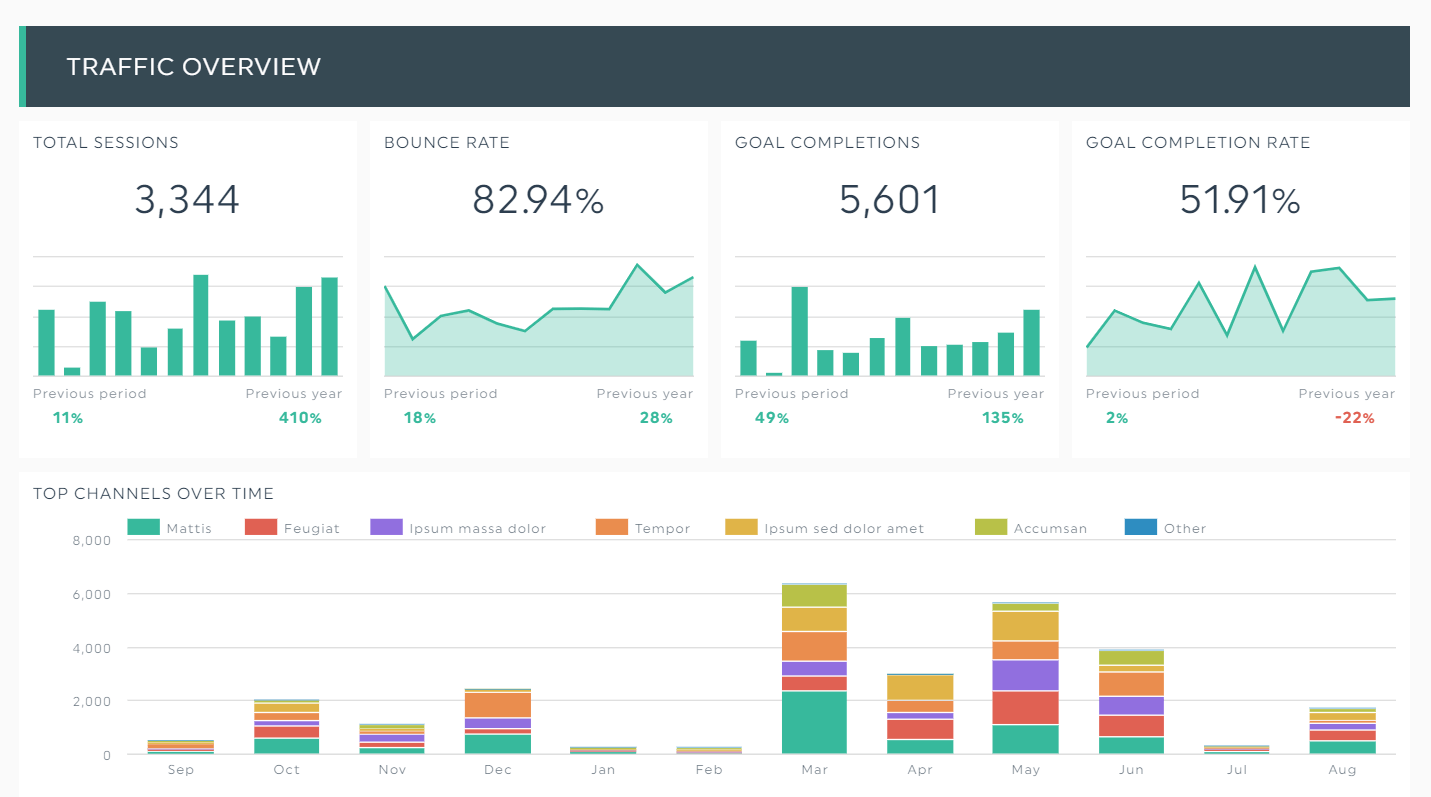
    https://dashthis.com/media/4150/data-visualization-dashboard.png

    Interactive content is now embedded across sectors:

    • Education: adaptive learning and simulations
    • Marketing: personalized campaigns and engagement tools
    • Journalism: interactive data storytelling
    • Entertainment: games and immersive narratives

    Its versatility makes it a foundational digital skill [25].


    8. Skills Needed to Get Started

    https://figures.semanticscholar.org/8dcfa7a52be773dca0861fd0733cf1b3882d90d7/4-Figure1-1.png

    Key skills include:

    • Design thinking
    • Logical reasoning
    • Storytelling
    • Technical literacy
    • Testing and iteration

    Interactive content creation is inherently interdisciplinary and collaborative [26].


    9. Common Challenges and Pitfalls

    Common issues include:

    • Over-complexity
    • Unclear goals
    • Weak feedback
    • Technical overreach

    Successful projects emphasize simplicity, testing, and iteration [27].


    10. Getting Started: A Practical Path Forward

    https://assets.visme.co/templates/blockinfographics/fullsize/i_Interactive-Small-Business-Project-Timeline_full.jpg

    4

    A recommended beginner pathway:

    1. Start small
    2. Focus on one interaction
    3. Prototype early
    4. Test with users
    5. Iterate continuously

    Conclusion

    Interactive content creation represents a shift from linear communication to dialogue-driven, system-based experiences. As digital environments become more participatory, understanding interactivity is increasingly essential for creators across disciplines. Mastering the basics opens doors to education, design, storytelling, technology, and future-facing creative industries.


    References

    1. Manovich, L. (2001). The Language of New Media. MIT Press.
    2. Norman, D. (2013). The Design of Everyday Things. Basic Books.
    3. Murray, J. (1997). Hamlet on the Holodeck. MIT Press.
    4. Bransford, J. et al. (2000). How People Learn. National Academies Press.
    5. Bandura, A. (1982). Self-efficacy mechanism in human agency. American Psychologist.
    6. Shneiderman, B. (2022). Human-Centered AI. Oxford University Press.
    7. Gee, J. P. (2003). What Video Games Have to Teach Us About Learning. Palgrave.
    8. Nielsen, J. (1993). Usability Engineering. Morgan Kaufmann.
    9. Landow, G. (2006). Hypertext 3.0. Johns Hopkins University Press.
    10. Kahoot! Research Library.
    11. Netflix Interactive Media Studies.
    12. Sterman, J. (2000). Business Dynamics. McGraw-Hill.
    13. Deterding, S. et al. (2011). Gamification research.
    14. Slater, M. (2018). Immersion and presence in VR.
    15. ISO 9241 Human–Computer Interaction Standards.
    16. Skinner, B. F. (1958). Teaching machines.
    17. Sweller, J. (1988). Cognitive load theory.
    18. Ryan, R. & Deci, E. (2000). Intrinsic motivation.
    19. W3C Web Content Accessibility Guidelines (WCAG).
    20. Russell, S. & Norvig, P. (2021). Artificial Intelligence.
    21. Mozilla Developer Network (MDN).
    22. Unity & Unreal official documentation.
    23. O’Reilly Web Architecture Guides.
    24. IDEO Design Thinking Toolkit.
    25. OECD Digital Education Reports.
    26. Salen, K. & Zimmerman, E. (2004). Rules of Play.
    27. Krug, S. (2014). Don’t Make Me Think.

    Further Reading & Exploration

    Books

    • The Art of Game Design – Jesse Schell
    • Interactive Storytelling – Chris Crawford

    Online Resources

    • Mozilla MDN Web Docs
    • Unity Learn
    • Unreal Online Learning

    Journals & Media

    • Journal of Interactive Media in Education
    • GDC (Game Developers Conference) talks
    • UX Collective (Medium)
  • Audio & Visual Content Creation: Craft, Workflow, and Professional Roles

    Audio & Visual Content Creation: Craft, Workflow, and Professional Roles

    Written by Alexander Chriatian Gteco

    With the Help of ChatGPT

    Abstract

    Audio and visual (A/V) content creation sits at the center of the modern digital economy. From short-form social video and long-form documentaries to podcasts, livestreams, and immersive multimedia experiences, A/V media shapes how information is taught, sold, remembered, and trusted. This article continues the content-creation series by exploring how audio and visual content is created, what quality standards define professional-grade output, and the specialized roles that support A/V production at scale. Emphasis is placed on real-world workflows, transferable skills, and the expanding job market surrounding audio-visual media.¹²

    Disclosure

    This article was developed with the assistance of ChatGPT as a drafting, structuring, and research-support tool. All editorial decisions, organization, and final intent reflect human oversight and authorship.


    Table of Contents

    1. Introduction to Audio & Visual Content
    2. Defining Audio/Visual Content Creation
    3. Core Components of Visual Content
    4. Core Components of Audio Content
    5. Integrated A/V Workflows
    6. Quality Standards in Professional A/V Media
    7. Platforms and Distribution Ecosystems
    8. Roles in Audio/Visual Content Creation
    9. Business Models and Monetization
    10. Career Pathways and Skill Development
    11. Future Trends in A/V Creation
    12. Conclusion
    13. References
    14. Further Reading & Learning Resources

    1. Introduction to Audio & Visual Content

    Audio and visual content creation refers to the deliberate design, recording, editing, and distribution of sound-based, image-based, or combined media for communication, education, persuasion, or storytelling. While written content remains foundational, A/V formats offer higher emotional bandwidth, greater immediacy, and stronger retention for many audiences.³

    In the contemporary media environment, audio and visual formats dominate:

    • Short-form video delivers rapid, algorithm-driven discovery
    • Long-form video supports education and deep narrative
    • Podcasts enable intimate, trust-based engagement
    • Livestreams collapse the distance between creator and audience

    Advances in mobile hardware, broadband connectivity, and cloud-based tools have lowered the barrier to entry while simultaneously raising audience expectations for quality.⁴


    2. Defining Audio/Visual Content Creation

    Audio/visual content creation blends technical execution with creative intention. Unlike static media, A/V content is time-based, meaning that meaning unfolds sequentially and must be carefully paced.⁵

    Defining characteristics include:

    • Temporal structure (timing, rhythm, duration)
    • Multisensory communication (sight and sound)
    • Narrative progression (beginning, development, resolution)
    • Performance or presence (voice, expression, motion)

    As a result, A/V creation requires both engineering precision and storytelling literacy—a duality that shapes modern creative roles.


    3. Core Components of Visual Content

    https://greenbuzzagency.com/wp-content/uploads/2020/02/lighting-in-video-production.jpg

    3.1 Composition and Framing

    Visual composition directs attention and establishes meaning before any words are spoken. Techniques such as the rule of thirds, depth layering, leading lines, and negative space are foundational in cinematography and visual design.⁶

    Effective framing:

    • Reduces cognitive load
    • Establishes subject importance
    • Communicates tone subconsciously

    3.2 Lighting

    Lighting determines clarity, professionalism, and emotional tone. Even simple setups—key light, fill light, and back light—dramatically affect perceived quality. Poor lighting is consistently cited as a primary marker of amateur production.⁷

    https://s.studiobinder.com/wp-content/uploads/2020/05/Camera-Shot-Framing-Framing-Examples-StudioBinder.jpg.webp?resolution=1600%2C2

    3.3 Camera Movement and Perspective

    Camera movement introduces intentionality:

    • Static shots suggest stability or authority
    • Handheld shots convey immediacy or realism
    • Controlled motion guides emotional pacing

    Perspective influences power relationships, intimacy, and viewer empathy.

    3.4 Editing and Visual Rhythm

    Editing is not merely technical assembly—it is narrative construction. Decisions about cuts, pacing, and transitions determine how information is interpreted and remembered.⁸


    4. Core Components of Audio Content

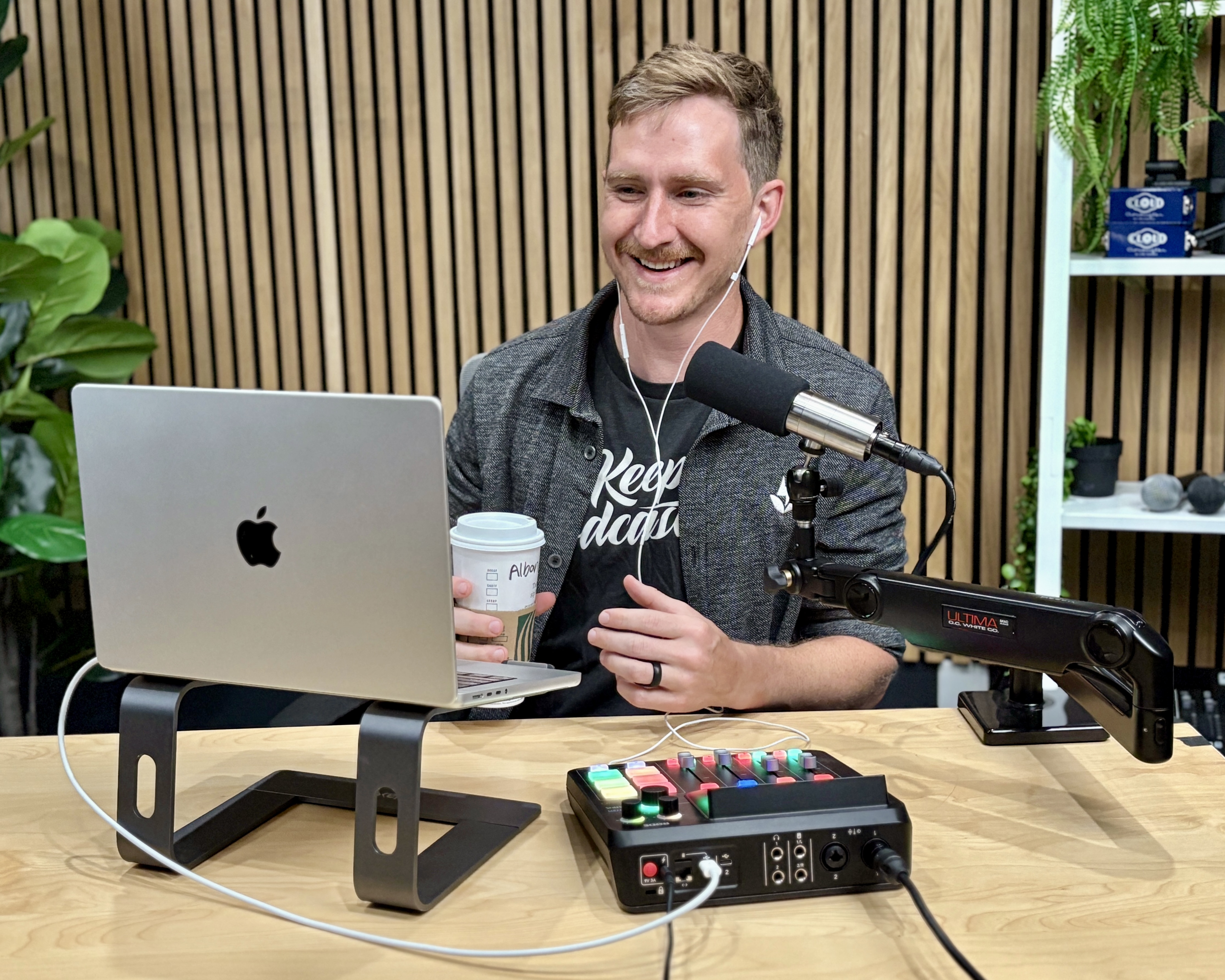
    https://images.prismic.io/buzzsprout/aEHnerh8WN-LVsBc_ProPodcastSetupHeaderAlt.JPG?auto=format%2Ccompress

    4.1 Voice and Performance

    The human voice carries emotion, credibility, and personality. Research consistently shows that vocal clarity and pacing significantly affect listener trust and comprehension.⁹

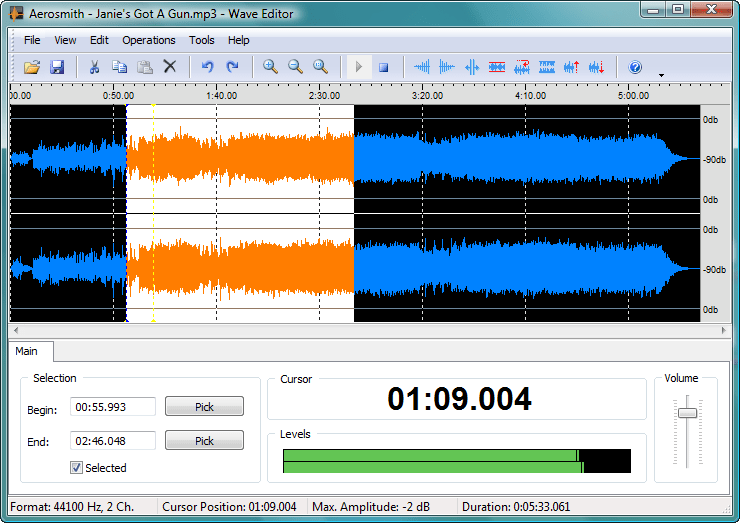
    https://wave-editor.com/screenshot.png

    4.2 Sound Quality

    Audiences will tolerate imperfect visuals far longer than distorted or noisy audio. Key quality factors include:

    • Clean signal capture
    • Controlled noise floor
    • Consistent loudness

    4.3 Sound Design and Music

    Music and ambient sound shape emotional context. Strategic sound design enhances immersion and reinforces narrative intent without distracting from content.¹⁰

    4.4 Editing and Mixing

    Audio editing removes friction; mixing creates balance. Compression, equalization, and level normalization ensure consistent listening experiences across devices.¹¹


    5. Integrated A/V Workflows

    Most modern productions integrate audio and visuals into a unified pipeline:

    1. Concept development and scripting
    2. Recording (audio and/or video)
    3. Asset management and labeling
    4. Rough cut
    5. Fine edit
    6. Sound design and color correction
    7. Platform-specific export

    Professional creators rely on repeatable systems, templates, and version control to maintain consistency at scale.¹²


    6. Quality Standards in Professional A/V Media

    Across industries, professional A/V media exhibits:

    • Intentional framing and audio clarity
    • Consistent branding and tone
    • Clear narrative purpose
    • Technical reliability
    • Audience-appropriate pacing

    Quality signals trust, and trust underpins monetization and audience retention.¹³


    7. Platforms and Distribution Ecosystems

    Distribution platforms shape both format and strategy.

    Major ecosystems include:

    • YouTube – long-form and evergreen video
    • TikTok – short-form discovery-driven content
    • Spotify – podcasts and serialized audio
    • Twitch – real-time audience interaction
    • Instagram – hybrid visual and short-form media

    Each platform rewards distinct pacing, aspect ratios, and engagement strategies.¹⁴


    8. Roles in Audio/Visual Content Creation

    8.1 Video Producer

    Oversees projects end-to-end, balancing creative vision with logistical constraints.¹⁵

    8.2 Videographer / Cinematographer

    Manages camera operation, lighting, and visual consistency. Combines technical mastery with aesthetic judgment.

    8.3 Video Editor

    Shapes narrative, pacing, and emotional flow. Editors often define brand identity more than any other role.¹⁶

    8.4 Audio Engineer

    Responsible for recording quality, mixing, mastering, and sound design across formats.

    8.5 Content Strategist

    Aligns media output with audience goals, platform behavior, and monetization models.

    8.6 On-Camera / Voice Talent

    Provides personality, authority, and continuity—often serving as the primary audience touchpoint.


    9. Business Models and Monetization

    Audio/visual content supports:

    • Advertising and sponsorships
    • Subscription models
    • Educational products and courses
    • Licensing and syndication
    • Freelance and agency services

    Sustainable creators design monetization into content strategy rather than adding it later.¹⁷


    10. Career Pathways and Skill Development

    Common entry points include:

    • Freelance editing or audio work
    • Production assistance roles
    • Niche content channels
    • Brand media teams

    Transferable skills include storytelling, technical literacy, project management, and audience psychology. Career paths are increasingly non-linear.¹⁸


    11. Future Trends in A/V Creation

    Emerging developments include:

    • AI-assisted editing and transcription
    • Virtual and augmented production environments
    • Interactive and immersive media
    • Hybrid human–AI creative workflows

    Future-proof creators understand systems and fundamentals, not just tools.¹⁹


    12. Conclusion

    Audio and visual content creation has become a foundational form of modern literacy. Those who master both craft and professional structure gain durable leverage across education, business, and culture. As this series continues, subsequent articles will examine audio-only mastery, visual design systems, and interactive media in greater depth.


    13. References

    1. Mayer, R. E. (2020). Multimedia Learning. Cambridge University Press.
    2. McLuhan, M. (1964). Understanding Media. McGraw-Hill.
    3. Guo, P. J., Kim, J., & Rubin, R. (2014). How video production affects student engagement. ACM Learning@Scale.
    4. Cisco. (2023). Annual Internet Report.
    5. Bordwell, D., & Thompson, K. (2019). Film Art: An Introduction. McGraw-Hill.
    6. Brown, B. (2016). Cinematography: Theory and Practice. Focal Press.
    7. Zettl, H. (2015). Television Production Handbook. Cengage.
    8. Murch, W. (2001). In the Blink of an Eye. Silman-James Press.
    9. Nass, C., & Brave, S. (2005). Wired for Speech. MIT Press.
    10. Sonnenschein, D. (2001). Sound Design. Michael Wiese Productions.
    11. Rumsey, F., & McCormick, T. (2014). Sound and Recording. Focal Press.
    12. Adobe. (2023). Creative Workflow Best Practices.
    13. Nielsen Norman Group. (2022). Trust and User Experience.
    14. Meta & Google Creator Reports (2023).
    15. Epstein, E. J. (2012). The Hollywood Economist. Melville House.
    16. Oldham, G. (2012). First Cut: Conversations with Film Editors. UC Press.
    17. Patreon. (2023). Creator Economy Report.
    18. LinkedIn Economic Graph. (2023). Media Careers Outlook.
    19. MIT Media Lab. (2024). AI and Creative Systems.

    14. Further Reading & Learning Resources

    Books

    • The Visual Story – Bruce Block
    • On Directing Film – David Mamet
    • Podcasting for Dummies – Tee Morris & Evo Terra

    Journals & Research

    • Journal of Media Practice
    • New Media & Society

    Platforms & Guides

    • YouTube Creator Academy
    • Spotify for Podcasters
    • Adobe Creative Cloud Tutorials

    Podcasts & Video Essays

    • Twenty Thousand Hertz
    • Every Frame a Painting
    • Creator Science
  • How to Become Successful at Written Content Creation

    How to Become Successful at Written Content Creation

    Written by Alexander Christian Greco

    With the Help of ChatGPT

    A Deep, Evidence-Based Guide to Craft, Strategy, and Long-Term Sustainability


    Abstract

    Written content creation is a foundational skill across education, business, media, and knowledge industries. While digital platforms evolve rapidly, the core mechanics of effective writing—clarity, structure, audience alignment, and consistency—remain stable. This article examines how individuals can become successful at written content creation through deliberate skill development, systematic workflows, and strategic thinking. Drawing from research in communication, cognitive science, and professional writing practice, it provides a comprehensive framework for building durable writing competence and sustainable creative output.


    Disclosure

    This article was drafted with the assistance of a large language model (ChatGPT) and subsequently structured, edited, and refined to meet professional educational standards. The author retains responsibility for final content selection, organization, interpretation, and accuracy.


    1. Defining Success in Written Content Creation

    Success in written content creation is often misunderstood as visibility or virality. In reality, sustainable success is better defined as the consistent production of writing that delivers measurable value to a defined audience over time.

    Research in communication theory emphasizes that effectiveness is determined not by the sender’s intention, but by the receiver’s comprehension and response¹. From this perspective, successful writing fulfills one or more of the following functions:

    • Informs or educates accurately
    • Persuades ethically and logically
    • Documents knowledge reliably
    • Supports decision-making
    • Builds trust or authority

    Success therefore varies by context. An instructional manual, academic article, blog post, or newsletter may all be “successful” while serving different objectives².


    2. Clarity as the Primary Writing Skill

    Clarity is the most important predictor of reader comprehension and retention³. Studies in cognitive load theory show that readers disengage when sentences demand excessive working memory⁴.

    Clear writing is characterized by:

    • Direct sentence structure
    • Defined terminology
    • Logical sequencing
    • Explicit connections between ideas

    Professional writing guidelines consistently emphasize that clarity is achieved through revision, not initial drafting⁵. Skilled writers expect to rewrite sentences multiple times to reduce ambiguity and complexity without sacrificing precision.

    Clear writing is not simplistic—it is optimized.


    3. Structural Design and Information Architecture

    https://leadspanda.com/wp-content/uploads/2024/05/Screenshot-2024-05-12-at-2.02.22-PM.png

    Well-structured writing reflects deliberate information architecture. Research in instructional design demonstrates that readers learn more effectively when content follows predictable structural patterns⁶.

    Effective written content typically includes:

    • Clear section headings
    • Progressive idea development
    • Defined transitions
    • Summaries or synthesis points
    https://media.nngroup.com/media/editor/2023/08/30/the-practice-of-information-architecture-updated-watermark.jpg

    Before drafting, successful writers often construct:

    • Section-level outlines
    • Key argument lists
    • Evidence placeholders

    This approach separates thinking from wording, allowing cognitive resources to be allocated efficiently⁷.


    4. Audience, Intent, and Context Awareness

    Written content is inherently relational. Its effectiveness depends on alignment between the writer’s intent and the reader’s needs.

    Audience-aware writing accounts for:

    • Reader knowledge level
    • Motivation for reading
    • Cultural and professional context
    • Expected depth and rigor

    Communication research shows that writers who explicitly model their audience’s questions produce more persuasive and comprehensible texts⁸. This includes anticipating objections, confusion points, and follow-up questions.


    5. Writing as an Iterative Cognitive Process

    Contrary to popular belief, writing is not a linear activity. Cognitive studies show that expert writers continuously alternate between planning, drafting, evaluating, and revising⁹.

    A productive workflow separates:

    1. Idea generation
    2. Structural organization
    3. Language refinement
    4. Technical correction

    This staged approach reduces cognitive overload and improves output quality¹⁰.

    Editing is not a secondary task—it is where professionalism emerges.


    6. Consistency, Habits, and Output Sustainability

    https://www-cdn.usemotion.com/webflow-export/blog/content-calendar-template/66462b5339f0f84a61165e00_social_media_content_calendar_fks3.webp

    4

    https://media.geeksforgeeks.org/wp-content/uploads/20240605131921/How-Read-your-Writes-Consistency-Works.webp

    Successful writers use systems such as:

    • Scheduled writing sessions
    • Time-based goals
    • Content calendars
    • Reusable templates

    Long-term success in writing correlates more strongly with consistency than talent¹¹. Behavioral research indicates that habit formation, not motivation, sustains creative output¹².

    These systems externalize discipline, reducing reliance on willpower.


    7. Platform-Aware Writing Without Compromising Quality

    Different platforms impose constraints on format, length, and style. However, research in digital literacy emphasizes that core quality principles remain constant across media¹³.

    High-quality content:

    • Serves reader intent
    • Maintains accuracy
    • Prioritizes readability
    • Avoids manipulation

    Platform optimization should follow—not replace—content integrity.


    8. Developing a Credible and Authentic Writing Voice

    Voice is not an affectation; it is the natural outcome of:

    • Topic familiarity
    • Ethical positioning
    • Repeated practice

    Readers associate credibility with consistency of tone, terminology, and reasoning¹⁴. Authority emerges when writers demonstrate understanding rather than assert superiority.


    9. Feedback, Metrics, and Continuous Improvement

    https://docs.oracle.com/cloud/help/pt/content-cloud/CECSA/img/GUID-01E38812-C9F7-407C-8425-FCBC132D31FA-default.png

    Effective improvement relies on feedback loops. Qualitative feedback—questions, comments, corrections—is often more informative than numerical engagement metrics¹⁵.

    Metrics should align with purpose:

    • Educational writing → comprehension indicators
    • Business writing → conversion signals
    • Reference writing → citation and reuse

    Misaligned metrics distort priorities and degrade quality.

    https://www.aihr.com/wp-content/uploads/employee-engagement-metrics-social.png

    10. Monetization and Professional Applications of Writing

    Written content supports numerous professional pathways, including:

    • Education and training
    • Technical documentation
    • Research communication
    • Thought leadership
    • Knowledge-based products

    Economic research on creative labor suggests that writing careers are most durable when tied to expertise rather than attention alone¹⁶.


    11. Writing in the Age of AI Assistance

    AI tools increasingly assist with drafting, editing, and summarization. However, research consistently shows that human oversight is essential for:

    • Accuracy
    • Contextual judgment
    • Ethical responsibility
    • Original synthesis¹⁷

    Writers who succeed with AI treat it as infrastructure, not authorship.


    Conclusion

    Successful written content creation is a compound skill built through:

    • Clarity-driven communication
    • Structural discipline
    • Audience alignment
    • Iterative refinement
    • Sustainable systems

    In an information-saturated environment, writing that is accurate, structured, and thoughtful remains disproportionately valuable. Mastery is not achieved quickly, but it is reliably achieved through deliberate practice and long-term commitment.


    Further Reading & Learning Resources

    Writing Craft & Clarity

    1. Zinsser, W. On Writing Well
    2. Pinker, S. The Sense of Style
    3. Williams, J. & Bizup, J. Style: Lessons in Clarity and Grace

    Structure & Information Design

    1. Mayer, R. Multimedia Learning
    2. Sweller, J. Cognitive Load Theory
    3. Nielsen Norman Group – Writing for Web Usability

    Content Strategy & Professional Writing

    1. Clark, I. The Long Game
    2. Content Marketing Institute – Research Library
    3. Google Technical Writing Courses

    Writing Habits & Productivity

    1. Clear, J. Atomic Habits
    2. Newport, C. Deep Work
    3. Pressfield, S. The War of Art

    References

    1. Shannon & Weaver, The Mathematical Theory of Communication
    2. Flower & Hayes, Cognitive Process Theory of Writing
    3. Cutts, Oxford Guide to Plain English
    4. Sweller, Cognitive Load Theory
    5. Zinsser, On Writing Well
    6. Mayer, Multimedia Learning
    7. Kellogg, The Psychology of Writing
    8. Bereiter & Scardamalia, The Psychology of Written Composition
    9. Hayes, A New Framework for Understanding Cognition and Affect in Writing
    10. Flower, Problem-Solving Strategies for Writing
    11. Ericsson, Deliberate Practice
    12. Duhigg, The Power of Habit
    13. Nielsen, Writing for the Web
    14. Aristotle, Rhetoric
    15. Redish, Letting Go of the Words
    16. Florida, The Rise of the Creative Class
    17. Stanford HAI, Human-Centered AI and Writing
  • How to Be Successful Across the Core Forms of Content Creation

    How to Be Successful Across the Core Forms of Content Creation

    A Foundational Guide to Video, Written, Visual, Audio, and Interactive Media

    Written by Alexander Christian Greco

    With the Help of ChatGPT


    Introduction

    Content creation is no longer a single discipline—it is a portfolio of crafts. Video, writing, visuals, audio, and interactive formats each demand distinct skills, production standards, and distribution strategies. While creators often specialize, long-term success increasingly favors those who understand the fundamentals of every medium, even if they master only one.

    This article establishes a baseline framework for each major form of content creation. For every format, we will cover:

    1. The basic content standard (what “good” looks like)
    2. Skill development paths (how to become exceptional)
    3. Audience and business foundations (how creators grow and sustain success)
    4. Sub-formats within each medium

    Future articles will expand each section into advanced, tactical guides. This piece is the map, not the territory.


    https://www.avermedia.com/BR/files/thumb/NS_seo-356288dd71a334a503f37cf19b7a1808.jpg

    Table of Contents

    1. Introduction: Content Creation as a Portfolio of Crafts
    2. Video Content Creation
      2.1 Core Standards for Video
      2.2 Skill Development and Craft Mastery
      2.3 Audience Growth and Business Models
      2.4 Subsets of Video Content
    3. Written Content Creation
      3.1 Core Standards for Writing
      3.2 Skill Development and Editorial Excellence
      3.3 Audience Growth and Business Models
      3.4 Subsets of Written Content
    4. Visual Content Creation
      4.1 Core Standards for Visual Media
      4.2 Skill Development and Visual Literacy
      4.3 Audience Growth and Business Models
      4.4 Subsets of Visual Content
    5. Audio Content Creation
      5.1 Core Standards for Audio
      5.2 Skill Development and Sound Design
      5.3 Audience Growth and Business Models
      5.4 Subsets of Audio Content
    6. Interactive Content Creation
      6.1 Core Standards for Interactive Media
      6.2 Skill Development and Systems Thinking
      6.3 Audience Growth and Business Models
      6.4 Subsets of Interactive Content
    7. Conclusion: Choosing a Primary Medium Without Limiting Growth

    https://assets.videomaker.com/2014/05/d0dd6aec46b86ae1abe8cafe61b60cf5.jpg

    1. Video Content Creation

    1.1 The Basic Content Standard

    At its core, effective video content must satisfy three requirements:

    • Clarity: The viewer understands what the video is about within the first 5–10 seconds.
    • Visual stability and audio clarity: Poor lighting or bad sound immediately reduces trust.
    • Purposeful pacing: Every scene or cut must justify its presence.

    “Good” video does not require expensive equipment. It requires:

    • Consistent framing
    • Clean audio
    • Intentional editing
    • A clear narrative or informational goal

    1.2 Developing Exceptional Video Skills

    Exceptional video creators master three layers of craft:

    1. Story and Structure

    • Hooks, escalation, payoff
    • Visual storytelling (showing rather than explaining)
    • Emotional or intellectual momentum

    2. Technical Execution

    • Lighting fundamentals
    • Camera movement and composition
    • Audio capture and mixing
    • Editing rhythm

    3. Performance and Presence

    • On-camera confidence
    • Authentic delivery
    • Audience awareness

    Skill growth comes from iteration, not perfection. Recording frequently, reviewing footage critically, and refining weak points is far more valuable than chasing gear upgrades.

    1.3 Building an Audience and a Business with Video

    Video is the most discoverable medium but also the most competitive.

    Key strategies:

    • Choose a clear niche early (education, entertainment, commentary, tutorials)
    • Maintain consistent publishing cadence
    • Repurpose long-form video into short-form clips
    • Build off-platform assets (email lists, communities)

    Monetization pathways include:

    • Advertising revenue
    • Sponsorships
    • Products and services
    • Education and consulting

    1.4 Subsets of Video Content

    • Educational / Tutorials
    • Entertainment / Storytelling
    • Commentary / Opinion
    • Documentary / Long-form
    • Short-form vertical video
    • Live streaming

    Each subset has distinct pacing, editing, and audience expectations—future articles will treat these individually.


    https://augurian.com/wp-content/uploads/2023/04/cross-platform-marketing.png

    2. Written Content Creation

    2.1 The Basic Content Standard

    Written content succeeds when it is:

    • Clear: The reader never feels lost
    • Structured: Headings, flow, and logical progression
    • Purpose-driven: Informing, persuading, or guiding

    Strong writing respects the reader’s time. Even long-form writing must earn attention through clarity and relevance.

    2.2 Developing Exceptional Writing Skills

    Exceptional writers focus on:

    1. Thought Structure

    • Logical progression
    • Clear thesis and supporting arguments
    • Strong conclusions

    2. Language Control

    • Precision over complexity
    • Rhythm and readability
    • Tone consistency

    3. Editorial Discipline

    • Revision and tightening
    • Removing redundancy
    • Improving clarity with each pass

    Writing skill improves through editing more than drafting. The difference between average and exceptional writing often lies in revision quality.

    2.3 Building an Audience and a Business with Writing

    Written content builds long-term authority and compounds over time.

    Effective strategies:

    • Focus on search-friendly, evergreen topics
    • Publish consistently on owned platforms
    • Repurpose writing into scripts, newsletters, or threads

    Monetization options:

    • Paid newsletters
    • Books and digital products
    • Consulting and services
    • Affiliate content

    Writing often monetizes later than video, but it produces deeper trust and longevity.

    2.4 Subsets of Written Content

    • Articles and blogs
    • Newsletters
    • Technical documentation
    • Essays and opinion
    • Educational guides
    • Long-form research

    Each subset has its own standards for tone, sourcing, and structure.


    https://framerusercontent.com/images/mtYFWTYYRBovkRlTYSKRSqzAkos.png?height=875&width=1200

    3. Visual Content Creation

    3.1 The Basic Content Standard

    Visual content must communicate instantly.

    Minimum standards:

    • Strong composition
    • Clear focal point
    • Intentional color and contrast
    • Consistent style

    Visuals fail when they are cluttered, confusing, or inconsistent—even if technically impressive.

    3.2 Developing Exceptional Visual Skills

    Exceptional visual creators master:

    1. Visual Literacy

    • Composition rules
    • Color theory
    • Negative space
    • Hierarchy and balance

    2. Style Consistency

    • Recognizable visual identity
    • Reusable design systems
    • Cohesive aesthetics

    3. Conceptual Thinking

    • Symbolism
    • Visual metaphors
    • Emotional resonance

    Skill growth requires studying both art fundamentals and design systems, not just tools.

    3.3 Building an Audience and a Business with Visuals

    Visual content thrives on platform recognition and style consistency.

    Audience growth strategies:

    • Consistent visual themes
    • Platform-native formats
    • Shareable designs

    Monetization paths:

    • Commissions
    • Licensing
    • Products (prints, assets)
    • Brand partnerships

    Visual creators often succeed by becoming visually recognizable, not just technically skilled.

    3.4 Subsets of Visual Content

    • Illustration
    • Graphic design
    • Photography
    • 3D and motion design
    • Infographics
    • Concept art

    Each subset emphasizes different tools but shares the same visual principles.


    https://wave-editor.com/screenshot.png

    4. Audio Content Creation

    4.1 The Basic Content Standard

    Audio content must be:

    • Clear and comfortable to listen to
    • Well-paced
    • Free of distracting noise

    Listeners tolerate imperfect visuals; they rarely tolerate poor audio.

    4.2 Developing Exceptional Audio Skills

    Exceptional audio creators focus on:

    1. Voice Control

    • Clarity
    • Pacing
    • Emotional modulation

    2. Sound Design

    • Editing out distractions
    • Music and ambiance
    • Silence as a tool

    3. Narrative Flow

    • Structured conversation
    • Clear transitions
    • Listener engagement

    Audio excellence comes from listening critically to your own work, not just producing more episodes.

    4.3 Building an Audience and a Business with Audio

    Audio builds deep parasocial relationships.

    Growth strategies:

    • Consistent release schedules
    • Clear show positioning
    • Cross-promotion with other media

    Monetization options:

    • Sponsorships
    • Memberships
    • Premium content
    • Live events

    Audio success is slower but often more loyal and sustainable.

    4.4 Subsets of Audio Content

    • Podcasts
    • Audiobooks
    • Voice essays
    • Music-based content
    • Guided education

    Each has distinct production and pacing standards.


    5. Interactive Content Creation

    5.1 The Basic Content Standard

    Interactive content must:

    • Respond predictably to user input
    • Be intuitive and accessible
    • Provide feedback or progression

    Confusing interaction breaks trust instantly.

    5.2 Developing Exceptional Interactive Skills

    Exceptional interactive creators master:

    1. User Experience Thinking

    • Flow and navigation
    • Feedback loops
    • Accessibility

    2. Systems Design

    • Rules and logic
    • Progression and incentives
    • Scalability

    3. Content Integration

    • Story or education embedded in interaction
    • Meaningful choice

    This form requires both creative thinking and technical literacy.

    5.3 Building an Audience and a Business with Interactive Content

    Audience growth depends on utility or engagement depth.

    Common paths:

    • Games and simulations
    • Tools and calculators
    • Educational platforms
    • Community-driven experiences

    Monetization includes:

    • Subscriptions
    • Licensing
    • Services
    • SaaS or platform models

    Interactive content often has the highest effort barrier, but also the strongest defensibility.

    5.4 Subsets of Interactive Content

    • Games
    • Educational simulations
    • Web tools
    • Immersive storytelling
    • Community platforms

    Conclusion: Choosing a Path Without Limiting Yourself

    Every content format rewards clarity, consistency, and craft—but each expresses those values differently. Success does not require mastering everything at once. It requires:

    • Understanding the standards of your chosen medium
    • Developing deep skill in one primary form
    • Building awareness of adjacent formats for expansion

    This article serves as a foundation. Each section is designed to be expanded into advanced, specialized guides covering tools, workflows, monetization models, and scaling strategies.

    In the modern creator economy, craft creates trust, and trust creates sustainability.


    Reference List (Foundational & Academic)

    These sources establish baseline theory, standards, and research relevant across all content forms.

    1. Anderson, C. (2016). TED Talks: The Official TED Guide to Public Speaking. Houghton Mifflin Harcourt.
    2. Berger, J. (2013). Contagious: Why Things Catch On. Simon & Schuster.
    3. McLuhan, M. (1964). Understanding Media: The Extensions of Man. McGraw-Hill.
    4. Norman, D. A. (2013). The Design of Everyday Things. Basic Books.
    5. Pink, D. H. (2011). Drive: The Surprising Truth About What Motivates Us. Riverhead Books.
    6. Rosenbaum, S., et al. (2011). Curation Nation. McGraw-Hill.
    7. Shirky, C. (2008). Here Comes Everybody. Penguin Press.
    8. Tolentino, J. (2019). Trick Mirror: Reflections on Self-Delusion. Random House.
    9. Wolf, M. (2018). Reader, Come Home. Harper.
    10. Nielsen Norman Group. (Ongoing). Research articles on usability, UX, and digital content behavior.

    Further Reading & Learning (By Content Form)

    Video Content Creation

    Books & Articles

    • In the Blink of an Eye — Walter Murch
    • Save the Cat! — Blake Snyder
    • YouTube Creator Academy (YouTube)

    YouTube Channels

    • Every Frame a Painting
    • Film Riot
    • Think Media

    Podcasts

    • The Colin and Samir Show
    • Creator Support

    Journals / Research

    • Journal of Visual Communication
    • Media Psychology

    Written Content Creation

    Books & Articles

    • On Writing Well — William Zinsser
    • Bird by Bird — Anne Lamott
    • The Elements of Style — Strunk & White

    Newsletters & Platforms

    • Substack
    • Medium

    Podcasts

    • The Writer Files
    • Grammar Girl

    Journals

    • Written Communication
    • Journal of Technical Writing and Communication

    Visual Content Creation

    Books

    • Interaction of Color — Josef Albers
    • The Visual Display of Quantitative Information — Edward Tufte
    • Steal Like an Artist — Austin Kleon

    Online Learning

    • School of Motion
    • Domestika

    YouTube Channels

    • The Futur
    • Satori Graphics

    Journals

    • Design Studies
    • Leonardo (MIT Press)

    Audio Content Creation

    Books

    • Out on the Wire — Jessica Abel
    • Make Noise — Eric Nuzum

    Podcasts About Podcasting

    • The Audacity to Podcast
    • Pod Save the Creator

    Platforms

    • Spotify
    • Apple Podcasts

    Journals

    • Radio Journal
    • Journal of Radio & Audio Media

    Interactive Content Creation

    Books

    • Rules of Play — Salen & Zimmerman
    • A Theory of Fun for Game Design — Raph Koster

    Online Learning

    • Coursera
    • edX

    YouTube Channels

    • Game Maker’s Toolkit
    • Extra Credits

    Journals

    • Game Studies
    • Human–Computer Interaction

    Next in This Series (Planned)

    • Video Content Creation: Advanced Strategy & Monetization
    • Writing for Authority and Long-Term Growth
    • Building a Visual Identity That Scales
    • Audio Content and Audience Loyalty
    • Designing Interactive Media for Education and Engagement